I think a lot of people are looking at this as "maybe this article is offering advice" instead, the way I'm looking at it is this is giving us a rough quantification of what we all know intuitively: that college is so expensive it's reaching a natural ceiling.
The way this manifests in reality isn't millions of people all doing a cost/benefit calculus like this and coming to the rational conclusion they can skip college. What happens is that slowly, the meme that "Jim went to college and he doesn't seem better off" seeps into the collective consciousness. More and more people start running into this evidence, and reconsider mortgaging the house (figuratively) to send their kids to college, and the upward pressure on college tuition starts to lessen.
After a while this meme that college is a tradeoff becomes well established, and it becomes common knowledge that you think hard about it before you send your kid to college. The underlying reason is something like "You can make a better return in principle investing in the S&P" but the way it becomes a force in the real world is by a collective bayesian reasoning process we all engage in as a society.
And college got expensive partly through policy choices. Offering easy loans tends to make people price insensitive, so tuitions go up and a lot of that money goes to things like increasingly fancy buildings and making textbook publishers' shareholders rich. Meanwhile often less is going to state schools that, with low in-state tuitions, were historically a way up for a lot of people. (An older friend went to Berkeley a few decades ago for under $1,000.) There's some comparison to the housing bubble, where policy also supported big loans.
Don't have all the answers, but less emphasis on loans, competition from better-supported state and other non-profit schools, and having multiple forms of post-high-school education and credentialing available could all potentially help to bring some competition and sanity back to all this.
I came here to say this. My wife left the private sector four years ago to work in higher ed. This was a huge epiphany to both of us after she had been there a while and we could see the big picture from the inside. Sure there are a couple other factors at play, but it's small potatoes, comparatively. If you look at the big state schools and the support they receive from the community, they've systematically had their legs cut out from under them over the last couple decades. It's horrifying. And the students are paying for it. As are the teachers.
Serious point: let's say that, to you personally, investing in the stock market and going to college are a wash. They're not a wash for the state. The state gets more taxes from your higher-paying job. The chances are you're also helping to support some lower-paying jobs as part of your industry. So it's not unreasonable to expect the state to contribute to actually making this happen.
The benefits are actually much larger than I've just described. There's a snowball effect as the industries of the state move up the ladder. America is currently benefiting from past state investment in education. (There's intangible benefits too, but for these purposes let's just talk about the benefits the state accrues.)
>The state gets more taxes from your higher-paying job.
That's if you accept the higher-education-as-training model. Under the higher-education-as-signaling model, the primary effect of education is to choose how to allocate a fixed set of high paying jobs. If there's 100 slots for new lawyers this year, then the difference between sending 150 and 151 students through law school is an additional unemployed lawyer.
There's a case to be made for that in particular professions, and there's no way the state should be funding the dodgy law colleges that have sprouted all over America. But then, if you subscribe to that model you should also believe that you should be able to disavow education loans in the event of bankruptcy.
The federal government is having it both ways right now: it earns interest on the money it loaned to you to get a higher education, and it also generates higher revenues via your increased lifetime earnings. This is a bummer because its not like your state taxes went down along with a decrease in state funding for your in-state universities.
Basically state governments off-loaded the burden of funding on the students while reaping the benefits of said investments.
Sure it does, if stake school is X, then private schools need to cost more than X to seem exclusive.
Further, financial aid makes nameplate number less meaningful. If someone has rich parents or wins a full ride then schools want to milk that for as much as possible. Otherwise they can always add discounts down to whatever someone can pay.
Um, not sure what you are talking about wrt community support? The community, and the state was supporting the university quite liberally.
My observations from attending and then later working at a large southern public university is that a bunch of things happened:
1) The financiers got in bed with the financial aid office, figuratively and possibly literally.
2) The campus went on an inexplicable building boom the likes of which no one had ever seen before. The state funded those projects, but they were clearly handouts to construction companies and pork spending. Sickening, really.
3) The quality of the average student plummeted. I blame the financiers for this, too--asses in seats is a thing.
So while it may be generally good that more people had access to higher education, at the same time the quality dropped, and I seriously doubt the outcomes for many of those people actually improved over attending community college or perhaps no college. Their debt loads had to be tremendous, after all.
There are huge discrepancies in student preparedness in different areas. It's possible your right, the South has long viewed education with suspicion and this has gotten worse, probably insuring students today are less ready for college.
It's also possible that states where education was valued have pulled back funding. There is actual hard data to indicate this is the case, but I'm also trying to avoid dismissing your claims out of hand.
I did undergrad at a state school (University of Illinois at Chicago) and later worked there as a researcher and our pension was bankrupt and the state was just trying to murder what was left of benefits and reasons to want to work there. Hilariously enough colleagues at private schools (SAIC, etc) in design in the area are now all bailing to work at UIC because their benefits and pay are far worse. I am in an evening MBA program at UW Seattle now, Foster School of Business, and its half covered by my employer. Everyone's trying to gut funding but improve education..
For a pure apples-to-apples price comparison it's reasonable to use an out-of-state tuition that's free of state support, grants or scholarships, as that reflects the true price sticker.
The rise in college tuition is the most baffling, as this industry refuses the amortize costs. The buildings have been built, the books have been written, the intro courses have been handed down to graduate students, the handouts are sometimes the same handouts that were used a decade ago.
What is baffling about it? This has turned into a very effective method of wealth transfer. I think some combination of the rise in administrative overheads and the involvement of private finance with government protection explain almost all of it.
Asking young humans with incomplete information to make a decision with long term financial impacts is a good gig, especially when "all their friends" are doing it.
"We find a pass-through effect on tuition of changes in subsidized loan maximums of about 60 cents on the dollar, and smaller but positive effects for unsubsidized federal loans."
First you have to factor in the fact that public schools are a competing good, so when public tuition rises private tuition will as well.
Then you have to realize that tuition increases at private schools are misleading. You have to look at what people are actually paying not what the sticker prices.
At Harvard, for instance, 70% of students receive financial aid, so they are paying $12k a year on average (not the $60k sticker price). That's tuition, fees, and room and board. Harvard has generous financial aid, but it's not unusual among elite schools. Most private schools worth going to are going to have very good financial aid packages.
And even at lower tier private schools most people aren't paying sticker price unless you're talking about for profit institutions.
But private schools have to compete with each other. If this was really about increased demand from students who would have otherwise gone to public schools, what we'd see is an increase in the number of private schools, not an increase in tuition.
Assuming the number of private schools that students want to go is in no way supply limited, which is an incorrect assumption.
How long does it take to build and staff a private school? How long to get it into US News top 500?
Even something like increasing the number of students admitted to existing private schools is tricky because they are tracked on their admission percentage.
You don't think they know that? I'm sure they do. But the other option is to stay the same size, but charge much more. Either way, more money. Only one solution demands building more classrooms and housing.
It's not that simple. A huge part of what makes a particular college attractive is selectivity. Acceptance rates are tracked and reported.
Harvard and Yale are ranked so highly that they could get away with it. But they won't do it for other reasons. Mainly that they don't need the money coming in from tuition. If you take a private school a bit further down the list though, their rankings would tank if they accepted twice the students.
Also there are other limiting factors. Many colleges don't have the physical space to just double in size. Their isn't land for sale within walking distance of their current campuses. Adding satellite campuses is one way around that, but that adds logistical problems that will reduce desirability. In addition to satellite campuses not always inheriting the reputation of the main campus.
Additionally you can't simply double the student to faculty ratio b/c that would tank rankings, and hiring double the faculty takes time.
You also don't know which departments you need to scale beforehand. If you decide to double your enrollment in the next 5 years, which majors will the new students choose? It's unlikely the ratios would stay the same. Good programs don't always scale well either. If a department worked hard over the last 20 years to build a good reputation, they can't just hire 20 new faculty members and teach twice the number of students without impacting quality.
Schools do expand all the time, but it is a very slow process that by its nature can't keep up with a constant growth in demand.
For decades the private sector has been feeding off the gravitas created by Stanford, Harvard, Yale and other superb private institutions. Maybe time has helped, maybe the Internet made comparisons easier, but it's pretty clear that private schools can be separated into three tiers, with tier one (Stanford, Yale) still being top notch, tier two being a questionable proposition for most people, and tier three (U of Phoenix, Trump U) being borderline fraud.
I'd assume the two are strongly correlated. If state schools raise their prices, then private schools can stay at the same multiple above them and also raise their prices.
That line of argument would be more persuasive if it explained why tuition has increased at private colleges? Suffolk University is an unimpressive college in Boston that is at risk of losing its accredidation, yet charges $37K/year for tuition. Harvard, arguably the best college brand in the world, costs $43K. It seems like there should be a bigger delta between the two, right? Why not? Might it have something to do with the amount of loans students are allowed to take out with government underwriting? Perhaps.
Or might it have something to do with the fact that Harvard has a massive multi-billion dollar endowment. Tuition is a tiny fraction of their income.
70% of Harvard students receive financial aid from the institution, and they pay an average of $12k a year total. Harvard clearly isn't charging a market rate for tuition.
Also government backed loans aren't nearly enough to cover tuition plus housing at these schools, so if your argument is that the prices are similar because they are both near the max loan amount, they aren't.
Is there any literature that explains why the costs continue to rise on a yearly basis? If one buys into the disinvestment hypothesis it seems like the public university traditions should have plateaued at some point once the <$10K difference in state funding and private tuition normalized. Especially considering we've seen dramatic cost reductions in IT and a profusion of programs like MITx, Khan Academy, and others that should allow colleges to reduce costs.
Pension plans of retired college professors and staff typically include some wildly optimistic investment expectations, and states are on the hook for compensatory payments when those expectations [surprisingly] do not materialize.
This is not limited to education pension funds, public sector or prison guard pension funds typically negotiate the same deal, very frequently with people they themselves have helped get elected, so you know those negotiations are extremely tough.
In almost all states, the money has gone to Medicaid. In Virginia (which I know well), the money also went to build a bunch of prisons in the 80's and 90's. But, if you look at the distribution of state budgets over the past 40 years, health care expenses and prisons have been the growth areas.
Government spending on higher education peaked in the mid 70s, dropped in the 80s, and has not kept up with the population increases. The focus on loans, instead of government funding, was basically a new tax on the poor and middle classes in order to fund the Reagan tax cuts for the rich.
Tuition rose right along with the inflation through the 80s and 90s, so no real correlation to the federal tax cuts, which you wouldn't expect anyway, since universities are largely state financed.
Causation goes the other way: Reagan's prioritization of tax cuts over public education led to tuition increases, which lead to an increased demand for loans to pay the higher tuition.
I don't see it that way. The 80s "greed is good" mentality laid the groundwork for the fleecing, but that was not Reagan's fault other than perhaps that administration was the time when financialization of everything began. Think "junk bonds" then think "loans that can't be discharged in bankruptcy."
It doesn't--this is one of those times where the statement makes zero sense, but it was fun to bash Reagan. No, the whole story of runaway costs can be explained quite easily by the financialization of higher ed--the liberal student loan policies championed during the Clinton Administration tied to the typical greed of Wall Street bankers, enabled by the bleeding heart "everyone should go to college" drama.
Everyone got paid, except the sheep who got sheared.
I remember reading an article describing how college costs can be explained by an analysis of supply and demand. There have been a variety of historic reasons for demand rising at different times - mostly related to unemployment and lack of other economic choices. I keep hearing the meme that low-cost college is the cause of college expense - but college is free in many countries where they are doing quite well. So I question the facile opinions I keep hearing.
College in the US is used by employers as a proxy for intelligence, something that's an outgrowth of laws and court rulings that date back to the '70s.
So if you want to put yourself on the path to the C-Suite in a Fortune 500 company or to a partnership in a major law firm, you have to get into one of the very top colleges in the country. That, in turn, means top colleges can charge pretty much whatever they want and it's still worth the money. Not because of the instruction students receive, but because getting admitted is highly competitive and those students managed to do it. In other words, it's a positive feedback loop driving up prices for a scarce resource.
Even when you get out of the nosebleed tier, colleges are easy to rank by their accept/reject ratio. So if you're a big employer and you have a candidate from Brown (acceptance 9.5%) and one from Cornell (acceptance 15.1%), you'd probably prefer the one from Brown, everything else being equal.
The sad part is adding more money just makes the problem worse for the same reason adding money to real estate markets just makes everything more expensive.
> That, in turn, means top colleges can charge pretty much whatever they want and it's still worth the money.
The most prestigious colleges actually don't charge much money, except for families that can easily pay. Financial aid, including stipends for living expenses, is extremely generous at elite schools. The sticker price might be high, but few people actually pay it.
The problem is more with second tier schools that aspire to greater prestige but have more limited financial resources. While many of these schools offer perfectly good educations, they don't really open the same kind of doors that going to a more elite school can. A big tuition price can make parents think they're sending their kid to a really elite school - just like people often will assume a more expensive diamond ring is better than a less expensive one. But it's probably not really worth the money.
I've seen this mentioned several times, and I wish I had realized this when I was younger. I didn't even bother to apply to top tier schools even though I would have probably been accepted there because I knew my parents weren't too well off and I didn't think they'd be able to afford to support me, and I really hated the idea of taking out big college loans ($20k+ per year to go to school just seemed insane to me at the time... now 20 years later it's the average tuition + lodging at my local public university!?!).
So instead I only applied to in-state colleges, thinking I was being sensible and pragmatic by doing so. But there's a chance I would have paid less at the top tier schools than I ended up paying for local schools.
That's absolutely a thing, and the knowledge of that fact is more limited than it should be. At my alma mater, I had friends who were getting almost a full scholarship. They left with only a few thousand dollars of debt (as opposed to tens of thousands) because they were able to pay off most of it with a part time on-campus job like being a lab technician.
It's an example of how inequality along financial or racial lines can be real despite there being no theoretical reason for it: if you don't know that you could attend a top tier university and leave with very little debt, you'll consider applying as a student. If you don't, then you've preemptively rejected a very good opportunity for upward mobility. Too many people just don't know because their families or communities don't play the college admissions "game."
Above and beyond that, and to crib on one of the grandparent comments re: "Eventually, demand will decrease if prices continue increasing":
If the minimum barrier to employment is having a college degree, then people will continue doing whatever they have to in order to get a college degree.
The only way you're going to change demand is if decent jobs start being created that don't require a bachelor's degree. And I don't see that happening...
Electricians, plumbers, etc. all make very good money without 4- year degrees. But nobody aspires to these professions nowadays - everybody assumed they must go to university.
New Zealand has a reasonable education system where tertiary vocational education is treated on par with a two-year degree, meaning one can still be a professional and then spend just two extra years to achieve a college diploma, if they so desire.
But it's not about "making very good money"--you look at who runs the country and it's a tiny few who attended a select group of institutions. It makes the whole "American Dream" concept a huge lie. But you can't tell a kid "you'll never be a CEO" but chances are if their father isn't one and they don't go to a big name school, they truly will never be one.
The American dream isn't about becoming C-level or running the country.
College is oversold but the American Dream is alive if you go to a cheap school and buy a house in a smaller city or burbs. There are plenty of great cities and emerging ones with jobs and reasonable cost of living.
However, if you choose to buy crap you don't need and succomb to debt, that's not America's fault. That's yours.
But yes it's dead in LA, NYC and SF. You have to be a top performer there. But that's just supply and demand. Nobody owes you the American Dream in those cities. You aren't entitled to it.
Never lived in a place that didn't need doctors or CEOs, either. "Become a tradesperson" is useful advice for an individual, and completely useless as a solution to the economic problems of non-coastal towns.
I'd urge you to explore some other great cities like Nashville, Minneapolis, Chicago, Austin, St. Louis, Milwaukee, Denver and all the suburbs and even small towns surrounding them.
You're so hung up on the CEO thing which is irrelevant. We don't need more CEOs just like we don't need more lawyers and doctors. And you mention doctors - those are needed in any town of size anyway. My own grandfather was a doctor in a rather small town outside of Little Rock and he did very well for himself and sent 4 kids to college, one to med school. His son is doing the same thing now as a doctor in Memphis.
The American Dream is alive and well: it's just changed. It's no longer "graduate college, get a good job, buy a home and be set for retirement"
Too many people just aren't adapting and are frustrated because they are sinking themselves with poor decisions like crippling debt.
I know people w 200k school debt that graduated with degrees targeting jobs that tap out at around 80k that are way more competitive than any tech or marketing occupation. Makes no sense.
My uncle makes 100+k selling tools out of a town of 6k people. My father in law makes 150k+ in HVAC out of a suburb of about 50k people. They both own their homes outright. One didn't go to college.
People don't want to learn general crafts like sales and they don't want to learn crafts that get their hands dirty. Their parents keep pushing them into college which provides less and less value and tons of debt.
The American Dream doesn't go away just because less people are realizing it. It goes away because people are being stubborn and we have a nation of financially ignorant and wreckless citizens.
I urge you to look past the suburbs that ring metro areas, and a bit further out.
I've just driven out to Whidbey Island this past weekend - a 70 minute drive from Seattle. Beautiful place. Economically, it's also dying, and not because the people who live there are lazy bastards. If it didn't have a US Navy base, it would be dead. As a young person, you'd be insane to stay there.
In order to feed your uncle and father-in-law, small towns must have something to export.
It could be lumber. It could be coal. It could be applications for social security. It could be people, who work in the city, and live in their community, 40 miles away. But it has to be something.
Small towns that have an export - one big enough to feed all the doctors, cops, plumbers, politicians, realtors, teachers, babysitters, bricklayers, HVAC installers, and other people who bring no money into their economy can do reasonably well for themselves.
Those that don't are in a death spiral, and it won't matter if you replaced every person in them with a skilled contractor overnight.
I see what you're saying and a lot of small towns that once thrived are dying but your argument doesn't prove the dream is dead because:
1) the American Dream has included a college education as a general requirement for quite some time now. People that live in small towns, esp. mid-sized ones that rely on Naval bases or other similar economic drivers as the example you provided generally aren't part of this group
2) it ignores that the Dream is alive and well elsewhere
Nobody should expect to get a college education and go live in any given town and be set for life. That's not practical. Economies change, but the opportunities are still out there.
If you believe people should be entitled to make a living wherever they grow up (or choose) forever, then yes the American Dream doesn't exist because your expectations are out of line with capitalism.
That's not fair; it's alive if you aren't stubborn with occupational choices and where you live. It sucks to move but people need to get over that fear.
>The only way you're going to change demand is if decent jobs start being created that don't require a bachelor's degree. And I don't see that happening...
I do. At the lower end, if employers can't afford to pay people enough to make their loan payments, they'll start hiring people without debt.
Right, but people with loan payments can't take jobs that won't allow them to make the payments. If they can't take those jobs, the jobs will go to people without degrees.
Well, a bit more than 10% are, based on the student loan delinquency rate.
The worry I have is that if the automation worries are born out, then you're going to have an inflexible debt loan (student loans) meeting a market that offers fewer jobs (due to automation).
But wait. The more colleges charge for tuition, the harder it becomes for intelligent but poor people to get admittance. Therefore, the worse a college degree from a "top college" can act as a proxy for intelligence.
State U is just fine for a technical degree, but you're diminishingly unlikely to be a CEO of a large company you didn't start yourself. Or a partner in a big NYC corporate law firm.
> I keep hearing the meme that low-cost college is the cause of college expense
I think you've misunderstood what you're hearing: low cost college by definition can't be the cause of high cost college.
The claim is that high availability of funds/liquidity for college is what pushes up prices,since there are more dollars available to chase a supply that hasn't kept pace[1].
> college is free in many countries where they are doing quite well. So I question the facile opinions I keep hearing.
This doesn't really make any sense. Colleges that are provided for free are a lot less dependent on markets to determine prices: they treat them like a more or less generic public good (where college choice is determined by quality of student more than ability to pay).
[1] strictly speaking, the supply hasn't been that constrained, but since college is largely perceived as a positional good, this affects all but the bottom rung for-profit colleges.
> The claim is that high availability of funds/liquidity for college is what pushes up prices,since there are more dollars available to chase a supply that hasn't kept pace[1].
Exactly. It's no different to what causes a real estate bubble: Extremely low interest rates and lax lending policies make borrowed cash very cheap, which pushes up the amount that the average buyer can 'afford' to borrow.
I can't understand the paradox that as tuition increased, tenured professor jobs became more scarce and other professor jobs lower paying. I guess fancy facilities and less gov't subsidy helps explain.
It's gotten to the point that you might consider the alternative of starting a higher education co-op to hire associate professors and frustrated, underemployed phds while minimizing tuition by meeting in un-fancy locations or online.
While a great idea for learning and purely academic purposes, a degree from such a co-op would mean nothing to potential employers. Actually, it would mean nothing to anyone. At least in the U.S., an institution must be accredited for the degree to mean anything at all.
That said, I would definitely join such a co-op as I feel the knowledge is more important than the paperwork anyways.
Why offer a degree when a BA in English isn't worth the paper it's printed on to employers? This is about knowledge, as you say. An affordable, liberal education, not a pipeline to Goldman Sachs.
For those seeking ROI, boot camps are already providing a compelling vocational alternative.
The increase in tuition (and fees) make up for budget shortfalls everywhere (fancy facilities are actually not all that big of a deal if you crunch the numbers).
At the same time, getting rid of tenured positions is a decent means of cutting costs to try to address the same shortfall.
Sounds like a death spiral. My father got a PhD in history so he could be a professor. If he couldn't expect that, he would have gone to business school, reducing the demand for history professors and so on until there's none left. You get it.
And then there is the bit where rich foreigners want to send their children to top schools, which usually translates into sending them to the United States as well as the general population increase. With more people competing for the same (or in some cases even fewer) spots the prices could only go up.
So now we get to see other effects at work and some of those effects expose this rise in price as unrealistic.
Not a fair statement, as highly esteemed foreign teachers and professors also get bought by US colleges and universities. These top school would not be top without the capital they have.
Although I do want to mention that in my eyes these so-called top schools are overvalued. With both their professors and students gaming the system in order to 'stay the best'.
Bankrupt-able student loans will not help the problem. The universities who are taking advantage of the easily available money from the government will still get paid. During bankruptcy, the loan write down hurts the lender. In this case it's us taxpayers.
The real answer is to cut what's funded by the government, make the rest of the financing come from the universities themselves, AND make it bankrupt-able. Then as demand declines and universities share the hit for each bankruptcy, universities will lower prices to something more reasonable to increase supply.
Why have special rules for student loans at all? If a degree is not very important anymore then it should be just free choice. Banks will step in to provide private loans on whatever terms they feel like. They'll be bankruptable. The banks can make their own judgements about the borrower's ability to repay it - eg. higher interest rates for useless degrees or low grades.
I thought the whole business of government helping with student loans is to enable poor people to get a degree when that was vital to getting rich. But that's not really needed anymore. You can often make more money with a trade certificate than a degree.
> Banks will step in to provide private loans on whatever terms they feel like. They'll be bankruptable. The banks can make their own judgements about the borrower's ability to repay it
Banking industry does not have a concept of a college loan. A loan is either secured (mortgage, auto, HELOC) or unsecured (personal, credit card). Without government participation all college loans are treated as unsecured, which means that everybody will get roughly the same offer as they do today on personal loans. High interest rate, payments must start immediately, bad credit requires a co-signer (time to talk to Mom and Dad).
Banking sector interest in unsecured private loans to people with bad credit (which describes most 18-year-olds) is so close to zero that LendingClub pretty much owns the sector.
I think the degree should be security for the loan. You can discharge your degree in bankruptcy, but you also lose the degree. Your resume legally has to show a blank spot that you cannot explain as anything other than wasting your time. (or possibly working part time if you had a job).
Want a new degree, your credits won't transfer so you start over as a freshman. (if you can get in - school is competitive and the bankruptcy is sitting there on your record)
"The 6-year graduation rate was 58 percent at public institutions, 65 percent at private nonprofit institutions, and 27 percent at private for-profit institutions."
It means the education system is design to pump out workers rather than thinkers. Taking this to the logical conclusion, why teach science, history or sport in high schools? Low ROI. Stuff that!
Why not make the coding bootcamp start at kindergarten. And why not let parents pay for such schools so they can choose the best ROI for their kid.
If those "thinkers" were really contributing something valuable, that will show up in ROI. If you don't agree with that measure, how do you propose to eliminate completely useless classes and make space for better alternatives? Do you just assume that any classes that are part of the status quo must be valuable?
So do you have a proposed improvement? I think taking schooling time away from history and sport and putting it towards coding would make us more, not less, likely to solve climate change.
I think he/she is right-ish about the supply-demand calculus on this; looking at history, overextended credit/margins often lead to nasty bubbles because of the distortion effects.
> I never figured out what most of the administration did besides irritate the better teachers.
As a teacher who has experienced that irritation, I hear you. But I also know that multitudes of administrators are a necessity in the modern world. There are a number of reasons for this; one of the biggest is regulatory burden.
Pick your favorite downtrodden group. Some politician makes a speech about how Group X has gotten the shaft for too long; he says he wants to pass a law that says no federal money is going to go to a university that hires people from Group X at a lower rate than other groups. Everyone says, "Yay, politician." And the law is passed.
Now, I am not (repeat: NOT) arguing against such policies. If thoughtfully enacted they can be beneficial. But they also come at a cost. And much of that cost is administrative.
Basically, this politician has just invented a new form to fill out. Before receiving federal $$$, we have to fill out this form that describes our good-faith efforts to hire qualified people from Group X.
Now, someone has to fill out that form. They have to keep the necessary records. They have to tell their coworkers what they need to do to be in compliance. They have to get periodic training, because government requirements change. That person needs office space and equipment. They need a parking space, and their trash needs to be emptied, and their restroom needs to be cleaned and stocked, and their paycheck needs to be deposited, and someone needs to supervise them. And none of this is free.
The modern world comes with a huge number of policies like this. "Let's prevent hard-working Americans' money from being misspent. I'm going to require that any scientist who receives a government grant has to account for his time, so we know where the money is going." Fine. And every university hires someone for a new administrative position.
"Every new construction project must conform to stricter safety requirements." Great idea. Another hire.
And again, none of this is free.
> Oh yea, and put a hiring freeze/salary cap on all administrative personnel for any school that accepts federal loans.
Ah, but the reason the administrative personnel are necessary in the first place is to ensure that the organization meets the qualifications to accept federal money. So the idea is, I'm afraid, completely impractical.
No, but the flip side is that if you don't want to enforce reasonable assurances on quality or efficacy, then you don't have the right to complain when people don't act in the manner you want them to. Most people would rather have the assurances.
Administration costs have risen quite a bit, and are even used as political gifts. Mitch Daniels, former governor of Indiana, stacked Purdue's board with his contributors and supports and when he left the governor position they made him president of Purdue. The detachment from the administration of schools and the actual education portion is a big issue.
Unless they are going out of their way to spend a lot of money, the cost of those graphics is actually pretty cheap in comparison to the entire device. It's probably things like marble floors where the cost between one material choice can be 3x-10x the cost of another that would increase costs.
We've had free access to college courses via the web for quite some time now (Coursera, edX etc.), but they have not yet usurped the status quo in the way many (myself included) had hoped.
I figure there's two factors behind this:
1) People want a "college lifestyle". It wouldn't really matter much to me, but I know this is something kids leaving home care about, so it's surely a massive factor.
2) People NEED to have a piece of paper with a fancy stamp. This to me is the biggest problem, and I don't know of an easy solution.
To share my own anecdotal story:
I was working on freelance projects prior to going to university (this is some time ago now). I won't say I didn't learn anything there, but certainly I went to many lessons covering material I was already familiar with, in much greater depth, from my own learning. As there was no way for me to get a job interview without the degree, I stayed put and ran up years of student debt.
The first issue lies with the student. The second lies with the industry at large.
Maybe this is how that happens - the dawning realization that higher education doesn't begin and end with college - and folks start to really look at the other options seriously.
1) People want a "college lifestyle". It wouldn't really matter much to me, but I know this is something kids leaving home care about, so it's surely a massive factor.
This is manufactured demand. Many other countries have a norm of commuter schools (Where most students live with their parents).
Those that don't tend to have cheap, barracks-like housing, instead of 'lavish' dorms.
Yeah, I'd support throwing some cold water on the demand for a 'college lifestyle' too. You know what, I would also like to be young and have all of my bills paid for (by loans) and live in a small town with only other young, similarly situated people. Sure, it's cool and all, but does it benefit society at all? It's a monumentally stupid cultural norm that should be dissuaded as much as possible. As should the norm that people should go to college right after high school. Maybe that's good for some people, but it's a silly cultural norm too. I guess the problem lies in the fact that uneducated 18 year olds are pretty much useless otherwise, but maybe we could grow the idea of apprenticeship for white collar jobs more to fill that gap. In many ways, undergraduate education is the new high school degree, and post-graduate is more like what a bachelors used to be like. And that follows the pattern I'm advocating above, people are older and have some work experience.
> reconsider mortgaging the house (figuratively) to
No, this is real.
One of my kid's friends is going for Mechanical Engineering at a school that will cost her $60K per year. And she is committed to go past and Bachelor's and obtain a Masters.
I have begged and pleaded with her to reconsider. I have done all the research for her showing salary potential, payments and a comparison showing what would happen if the delta in payments were to be invested in a Roth IRA for, say 30 years. She won't budge.
This girl is going to graduate with an M.E. degree and $300K in debt. This is insane beyond belief. That degree is not worth that kind of money, not by a long shot. Average salaries are in the $60K to $80K range depending on location and industry. Getting significantly north of $100K is very difficult and getting to $200K seems down-right impossible. And so this girl is going to have MD level debt with an earning potential nowhere near that of an MD.
In other words, she is signing up for financial slavery.
And worst than that, she is making a bad decision today that will cause severe damage to her future family. She will realize this when she marries and has kids. And, if her husband comes in with another $200K in debt. Well, that's a formula for a really shitty life for 30+ years. Great education, shit life.
I have to admit I don't understand how these decisions are made.
BTW, I forget the exact number but investing $500 a month on a Roth IRA from, say, 20 to 50 years of age has you waking up one day with something like $1.6 million in the bank. Keep at it until age 65 and it is somewhere around $3 million. Which means that paying an extra $500 a month for a high dollar student loan has a huge opportunity cost. A $300K loan probably means payments that are $1000 a month above those for a loan to go to a mid-tier university.
And so she said: "My parents are going to take out a second mortgage and pay $200K out of the $300K. It'll be OK."
To which I replied: You are smart, you took a lot of advanced math in High School. Go figure out how much you would have in 30 years if your parents gave you $200K and paid for you to go to an investment adviser to invest that money wisely. Then do the research and find out how much more you might earn if you pay $300K for your degree rather than $100K.
The reality is pretty simple, though: a lot of people making decisions like this will look at their career options when they graduate and have to face the real world, struggle for a while, then realize that they're more than qualified to make twice the money as a junior programmer and make the switch then, recouping their costs easily unless they're really stubborn.
Half the people that I went to school with in physics, math, econ, bio, did exactly that. They're doing just fine now because TBH, those fields are vastly more intellectually challenging to learn at a research level than being a well qualified working programmer is (doing proper CS at a grad level is a different story, on par with those other fields, but you don't need to be a research-class CS PhD to be an above average programmer), and most of them already had to learn to program to get through their courses anyways, so it's an easy transition.
It's the people in completely non-technical majors that have the most trouble, because they don't know math, they don't understand proofs or algorithms, or even basic problem solving, let alone how to design systems, and worse, they've never really had to learn to effectively use software except in extremely limited ways.
What other options are you presenting though? I keep seeing really expensive school vs. no school when in fact there is a wide sliding scale. If someone can get into a top tier school, then by all means try to make it work. But most people will not go to a top tier school, so they should be going to local colleges. Too many kids only see college as a 4 year party away from their parents, and to my dismay many parents encourage this thought.
I went to a local college while living at home with my parents. That saved tons of money. I also worked 20-30 hours/week while in college and paid for most of while I was going. I get that not everyone lives close to a decent college, but many do and still go away.
"What we found startled us. For STEM-related majors, average earnings don’t vary much among the college categories. For example, we find no statistically significant differences in average earnings for science majors between selective schools and either mid-tier or less-selective schools. Likewise, there’s no significant earnings difference between engineering graduates from selective and less-selective colleges, and only a marginally significant difference between selective and mid-tier colleges."
Another reality check quote from the same article:
"Our findings are crucial for families to understand because chasing a prestigious STEM degree can leave students burdened with huge amounts of unnecessary debt. Financial aid can certainly help, but for many families, the cost of education can still differ dramatically across schools. For example, if an engineering student chose to attend the University of Pennsylvania instead of Texas A&M, the average starting salary would differ by less than $1,000, but the tuition difference would be over $167,000. At that slightly higher salary, you’d have to work for more than 150 years before you make up for that vast tuition difference."
This is startling and should be considered by every single student and family engaged in choosing a school.
Something else not mentioned is that the education can be better better than the not top-tier schools because they are typically focused on teaching instead of research. In another thread I talked about my smallish college where the dept. chair on down rotated through teaching the into CS classes in addition to their higher level duties.
Going to college is not really a cost benefit calculation - there are plenty of degrees with low job market demand and a lot of them are popular. Part of the reason why there is such pressure on the prices, sort of like palliative care vs. spare no expense for the aging population drives up medical prices.
Medical care is part of survival. Going to a university for job training is part of survival (and as an aside, I think it's an inappropriate use of academia in the long view). But going to a university for life betterment, intellectual pursuit, or even just ego is a luxury. So there's no real price pressure on the latter, only the former.
I would say that just having the magic paper is what low market demand degree pursuers want, regardless of the major. But that means the paper itself has high market demand, even if the actual field of study doesn't, so it still comes down to cost-benefit calculations. The reason they chose that specific degree is to lower the exertion cost of the beneficial degree.
That doesn't seem necessarily right. College is an investment of limited size that you can more or less make once per lifetime, and the market for it is about the furthest thing from an efficient or free one you could ever think of, with subsidies and regulations and externalities coming from every angle. It's not obvious that it might not persist as an "unreasonably" good or bad investment.
Some interesting questions arise from these observations.
* Other comments in this thread rightly point out that US higher education loan policy is largely the cause of unsustainable growth of college tuition. However, instead of bloated bureaucracies and buildings that are unmaintainable at lower budgets, why didn't at least some colleges invest the proceeds into index funds to directly defray the costs to students, like at Yale? Or allocate to competitively recruit and retain proven professors with observable education outcomes (or invest in establishing metrics to identify such outcomes)? Is there a herd effect at work in how colleges decide to spend the largesse, and if so, where did it roughly originate from?
* I find it interesting that the standard investment is effectively an S&P 500 index fund. If your slow collective consciousness meme is on point, then pointing more working and middle class towards indexing with big life goals like children's higher education could have big ramifications for the financial industry, as one of the large institutions supporting the industry---pensions---starts eroding away in the future, and now another source of funding in 529 plans might open up more to indexing. How likely is indexing going to replace pensions, and when will most 529 plans shift to indexing?
* It is common for US employers to note that colleges are producing graduates that do not hit the road running at the workplace. There are quantified lists of skills that are observed missing in the graduates [1] [2]. Why aren't there "finishing schools" set up to teach these skills?
It lists Scala and Go as "MOST SOUGHT AFTER" skills.
First, IMO it's weird to consider particular languages as "skills" when talking at a sort of macro level about educational preparedness. "Go schools" and "Scala schools"
won't fare much better than "Java schools", and we'll be having this same conversation but replacing Scala with Haskell and Go with Rust (etc. -- you get the idea). (And if you need to go to a finishing school to learn Scala or Go after college, the college has fundamentally failed at its primary task.)
Second, Ctrl-F for Scala in the latest Who's Hiring thread -- some Javascript frameworks are more in demand. And I'd imagine Who's Hiring threads are more representative of the sort of companies hiring FP programmers than a generic jobs board.
The Forbes article is more interesting -- communication, interpersonal skills, teamwork, data analysis (which, if we step outside the zeitgeist and generalize across several generations of in-demand technical skills, we should really just read as "mathematical maturity" and "ability to self-learn").
Those are all the sorts of things you don't simply teach in a single course. They require prolonged situational exposure, of the sort that colleges readily provide. The problem is that students don't avail themselves of challenging course work and extra-curricular activities, and universities don't demand it.
"However, instead of bloated bureaucracies and buildings that are unmaintainable at lower budgets, why didn't at least some colleges invest the proceeds into index funds to directly defray the costs to students, like at Yale?"
Investing implies that the tuition increases are not to make up for current budget shortfalls. This is often not the case. Many states, for example, cut the budget for higher education in 2008-2009 by the high double digits, with no real way for the universities in question to make that up.
"Or allocate to competitively recruit and retain proven professors with observable education outcomes (or invest in establishing metrics to identify such outcomes)?"
Honestly, because if they were doing it strategically to make up for the shortfall, they'd be competitively recruiting and retaining proven professors with a track record of funded research projects. Which is what they're doing, but that too is becoming more difficult as federal research budgets stagnate.
First of all, are you investing the same money in both cases? Even with a smaller annualized ROI you can earn more by investing more at the start.
This brings us to the second point: if you skipped college to just invest in the market, where are you taking the money? I would be very surprised if you managed to obtain a loan of some tens of thousands of dollars by stating that you will invest then. And even if you did, the blog post calculations didn't account for the interest rate that would necessarily have to be included in this case. Let's say you invest your savings then. The majority of teens out of high school has little to no savings, and it's a fact that jobs you can apply to out of high school pay much less than those requiring a degree or more (at least in the first few years).
You're thinking of college by looking at the average. College doesn't work like that. It never did. You'll always find a "Jim" that went to college and did fantastically well for it. Elitism works like the lottery, or the Netflix prize, or the Olympics. When the aggregate resource spent is averaged out per head, it's never worth it. But for the winners it is always worth it.
The article averages all colleges, some major have significantly higher returns, choosing engineering for example you get both high returns but also a lower tuition cost and better outcome on average than, say, law schools where prestige and connections play a major factor in lifetime earning
The key is to leveraging a degree is to major in a profession where labour supply is artificially constrained through the possession of that degree. There is good reason that 49% of the top 1% in the US have post-graduate degrees, while the high school or less group actually outnumber those with bachelor degrees only. It is not because of the education, but because the post-graduate degree bought them quota into a supply management system, so to speak.
The trouble is that these outliers, who are able to realize artificially high incomes due to the artificial labour supply constraints, make it appear that everyone with a degree can do better than without when observed on average. But closer inspection of the data does not continue to back it up. Despite substantial increases in college attainment over the last several decades, incomes have remained stagnant.
Nope, it hasn't reached a natural ceiling. As the article says it's adding no real value above the background growth rate. The reason why it has overshot it's natural ceiling is because the price of college is set by available credit. The govt said they would lend X, that was the price.
We should also learn this lesson for land. This is how prices are set.
You already have a serious education problem in the US. But now, with more and more people that will avoid college, the country future seems quite bleak. Trump like events are going to accumulate. And with the US dept and war lord attitude, this is looking bad for the whole planet.
I believe the cost-benefit analysis you speak of desperately needs to become part of public consciousness sooner rather than later. We can't rely on students to have the maturity and direction to maximize their college experience, but we also cannot rely on them to succeed without any educational structure for precisely the same reasons. There should be something in place, but it is often predatory under the current paradigm.
In my opinion, college as a publicly subsidized institution of educational breadth needs to end. I think that we could move towards reducing the current burden by doing the following:
1. Privatize student loans entirely, and give them eligibility for bankruptcy.
2. Eliminate all degrees that do not demonstrate a true specialized skill in the manner of a vocation, or a level of academic rigor that cannot be achieved outside an academic setting.
3. End the cultural stigma against those without a college degree.
4. Regulate the use of college as a requirement in job listings, and disallow it as a filter unless it can be specifically demonstrated to be required for a specialized skill (through legislation, if necessary).
5. Reduce the number of courses in an undergraduate degree. Get rid of courses that are not "in the major", and supplement what's left with practical subjects that are critical for personal success (taxes, personal finance, etc).
I don't think this is ever going to happen. But I do earnestly believe it would be the best possible outcome. It's also imperfect and a message board comment obviously cannot flesh out the implementation details. But it's a start!
Privatizing student loans and allowing the debt to be relinquished through bankruptcy would provide a free market incentive for eliminating degrees that are generally unproductive. There are many courses of study aside from the stereotypical "basket weaving" which are taken because kids simply don't have the maturity or direction to understand what they want to do or accomplish with a degree. These harm more than they help, in my opinion, because they forget most of what they learn anyway.
Ending the stigma against the choice to go without a degree could help drive people who would otherwise get poor degrees to go into practically useful vocations, at least until they decide they'd like to do something else. It might also lessen the stigma of adults who return to college later than "college age."
Regulating the use of college as a professional filter would be tricky, because historically this seems to bounce it some other form of signaling (it used to be an IQ test, then it was college, etc). But it might tighten the loop between a choice in major and a choice in career, which is acceptable if it becomes culturally okay to make that decision closer to when the brain is fully developed and if the time required for the degree is shortened (e.g. you could simply go back, if you want).
Finally, you'd help accomplish that last point by reducing the number of courses required for a full degree, potentially bringing the time to complete an undergraduate down to two years.
In my opinion, the ideal of undergraduate education is somewhere between the current Master's degree and vocational training.
> Privatize student loans entirely, and give them eligibility for bankruptcy.
Considering most college graduates have nothing but tons of debt behind them on their graduation day (and that's if they graduate, a fairly big maybe in the US), the incentive to declare bankruptcy the day after graduation is extremely strong.
No private investor is going to rush to profit from this questionable opportunity, and aspiring college student will be left with advice to "work a few years, save up, and then see what happens" or "talk to your parents about home equity loans".
> 1. Privatize student loans entirely, and give them eligibility for bankruptcy.
Lenders will just requires parents to co-sign so anyone who is not from a well off family can no longer go to college. It will also stop the ability for the student to go into bankruptcy and discharge the student loan debt.
As a culture, we really need to stop telling 17 year olds to not worry about money, go to college, and figure something out. There is always someone ready with a romantic appeal to a classical education, and it is so frustrating for me.
Wasting four years is a huge cost. Years, decades of debt is a huge cost. Going to college with no plan about money? The costs are assured.
Plus, the degrees people are actually getting aren't necessarily worth all that much to the educational romantics. Business administration is what it is.
What about... offering college for free like the rest of the modern world?
Then you would only have to worry about living costs and those loans are pretty small. I could pay off mine in like 4-5 years if I really wanted to. Plus, then people still could get an education even if their parents didn't save up for you.
What about as a society/culture you start telling people that the country should offer education for free instead of not getting educated?
EDIT: For the butthurt americans, I don't mean that your country isn't modern and I understand that not every country even in europe offer free education. I just think a modern country should offer free education as they offer free roads to travel on.
It works great in every country that has it, why do you think the US would suffer if you started doing the same?
That's still time opportunity cost for the student and merely shifts the financial burden.
I'm not against a liberal education for the betterment of the person, but it's not a sound investment.
We should not aim to make college free by means of government sponsorship, but rather education free or inexpensive by means of lowering the actual costs. As someone else said in this thread, certain kinds of knowledge are rather cheap to be had. Yet even so, degrees are pursued blindly by students, and hired blindly by employers.
Again, there's plenty of benefit to schooling. I liked taking classes with peers, including the non-major classes (for the most part). But throwing more money at the problem is the problem.
I think most of the comments on this topic ignore the fact that the U.S. really does have a mult-tier education system. The most cost efficient ones are state sponsored public universities, which are also the ones that have had the largest cuts in their budgets over the past few decades.
The private ivy-league and liberal arts colleges are the ones with the highest price tag, and also seem to be the ones most likely to give someone a "leg up" into an upper class life, mostly through the contacts gained while attending. They're also losing quite a bit of their value, especially the smaller liberal arts colleges.
> We should not aim to make college free by means of government sponsorship, but rather education free or inexpensive by means of lowering the actual costs.
I think that you're vastly underestimating how much money is needed to provide quality higher education. Trust me, the last thing we need is a race to the bottom when it comes to higher education.
The amount of money that goes towards marketing, administration, and buildings that are far fancier than they need to be is the issue. The professors are a fraction of the costs. Universities spend far more money than they need to on useless extraneous offices and bloat. Get back to focusing on education and the costs will drop.
Regarding buildings and marketing: you have to work hard to attract the absolute top students, especially in a huge education market like the US. Now you may argue that students shouldn't be so superficial, but they are, so universities have to deal with that when competing at the national stage.
As for administration, you probably have no idea how complicated it is to keep a university running. Don't like it? Good luck getting faculty to do the daily grunt work. Their plates are overflowing already just trying to get tenure and keep their jobs.
The higher education system definitely has room to improve, but to claim that it's as simple as "cheap facilities and no marketing" is a vast oversimplification in my opinion.
> Regarding buildings and marketing: you have to work hard to attract the absolute top students, especially in a huge education market like the US. Now you may argue that students shouldn't be so superficial, but they are, so universities have to deal with that when competing at the national stage.
Yes but that isn't actually making education better overall, it just means you're taking in better students. It's a zero sum game. Every college could deck out their dorms like the 4 Seasons Hotels, but it's not actually improving the quality of the education provided. It's still the same set of students, rotated around a bit more between which ones ended up in which schools.
That's the key part - is separating out what costs actually provide a better overall education vs. which costs just are "marketing in disguise" to take the top students from School A and convince them to go to School B.
So you're proposing regulation of the higher education market? Not a good idea at all, my friend.
Look, public universities in other advanced economies like Japan, Germany, and France probably spend just as much as a typical US state university, yet tuition is basically free. We can argue about how to improve education all day, but let's fund it first so our students don't have to worry about their debts for years. How do we fund it? Higher taxes.
Do you have any justification for this? Or should this just be accepted because you said it's not a good idea?
I don't see an argument anywhere in your post saying why not. Other than as a general rule you are against taxes. Does that mean we should eliminate the fire dept and police dept as well because they're funded by taxes? Or is it only services that already exist are grandfathered in and new services shouldn't be created?
> Do you have any justification for this? Or should this just be accepted because you said it's not a good idea?
I can provide a counterexample: the best higher ed system in the world operates as a free market.
> Other than as a general rule you are against taxes.
And where did you get that from? In the future, make sure to carefully read comments before replying.
To recap:
I said that we should stop arguing about why school is expensive and instead focus on funding it so American college students don't have to carry a debt for the rest of their lives. I then said that the way to pay for their tuition is to increase taxes.
"Regarding buildings and marketing: you have to work hard to attract the absolute top students"
Bullshit.
Relatively recently, the very top students lived in crappy dorms and ate standard issue cafeteria food and worked out in mediocre gyms. None of which mattered. Because they had top rate professors and high academic standards and intelligent peers competing against them. Throwing away money on fancier buildings and food does absolutely nothing to increase the quality of education.
>Regarding buildings and marketing: you have to work hard to attract the absolute top students, especially in a huge education market like the US.
Government paid higher education usually don't care that much about getting top students. They may or may not come. This attitude makes saving on all the extra stuff pretty easy.
Anyway, not all universities can have top students, by definition, so most universities' generous facilities are wasted in an arms race they can't win.
State universities are absolutely trying to pull in better students. They track average SATs and every other metric. For the top schools in each state, this is not just an issue of prestige, public funding, and attracting stronger faculty, its also about endowments growing because those students graduate and have more money to contribute.
By definition, not all schools attract the top students. We need a range of schools for the range of our society, not schools wasting the money of students actually attending the school competing for students that won't attend.
Schooling, like roads and health care, work better when run by government.
I work at a local community college that is in the network of the state University. The amount of waste that goes on is insane. I understand this is a state government issue in general but I'm pretty sure the school could be run with half the funds if they actually tried.
I'm absolutely not saying this is an easy problem. I also agree with your last point. I'm being idealistic, I know, but I'm cautious about accepting any proposed solution.
I definitely see the merit in comparing the US to Europe in terms of what has worked. Even as I am cautious, I value societies willing to experiment and progress forward with solutions to problems.
I'm not sure the US system is amenable to the same thing, but I'll bow out at that point and merely listen to what others have to say.
What I do suspect is that the landscape is changing with regards to what jobs need a degree and how easy knowledge is to obtain.
Depends on the branch, but considering that about 10-15% of costs of college is actually faculty, and marketing is twice that, then something is going wrong.
Oh, we absolutely should. An educated populace fits so perfectly under the idea of "general welfare" that it's a no-brainer to make school free for everyone.
It just runs counter to the goals of our capitalist overlords to have a bunch of learned folks running around. That's why you don't see it. That's why "ivory tower elites" is such a common, cliched even, pejorative. Don't want too many smart folks! They might wonder where all the money's been going for the last 40 years, and might not be so quick to blame immigrants or brown people.
On the other hand, one should wonder why college is so expensive in the US in the first place. Even without any subsidies, non-American tuition is a fraction of the cost of the big universities in the US. Why? Why are book so expensive here? Why is so much money spent on buildings, stadiums and hiring football coaches? The highest paid public employee in 39 states in the US is a college sports coach! [1]
Throwing more money at this problem will hardly combat this issue (it's an issue in my opinion).
Savers are counter-parties to debtors. Every debtor that consumes real goods and services now in exchange for forgoing later consumption gets paired with a saver that forgoes current consumption in exchange for later. The market has to clear, and the price is the risk-free rate of return. More people interested in saving? The natural effect of this pressure is to drive interest rates and credit standards down until you find enough people interested in borrowing.
Equity is fundamentally in the same boat - it's really the same thing as a loan, except the repayment term is a percentage of the economic output of a business venture. There's even some cool math-y economics about how the value of a firm doesn't change when you change the capital structure, so replacing $100M of equity with a $100M corporate bond just shifts risks from bondholders to shareholders.
Anyhow, the short story is that the West is having fewer children later. This means fewer currently-productive members of society per retiree. So, larger amounts of savings/debt required, which means better terms need to be offered in order for the market to clear.
I would assume because retirement fund managers and pensions like constant safe returns on investment, given they have a to have a constant payout, they go for things like debt, especially tasty non-dischargable student loan debt. Debt is a lot easier to predict than investing in companies.
Investing in companies vs lending money is a pointless distinction here. The total return for the business venture is the same if, for example, a company borrows money to buy back stock. All kinds of the return-on-savings are fungible with each other, and work together to drive down the risk-free rate of return.
Sports have little to do with it as most of that money is completely separate from the operating budgets of the Public Universities. It does seem to be a good way to attract students for whatever reason. Textbooks are expensive because they have a limited monopoly, but they still aren't a huge expense compared to the per-hour tuition and fees.
The issue, IMO, comes down to decades of budget cuts from state legislatures that ends up being borne by the students. The "fees" end up paying for new buildings for student use, which used to be part of the budget allocation from the state. The "tuition" partially is related to increased administration costs, and partially due to the fact that budget allocations have been frozen for 10+ years but they still have to give professors a COL increase if nothing else.
TL;DR: state budgets have been static for a decade or more while more students are trying to attend. If they want to have classrooms and facilities for these students, and they can't get more money from the states, then they need to raise tuition or hit up donors to build them.
Sports often generate enough revenue to cover the costs for the top tier schools. Top ranked universities use sports to build donations from alumni, brand awareness, etc.
If you want to tackle a good portion of the high cost of higher education tackle medical costs. It influences the cost of everything in the US. If you earn $50,000 a year the university is paying another $10,000 - 20,000 for insurance.
"Nearly every university loses money on sports. Even after private donations and ticket sales, they fill the gap by tapping students paying tuition or state taxpayers."
How do you do that without massive numbers of voters losing their jobs? The US spends 17% of its GDP on healthcare. Europe spends an average of 10%[1]. Do you know what it is called when a country loses 7% of its GDP? Recession.
How do you incentivize a group of politicians to intentionally do that?
Actually, I think this is at least part of the reason for increased healthcare costs. The consumer almost never the one paying for healthcare. It might help to lower healthcare costs if there was no longer a tax incentive for employers to use healthcare as a form of payment. If that happens it will make far more sense for employers to let their employees deal with the administrative overhead of finding health coverage and pay them higher wages to make up the difference. Suddenly the employee is much more aware of what their health coverage is costing and now has a much greater interest in it costing less. Without the consumer being the one paying for things costs can on paper get a bit crazy when in reality it costs the company a reasonable amount overall as they've negotiated with the insurer and the insurer has negotiated with the hospital.
This is of course self-reinforcing. The reason they want lots of donations from alumni is because it increases profits. But they can only get those donations if the alumni have very fond memories of college. Thus they need to spend donated money on making students feel like they're part of something special, something they'd want to contribute back to. And that increases costs further.
(I went to a humble college, got a degree that doesn't do much more than tick boxes on job or visa applications, and enhanced it with self-study to get an effective education. I feel no obligation to send donations back to my college.)
I have no inclination to donate back to the university I attended since I paid more than enough in tuition. Also, as an out of state student at the time, the tuition and fees I paid was used, in part, to subsidize in state student costs.
But all you're really saying with sports coach comment is that, among people in a sector that is not profit-oriented or known for high wages, the highest paid employee is the biggest differentiator of success ("amateur" participants notwithstanding) for a lucrative entertainment business. That's not really surprising on its face.
Agreed – see my comment lower down the thread. But even some athletic departments that are net in the red have football programs that make money on their own. Their coaches are paid market value, more or less.
Very few college football programs generate a profit for the school. A large majority of college football programs are propped up by mandatory student fees. College athletics is not profitable for schools with the exception of very few of them.
Instead of investing directly in public universities, we decided to provide grants and loans (but mostly loans) directly to students to use at any university, public or private. This simply created a bubble, similarly to the mortgage lending bubble. College tuition in the US is just another over-inflated asset class.
That's a common misconception. Very few college athletic departments are in the black. And even among those, usually only football and men's basketball make any money at all. Sorry no link...should be easy to google statistics.
Every single one of those programs listed is making money, though. That's also easily Googleable and you can see that above link.
It might be wise to not link to an article in which every single sports program is massively profitable as an example of how college sports are causing financial issues. There's an argument to be made for that, but that link isn't it.
The parent comment to my previous was completely rewritten after I replied. It originally said something like "those athletic programs make tons of money for their schools." I was just saying that only a relative few really made a lot of money, which is what the link shows (as you said).
The big sports programs are profitable, but not all of them.
I guess many state schools do have successful sports programs with big TV deals. For example, 2 of the highest paid NCAA football coaches are in self sufficient programs at state schools in just 1 state: http://www.mlive.com/news/index.ssf/2016/08/big_10_schools_l...
Building maintenance isn't free and comes out of university funds. Especially at state schools you see politicians posing in front of a new building they have arranged funding for. Trouble is, the new building requires maintenance, as does the existing building stock, and oftentimes it would make better economic sense to renovate the buildings that are already there as you don't increase the number of buildings. But you won't find a politician to pose in front of a renovation, consequently you won't get free state money either.
At Alabama. What about the other 100 or so FBS schools? Does Alabama make a profit without mandatory athletic fees? What about other schools? Alabama is an outlier and even its numbers are not as good as they make them out to be.
Well, for one, college sports is a GREAT selling point to students and alumni, who in turn stay involved and donate back to the universities.
For another, there are quite a few college athletics programs that fund themselves through ticket sales, televised game revenue, televised show revenue, and private donors.
While the college coach is often highly paid, keep in mind that the football program usually brings in a boatload of money, and that money goes on to subsidize other NCAA sports and in many cases even returns money back to the university.
I'm not a fan of the sports-fetish of college sports, but I do want to make a balanced point for others to consider.
"Of the 120 athletic departments in Division I-A (sorry, the Football Bowl Subdivision) just 22 were self-sufficient last year. That's actually actually an improvement from 2009, when only 14 schools turned a "profit.""
And as your link says 58% of football programs are self-sufficient. Your link is also referring to sports programs as a whole. So yeah cut out all the women's sports and even more will be self-sustaining (not that I'm advocating that). And, it appears that more programs are making more money as time goes on.
So sure boatload could be a mischaracterization, but majority certainly isn't.
We already provide free college to the best performing students and those students very likely achieve much higher ROI. I benefitted from a four-year tuition, room, and board scholarship from my college, as did my brother and sister from theirs. However, only a fraction of a percent receives academic scholarships and a good portion of scholarships go to star athletes instead.
The German system is nearly comparable. Only 10% of Germans are accepted to Gymnasiums followed by Universitat. If you test highly enough to qualify there, your college is free. Other students get free trade school.
Perhaps America should expand scholarships to more students instead of eliminating them along with other cuts? We seem to have far too much money for sports programs and war while cutting everything else. I've never seen any highly-placed leaders propose that war plans involve a cost-benefit analysis or that cuts should go to the men's football team.
There could be tons of reasons on why you would score badly in your younger years. That shouldn't mean that you should be excluded from a chance to college IMO.
I performed pretty badly before my high school (gymnasium) but after that I performed well as I found what I was interested in. But I didn't have like the best scores but I still have a good education in IT and works as a competent programmer today.
Perhaps I wouldn't be as successful if college weren't free in my country. It's just stupid not to offer college for free. A less educated population leads to bad things. Just see who the US president is.
> a good portion of scholarships go to star athletes instead.
That's simply not true. There are vastly more academic scholarships available than athletic scholarships. Athletic scholarships are regulated and limited to ensure that all schools can compete on even ground for student athletes. Even if you have an athlete who is a star student on academic scholarships it counts against the schools athletic limits.
Aside from academic performance based funding, there is also plenty of needs based funding in the US. We have a set of standard forms that everybody who wants financial aid fills out, and a determination is made based on their personal and family financial situation as to how much financial aid they qualify for - which can come in the form of funding directly from the institution, federal and state grants, and in subsidized or guaranteed loans. It stops there for most people, but it doesn't have to. You don't _have_ to get loans, you can seek out independent scholarships, grants, and other means of financial assistance. There's something for everyone - for people who live in urban areas, for people who live in rural areas, for people with certain ethnic backgrounds, for people who represent a particular struggle or ideal, etc. etc. etc. A lot of those scholarships don't amount to much individually - $500 here, $1500 there, but even $25 is $25 that you don't have to borrow.
There are frequently less expensive housing options, dining options, book options, etc. that can be taken advantage of. There are frequently options for students to earn money while in school.
I don't know about german students, but I do know that Sweden has "free college" as well, and their students generally come out of school with just as much or more debt than students in the US.
> Only 10% of Germans are accepted to Gymnasiums followed by Universitat
I just registered to point this out: This is completely untrue and has been for decades. Just have a look at this https://de.wikipedia.org/wiki/Abiturientenquote_und_Studiena... wiki article, the table on the right should give you an idea how the development looks like, even if it's in German, the "B erechtigten, Ges." column shows the percentage of pupils that get the Abitur (the certificate that qualifies you to study at an university).
It's been pretty much half of each year of pupils for a while now.
> What about as a society/culture you start telling people that the country should offer education for free instead of not getting educated?
Many kinds of education are cheap to free. You can learn how to make a brioche, read Chinese, cultivate roses, or write a compiler for almost nothing. It's degrees from universities that are expensive.
25% of the people in the U.S. believe in classism, and that everything is a product subject to the free market, including education. Sometimes (hand wave) it's acceptable to have very basic public versions that are free for primary and secondary education but beyond that it's socialism (and therefore evil).
25% want to get everyone at the same horse stall starting gate, and then compete. Getting to the same starting gate involves some socialism, but it's supposed to neutralize things like race, class, gender, geography. And then you compete.
Those two groups are fighting which is why the political situation is why it's so acrimonious right now.
And a 3rd group, 50%, maybe give a crap but they hate politics and don't get involved.
Also, most of education happens at a state and local level, where political participation is pretty dreadful so you get even more extremes, and pretty much right now overwhelmingly counties in the U.S. are red/Republican states and they think already there's too much money spend on public schools, and more public money should go to private schools, i.e. make things competitive.
(Hilariously, Republicans think in health care, an option to buy into Medicare to make things more competitive is evil, probably because it's evil whenever the government does something good.)
I come from one of your "paradise European countries with free higher education" and it's astounding to me that in the 21st century, people still fall for this "free lunch" fallacy.
You do realize the education is not really "free", right? That word is such a red herring. It's just tying up resources in a way YOU like, at the expense of other people's preferences.
Many people here, teachers and doctors included, are deeply unhappy with what this centrally-planned-one-size-fits-all turns out to imply for their professional status and career prospects.
It seems everyone is freaking about the original article, but I actually see it as positive news. The value of some good/service has been calibrated by the market and rational people are taking note.
In fact, given the recent trend in (some?) US colleges (Bret Weinstein at Evergreen, Nicholas Christakis at Yale, Berkeley...), I'm surprised this break-even point hasn't occurred earlier. Too little bang for too much (tax-payer) buck.
Yes of course, I am not retarded. But you maybe don't own a car, go much to the hospital etc. but I assume you don't want to privately fund those things?
Education is just one other thing that is simply good for everyone and something you shouldn't have a less opportunity in because you had the "wrong" parents.
But if you're from a paradise country as you say, I assume you enjoyed your free education and now just simply shit on it for no good reason. Do you think you could've really afford it since your parents probably didn't save up? Unless you would have worked your ass of in several years and saved every dime you could not. It was probably good for you with free education, as it is good for the society.
Listen, these are not novel concepts. The ideology of "grand social good trumps individual interests (and I decide what that good is)" has been tried repeatedly, around the world. Its long-term effect on human psyche and society are well documented (try some Solzenitsyn).
"Those who don't learn from history are doomed to repeat it."
But it's always "This time is different! NOW we finally have the RIGHT social formula!!". Well, I have some bad news for you, sunshine. I'm not "shitting on education for no good reason". The efficiency tradeoffs that come with increased system complexity are real, the break-even ROI points are real. Your wishful thinking notwithstanding.
Just google the people from my previous post, for god's sake.
Did you actually reply to the staticelf's comment? From what I can tell your reply is:
>The efficiency tradeoffs that come with increased system complexity are real, the break-even ROI points are real.
But what do you mean by this concretely, are you saying that if we can find an financial deficit by offering college free then we should stop? Would you say that there is no other good offered by higher education than that measured in monetary gain for the individual & society?
It's not free, it's an investment by the state into getting higher tax revenues in the long-term and a more advanced economy. I think everyone wins in the equation
Education in America is cheap, the problem is people don't go to their local school, they see college as an experience where they travel halfway across the country and stay in student housing.
No, education in America is expensive. If tuition was free or cheap, you could work part-time to pay living expenses and take more time to finish your degree as many students in Europe do.
Community colleges and state colleges aren't expensive at all. I went to community college for ~4 years, and I never paid for a class because of something called the board of governors fee waiver. Beyond that, I got pell grants and scholarships that were my primary source of income. With the addition of food stamps, the occasional side hustle and some creative cost cutting measures I was able to make it work with a single 4.5k loan.
When I transferred to a state university, my yearly tuition was ~6k, which was a great deal since it was a prestigious place as far as public schools go.
> Community colleges and state colleges aren't expensive at all.
> I never paid for a class
Your survivor bias makes you think that is the case for everyone. It isn't. State schools are no longer affordable in most regions of the U.S. without high debt load. It is true that community colleges for the most part are affordable, but the acceptance rate of students coming from community college is not optimal.
I congratulate you on your considerable achievement. You truly earned it through your hard work and good fortune to receive the grants and scholarships.
Many students had the misfortune of being raised in states without affordable state schools, despite being willing to put in the same amount of effort that you did.
More important: if tuition were free you could fail your students. With the present model there is a perverse incentive to pass everyone no matter what because they pay the salary.
I went to two years of community college for under 2k. My parents invested in a state program when I was younger which promised to pay for 4 years of state schooling. Not sure exactly how much they put in, but had you withdrawn the amount to use it for private schooling it was like 10k, so I'm assuming not much more than that.
Because community college was so cheap, I was able to use that other funding to pay for a graduate degree and part of my PhD program.
It's not expensive, people just have goofy ideas about what being educated means.
I agree completely, I have no idea why you're being down-voted. I got a 4-year bachelor's degree in CSE at my community college (through a partnership with a bigger name school). I did all 4 years at the local college, and it would have cost me less then 30k for the entire program. However with scholarships (Which over half of my class receives) I graduated without any debt at all.
We have students transfer in from the local community college. They struggle mightily, some even survive. With online labs in the physical sciences (instead of real glassware) it's an experience that I wouldn't wish on anyone. You can't call it education, the level is too low for that.
This may be true in the situation you're looking at. In neither of the community colleges that I have been to has this been the case. We've been in real laboratory sciences with skilled instructors and successful students have gone on to do well in university.
I think, though, the point is worth mentioning: not all community colleges are as good as the ones I've been to. Students would be well advised to consider the options and opportunities prior to matriculation (especially in light of an order of magnitude difference between even state university and community colleges).
As a counter point, I attended a community college program that partners with a larger school to provide a CSE degree at my local community college. When we have combined classes (Which are taught via video) the students on the community college side on average score a letter grade higher. With that, when students on the main campus join us for some classes (commonly during the summer) they frequently have a hard time due to not learning everything we did in previous classes.
That's not to say you're wrong, but you can't judge every community college program the same. Some of them aren't great (Especially if it's involving online labs, like you pointed out), but some are extremely good.
I went to my state's top public school for <7000/year. It's doable. In addition to a predatory loan system, the US also has a problem of too many kids who can't afford it being suckered to private or out-of-state schools.
Tuition != education. Tuition pays for far more than education, administrative costs are skyrocketing (look it up) and colleges spend like drunk sailors because competition on tuition costs is nearly non-existent (you'll take the loan anyway, so what does it matter the 10% difference in loan size?) and raising tuition won't result in significant application drop (since most applicants are either subsidized or take loans anyway).
Yes, many schools offer work-study programs and you're free to take fewer classes per semester (within certain limits) than what a 4 year plan would require.
So long as you consider your time worthless, education is free. You are but a Google search away from learning about anything you want. If you want to go to school, that can be expensive, but that is quite different to education.
My "local school" when I was an undergrad now would cost me $30k/year to attend. Even assuming only 2 years (because the first 2 were spent at a community college, and all the credits magically transferred), that's over $60k. My parents never spent $60k on anything that didn't have a foundation and a roof.
Where do you get this impression, because it's simply not backed by any study, or even any anecdotal information? Quite the contrary, most people attend a college within 50 miles of their home[0].
No anecdotal information? My life? I went to the local college and graduated with less than 8k in debt and no scholarships. And that study doesn't really dispute my point, most may not, but a large percentage do, and those those who do are the ones without mountains of debt.
That's not true, it's highly variable. Community colleges are much less expensive, that is true. But depending on the chosen career, a diploma from a community college means lower starting pay than a state university or a private college. Just the way it is.
There are some worthwhile tricks, where you do 2 years at a community college, transfer credits to the state university, and finish a degree there and you get a diploma from the state university.
Most community don't offer 4 year degrees. When people are talking about community colleges they are generally talking about a place where you get an associates degree and then transfer.
I don't think it's exactly cheap, but I agree with your point. US kids have this idea that college is about living away no someone else dime for 4 years. That's always going to be expensive. Instead, live at home and go to a local college. Admittedly not everyone lives close to an okay school, but many do. It's what I did, and with a 20-30 hour/week job I graduated with near zero debt.
That may have been true 30 years ago. These days kids who make the "responsible choice" to attend an in-state school can still pay upwards of 20-30K a year in tuition and fees (source: me and everyone I know at my large state school). And many colleges force students to stay in student housing until their sophomore or junior year.
Why? Does it offend you? People are just commenting stupid shit like "ITS NOT FREE OMG, TAX PAYERS PAY FOR IT" when it's so obvious that's exactly what I mean. Free for the student, not for the society.
It lowers the discussion quality, it distracts from the underlying topic, and it's also against the site rules.
"Be civil. Don't say things you wouldn't say in a face-to-face conversation. Avoid gratuitous negativity.
When disagreeing, please reply to the argument instead of calling names. E.g. "That is idiotic; 1 + 1 is 2, not 3" can be shortened to "1 + 1 is 2, not 3.""
That's some kind of ideology. The term modern is recognized as something positive, and then beeing used as an argument. I would argue developed countries are also modern.
I graduated from university in Australia 10 years ago. At the time I did not have to pay anything upfront but I did accrue a debt while I was studying. The cost for me studying Engineering was ~$750 per subject (8 Subjects a year * 4 year degree = $24K debt at graduation).
The entire debt was interest free and repaid out of my tax return once I started full time work (i.e. I effectively paid higher tax rate until I had paid off my university debt).
The expensive part in Australia is not cost of university. It is all the living expenses and other costs while you are studying (rent, food, transport etc.) In some cities like Sydney cost of living is stupidly high especially compared to low wages you'd get doing typical student work (waiting tables, bar tending etc).
Many countries in Europe, even. Tuition in the UK is actually higher than it is in the US, though the terms of the repayment are quite a bit more forgiving.
If you saddle people with debt that can't be discharged, they're less able to take risks that may end up producing major benefits for society. Instead, they're driven to compete for safe positions that have a smaller potential upside. This results in less innovation, and it also depresses wages for people in the safe positions. Besides making the lives of people who are already low on the totem pole worse, this depression of wages for safe jobs can ultimately lead to a greater reliance on government assistance. The only winner is large established corporations who profit from cheap labor and fear disruptive innovation.
> If you aren't willing to invest in yourself, why should society do so?
Because society has an interest in a large, well-educated labour pool that its entrepreneurs and companies can draw from. They can then employ these people, and pay them high salaries, a part of which goes back to education, and there you have a positive spiral.
Doesn't that argument extend to mean that the public shouldn't fund any education? I mean what's the difference between the first ~12 years of school vs the last 2-5? Is the difference that the people are adults and no longer children (and so can be said to be responsible for themselves)?
First, there must be a dividing line between when we are no longer going to pay for a persons education. 18 years old is a pretty good dividing line because that when society deems people responsible for themselves.
Second, college is a good cut of because it's highly specialized education.
Third, almost all the benefits are captured by the precipitant of the education.
Finally, most of the country would either be unsuited or uninterested in college education. To a person breaking their back doing roofting, they might as well be buying rich kids trips to Europe instead. Not only does free college only benefit a portion of society, it benefits a portion that doesn't need a subsidy.
The point of subsidizing college is to give the person who might otherwise become a roofer the option of a more pleasant, lucrative career.
Scientific and technical knowledge drives innovation. Economic growth on a per-capita basis is entirely driven by innovation. Thus scientific and technical education directly impacts your quality of life.
With regards to liberal arts education, I'm inclined to agree that government subsidies may not be the best use of tax money.
> With regards to liberal arts education, I'm inclined to agree that government subsidies may not be the best use of tax money.
Who do you think will start going to college more once it's free? Students who are driven to get a STEM career are already pursuing college. Making it free will attract the people who think along the lines of "I don't wanna start working yet, might as well go live the college lifestyle for free and get a sociology degree before I end up as a barista anyway." (I'm exaggerating slightly but you get the idea).
The key value of making STEM degrees free isn't that it will cause a massive increase in the number of people who get them. I suspect that the increase would be rather modest. Instead, it is to free people who pursue STEM degrees from the burden of debt, so they're more able to take the kinds of risks that can result in big wins for society. Innovation is an inherently risky pursuit, and if we make potential innovators risk-averse through debt we're wasting much of the value of their education.
To be fair, I'm not totally against (at least partially) funding certain liberal arts degrees either. Specifically, creative writing and journalism are both valuable. For example, it would be profitable to subsidize many thousands of creative writing students to produce more popular writers like J.K. Rowling or Stephen King. Total yearly sales of fiction books in the US is ~14 billion, taxes from that could cover subsidies for creative writing if they were merit based.
The first 12 years is general knowledge: how to interact, read, write, basic knowledge, etc. Also has the purpose of acting as a binding agent for the local community: children make friends, join teams/clubs, etc.
College / university is specialized knowledge that is typically used for career and social status advancement. Its helpful and has utility, but it's not necessarily required to be a functioning adult that lives in and contributes to society
The primary thing universities offer for jobseekers is a demonstration to an employer that a person probably learned contemporary skills in the field of their degree. They also offer licenses to join oligopolies.
They are of course not the fastest way to learn. Learning quickly is a secondary or even tertiary goal. If you want to learn something the fastest, you gotta teach yourself or use a tutor.
Why don't you subsidize it so it is affordable, but not free? In Canada I pay ~8k per term (and that's higher than most Canadian schools), which I think is pretty reasonable. Plus there are tuition discounts for lower income levels, so it's more affordable for them. Seems to work pretty well, I think making it free would cause people to get more useless degrees, which would just cost taxpayers money for no reason.
So you're arguing that everyone should pay for it and go to it until we make it free? Why can't we argue using the reality college tuition payers have today? Instead of arguing from a fairy tale reality for high tuition payers...
Because the argument is society reaps the benefit of an educated populace, secondly yes, everyone should pay for qualified individuals to go to college, as most or much of the civilized world does.
That does not mean free college for everyone. There would still be a stringent entrance exam. It means free college for those who are qualified.
Contrast that to the system now where college is seen as just another marketing device to squeeze profit out of the young and naive. This is not healthy for society and it is not sustainable.
By the way, your jab about publicly funded college tuition being a "fairy tale" flies in the face of the reality of many, many, many countries. Completely unnecessary and ignorant comment.
So by keeping out the "unqualified" we continue to increase the gap between the haves and the have nots? I'm not suggesting that is your intention behind the statement, but that is the harsh reality of what will happen. A policy like this will continue to discriminate against the poor and those stuck in areas without access to decent primary/secondary education (inner-city comes to mind).
Despite the numerous issues with the american primary/secondary education system, I'd imagine you'd struggle to find many arguing that making secondary education free to everyone (qualified or not) wasn't a net benefit for the US.
It is my personal feeling that the entrance exams that used to exist as a barrier to secondary education were awful and unfair. Everyone should have a right to choose their direction, instead of being told you have to start a job/family. Based on the success of eliminating that barrier, I feel opening up university/college to everyone should be the goal of any civilized society.
Free higher education is usually seen as the biggest helper of social mobility.
In the US there is one more fundamental issue that needs to be addressed: the use of local school funding in school districts. Had schools been properly funded with more funds going to schools that need more resources (I.e schools where parents don't have higher education get more money per student than schools where they do) then having grades/tests as a qualification for free can be done without discriminating.
> Spending more does not help. Spending per pupil in Washington, DC is possibly the highest in the nation, with the most abysmal performance.
Perhaps even more needs to be spent, or the money is spent the wrong way? It would otherwise seem as though DC students are impossible to teach - which seems odd.
This seems like a very common line of thinking on the "liberal" & "democrat" side of the "debates." That in situations that already have money being spent on them - and are not going to plan - all of the best solutions involve spending more...
The solution might be spending differently or changing other things that are budget neutral, such as the curriculum.
But in 90% of cases throwing money at it will help most problems a politician will face. More teachers or better teachers is doable without more money but it's hard. That means you need better school administrators that will attract and develop good teachers - but it's the same argument again - how will you get those?
The objection might be that it's not the most efficient use of money - which depending on your political views might be more or less terrible.
But is the benefit society gets from a college educated populace really worth the cost? I feel like there are a decent number of degree programs which we would never get a return on our investment for subsidizing, so making it free for studying any topic seems foolish. Plus, job specific training could be just as good or better than a 4 year degree in many cases, and that would take far less time and be much cheaper.
It depends on what we feel is beneficial to society. Is financial return the only thing we should care about? I'm not a philosopher/artist, etc, but I feel they are important to society, regardless of whether they generate financial gain. We should be providing as many opportunities as possible, not putting financial barriers on education.
These are the similar arguments that went on in the late 1800's and well into the 1900's. Society (at that time) determined it was not beneficial or better to simply do job-specific training. So they opened up secondary education to everyone, for free. I'm happy they did and feel it was great for society, despite the cost. I'd like to believe we've progressed enough as a society to open the next levels of education to everyone as well.
It doesn't mean it is right for everyone, but the individual should be able to choose. They shouldn't be barred because they don't have money or the right activities on their transcript.
In this case, I do think it's what we ought to care about. We have serious problems related to job skills and underemployment that need to be addressed far more than philosophy/art/etc needs to be subsidized. I'm especially opposed to just flooding our existing institutions with money, since they seem poorly equipped to deliver what's needed economically for either their students or for society in general.
We could do a much better job of improving education by reforming K-12 than we could by just pumping money into our higher education system imo
And indeed there were people arguing against high school education across the board for everyone: not all students needed to go to high school, they were better served not learning any history or mathematics or science or civics or ethics or English or geography or about the modern world and instead going to an apprenticeship in a trade at 12 or 13, where they would toil for the rest of their lives. The few elites could go to high school and study more lofty topics required to make serious decisions, since they were, after all, destined by virtue of the fortunes of their birth to be the rulers and decision makers in society.
But high school for all is generally considered by everyone to be a Good Thing and having a more educated populace is good for everyone: jobs change, times change, and generally educated, intellectually flexible citizens are better able to adapt with the times, vote intelligently, be part of modern communities, etc. You can go to a trade school after high school.
We've come along far enough it's time to recognize that high school is no longer good enough as a general education, and that's a good thing: a college education where students study philosopy, history, science, mathematics is now the basic standard for an educated citizen and we should provide it to them regardless of how wealthy their parents are or how well they take IQ tests.
This logic requires your definition of educational systems to be inherently beneficial and also financially a net-win for graduates. If you turn this around and say that educational systems don't always produce better workers than the self-taught and the apprentices, then we must say they are not necessarily "better than nothing." Which is why it is super reasonable for many of us not to want our tax money going to them!
I think the best solution for individuals in the US is to move to an european country, stay there and work until you get some kind of permenant stay visa or citizenship so you can enter college for free.
That usually do not take long for americans. If you have kids you can do it when they're small so they are ready for university when they come of age.
Hell, a few countries will provide tuition free education for foreign nationals too. The challenge is that Americans interested in that will have to prepare the corresponding entrance exams instead or in addition to SATs and have sufficient language proficiency.
I knew students back in Mexico preparing for their Abitur exams for Germany at the end of high school (in all fairness, they were coming from bilingual private high school, which is a extreme luxury in Mexico, but still way below what college tuition in the U.S. looks like at most research universities...).
For Germany I know you don't need to be a citizen to be able to take college with the same terms and conditions as natives, it's "free" since most places have a per semester administration fee (5 years ago this was around 100 Euroes). To get a residence permit to study one has to show that one is able to finance one's self, or have someone (e.g. a parent) as a sponsor. The residence permit allows 20 hours/month of part time work for foreigners (or even more if you're working in your area of study), so that is taken into consideration when you go to renew the residence permit every 2 years.
Look up "blue card scheme". If you have a university degree, and you interview somewhere and get the job, and your salary will be over 1.5x average national gross salary (In Germany this calculates to around 39KEUR/year), you will get a residence permit, none of this "is there an EU citizen qualified for the same job" check.
As for the salary, I can only say a German computer science graduate being offered a real programming job would probably laugh at anything below 45K, and is looking at around 50K. After tax this comes to around 30K/year (don't quote me on this number), which will be enough to live if you're single, for more costs of living you can check numbeo.com
Ah.. you can see my response above about that. They have residency permits for the purposes of study, you have to show that you can finance yourself or have a sponsor (e.g. a parent).
As a butthurt American I only have one real gripe with what you said - our roads aren't free. Our taxes pay for them. I think we need to change this mentality and acknowledge that our taxes going to something else useful is actually a net good - not 'welfare.'
The roads are free to travel on, as a publicly funded post-secondary education would be free to acquire. The parent was quite obviously not suggesting these things were not paid for by someone/everyone—at least not directly at time of use.
Otherwise, totally agree with your last point. It's a shame we Americans, in our infinite political stupidity, devalue and denigrate tax-funded programs.
I say a compromise with free 2-year college is a good one. Most CC's offer trades programs, the ones that don't still let students save 1/3 to 1/2 of the cost of a full bachelors.
Colleges employ people and build buildings and have ongoing costs. Taxpayer money would need to be used to pay for this, and that money must have continued value, otherwise no amount of money would actually get the job done (see Venezuela)
Not everyone learns valuable skills at college. You have to watch out for conflating "learning valuable skills" with "occupying space on a college campus."
Net bad. Too many degrees reduce their value in the market with poor job prospects. The extra years of education does not create an enlightened utopia.
It would be a net good if the people who went to college were changed in such a way that they stopped destroying value and started creating value.
That is to say, if college (more often than not) turned criminals into saints, and turned a welfare recipient into Erdos, then it would be an excellent investment for society.
But there's no evidence it does this, and it doesn't even do a better job than high school. You can learn more on youtube than you do in college.
So until then, it's a marketing racket that transfers state money into a few private hands- and the gov't goes around collecting for decades.
There is still a price collected. The question is- "is this price worth the value delivered?"
In the case of roads, the answer is usually yes. The value they add is clear (at least until flying everywhereis the new economic norm).
People are willing to pay local taxes, tolls, insurance, licensing fees, gas taxes. A good portion of this money goes to road building and upkeep. Some of it is syphoned off and goes to other things.
If the proportion falls out of balance, and in parts of this country it does, then it no longer becomes "worth it", because of corruption and misuse.
If you've ever drive i95 from the Bronx to Stamford CT, you'll notice the portion in NY is in absolute disrepair, but the CT portion is very nicely paved. And yet, both states are flush with money. So what gives?? Mismanagement of public funds is the cause.
Similarly, if college (a 4 year holding tank after high school) is so much better than secondary education, vocational education, and self-teaching through books and youtube, then we can continue investing in it.
But since it isn't clear that college is better than these cheaper alternatives, it's just a way for public money to be siphoned from your wallet to someone else's.
It most definitely isn't free, unless you avoid the variety of taxes in our society. In which case, I applaud you for living a non-traditional and very self-sufficient life :)
Americans are actually enrolling in college at a rate higher than many other developed countries. A good article in the Economist last year (which I hope to track down if I get the chance) pointed out that 6.25% of the U.S. population was enrolled in university as compared to 3.75% of Germany's population. Other developed countries do provide free and heavily subsidized higher education to their citizens, but they're also more selective in which people go on to university and typically decide which education path students will take at a young age.
While I think that's a more beneficial setup as a whole I think it'd be a tough sell given the attitude the U.S. has towards higher education. I think a lot of people put a value in higher education beyond its economic return on investment. In other words, even if it's a less return on investment pursuing higher education provides the additional benefit of avoiding the stigma of not having a degree.
In my ideal world, the U.S. would offer much greater subsidies to attend university but at the same time be much more selective with who gets into universities to begin with. That, coupled with better connecting high school juniors and seniors into technical education paths.
At college I: learned calculus, computer programming, advanced mathematics, urban planning, how to communicate like a grown up, and those are just the big topics. I also took acting classes and learned social skills and made lifelong friends. When I graduated, a professor arranged my first professional job which was an order of magnitude better than any blue collar gig I had ever had. Now I have an interesting job that I feel good about, make 90k a year with benefits and a pension, and go home at 5:30 every night; this job would not be possible without college. I took out 20,000 in loans to go for the last two years after transfering from community college (with no loan for that).
So, ... what the fuck did you do at college that you are calling it a "waste"? My life is completely different because I went to college, and the same is true for everyone I know.
Now, I think there is a problem when naive, often blue collar people, go to college and don't know how to make the most of that experience: they don't know how to talk to professors so they get their help and friendship, what courses to take, how to study, how to schedule their own time and not spend it getting wasted, or how to use their degree to get professional jobs afterward. Even though I was a returning student, I grew up in a very educated professional world, and that was not hard for me.
Probably doesn't matter, but I got a BA in math from a mediocre regional state school as returning student, graduating at the age of 30 or 31 (I don't remember).
This is the same exact trap that people fall into who are successful without formal education. "All people should be expected to have an above average level of agency and intelligence!"
It is unreasonable to expect most people to be self-learners and/or entrepreneurs. It is also unreasonable to suggest that people, who have been brainwashed since elementary school that university is a turn-key solution, should spend so much money on tuition and still not be guaranteed with reasonable accuracy that they can be more than one paycheck away from poverty.
Everyone is supposed to know that there are 10-quick-tips that they need to apply in university to actually make use of learning what they have been told is highly specialized knowledge? Is this really reasonable?
I say this as a self learner with no formal education: it is incredibly unfair that people are trying to "do everything right" and are still in the shitter.
I don't think it's fair to fault people for being average. Higher education in the US is very predatory in many cases. If the economy is doing well and the average individual is still coming out of university in a pretty rough situation, you have a problem.
They're not saying going to college and making the most of it is a waste. They're saying shipping all kids off to college under the presumption that things will sort themselves out and you'll end up with a bucket of money and a good job at the end is the problem. Kids need to be taught what college can offer them, how to make the most of it, and whether it'll even benefit them before we push them into going.
On the other hand I went to college and learned about biology, intersectionality, ancient and modern Chinese as well as English literature, I learned how to write an essay and construct an argument from evidence, and I met great friends. Then I was hugely in debt and had to work my butt off learning software to pay it off.
I STILL think it was worth it, but that was ten years ago and the cost has been rising steadily since then. University was conceived largely because an educated population is a great benefit to the culture and economy of the state, but it's being marketed like it was a four year luxury vacation. Something is terribly wrong. A humanities education shouldn't be a privilege and it shouldn't be an economic burden.
But the 100 people you would know would be biased towards Math grads, and less towards English or Environment majors, right? Survivorship bias means you would be less likely to be in touch with collage drop-outs.
What do you think the "alumni lists" on researchers' webpages are good for? On the other hand, if a researcher has no alumni list on their page and isn't just starting out, that's an obvious sign for all that can read.
In high school I: learned calculus, computer programming, and how to teach myself topics I found interesting.
At college I: learned advanced mathematics (in direct violation of my advisor's advice), discovered that most people are in fact bad at what they do (still trying to unlearn this one), and realised that my professors consistently keyed 10-15% of the questions on exams incorrectly [1]. I went to professors' office hours and found that they had no interest in talking to students. When I asked questions (outside of class), I was either 1) informed that the answer is only covered "at the graduate level" and promptly dismissed, or 2) assumed to be a complete moron with no understanding of the class material and given a remedial description of some irrelevant subject and promptly dismissed. I took some humanities classes that covered less material than I learned in high school. I wrote incoherent essays in the hour before class, and yet still got As. My writing ability worsened over time as I realized that I could write worse and worse and still get a good grade. I found that the only other people studying the subjects I loved where only there because they heard there was good money, and had no interest in gaining a real understanding.
A waste.
I had an image of what college was supposed to be, and found that my experience was nothing like that vision. I envy your experience.
[1]: I once took an final exam in which I got "none of the above" (the classic cop-out for professors who screw up) on 40-50% of the questions. Since I found this disconcerting, I discussed the exam with the professor right afterwards. It turned out that he hadn't bothered to check his own answers and that the correct answers were not in fact provided. He gave everyone full credit for those questions, which amounted to over 10% of the total grade in the class. This professor was a well-respected researcher in his field.
Seriously. Top schools have dedicated teaching profs for all their main undergrad classes and they treat them like gold. This load up on adjuncts and grad students to teach the undergrads shenanigans will not last.
Was it college that was a waste, or you who wasted an opportunity? If you focus on all the bad stuff, such as lazy professors and unmotivated students then of course you will have a bad time.
If 'non-professional' courses are taught well, they can be a huge asset. I personally learned quite a bit from the couple in-depth history courses I took because they taught me how to research, how to understand information, and how to understand the context in which information is presented.
Sure, life betterment is great to have. However, with 6 figure debts involved, is it worth bulldozing most people in society through that model, when those skills can also be found elsewhere? There are lots of people out there who simply aren't academically minded, regardless of how otherwise smart they are or aren't.
We shouldn't be seeking to shovel everybody through this model because not everybody is compatible with it, and tons of people cannot afford it and the significant financial investment will be an albatross around their neck. If it weren't such a financial burden, it would make a ton more sense to expose more people to academic skills training more broadly, regardless of attach rate.
I think it is if we give people an option to default on student loans. There has to be a way to send a negative signal. Even something like a "one year out, one year in" option. i.e. If after your first year out of college you don't have a "decent job" then you may go back for a year of retraining no questions/bills so long as you're on campus. Costly for society? Sure, but much better than increased DOD spending.
Sure, you will get something out of college....
better reasoning skills, better social skills and other 'horizontal' skills that you would probably have got from say an engineering major too.
Is your degree at 30 your only degree, or did you also go straight out of high school? I think OP's main point is the "straight out of high school" part. Or maybe my bias makes me think that. A lot of kids have no idea who they are and what they really want to do.
I was one of them. I got a degree in graphic design. I'm a horrifically bad designer and absolutely hate doing it, but that's just where my wandering, unknowing self ended up. I went back to school as an adult to get a CS degree.
My brother didn't go to college out of high school, instead started working at restaurants. After doing that for several years, he realized he loves cooking and went to culinary school. He's had a great career ever since.
Of course two stories are very anecdotal. But if I could do it over again, I'd probably do something to similar to my brother.
I'm the same. Straight out of high school I wasn't mature enough to make the most out of higher education. Clocked up 50k in debt and wasted 3 years. Got older woke up and went back worked hard and got an Engineering degree. That was a life changer and with scholarships was much cheaper than my first attempt.
I didn't want to go straight to collage, but the when I said that to my parents they were very afraid, so I went. But actually I needed to take time to grow up a bit. 18 for me was too young. I don't know if it's wise giving people so young such access to loans.
"I took out 20,000 in loans to go for the last two years after transfering from community college (with no loan for that)."
This is the key.
If your debt was an order of magnitude larger, would the benefit still be worth it? And if you got a degree that led to a $45k / year job instead of $90k?
It's no longer easy to say "going to college" is always a worthwhile investment. It is highly contingent on future earning potential with the degree and how much it costs.
Very few colleges will leave with student loan debt an order of magnitude greater than $20k.
That's about the sticker price for 4 years at Harvard. But 70% of their students receive financial aid.
Average student loan debt is around $30k. Very few people have $200k student loan debts.
>And if you got a degree that led to a $45k
Considering that the vast majority of student loans are public loans, and public loans all qualify for income based repayment, I'd say yes.
>It's no longer easy to say "going to college" is always a worthwhile investment. It is highly contingent on future earning potential with the degree and how much it costs.
Again since public student loans all qualify for income based repayment, there is almost no scenario where it isn't worth it to go to a state school. Income based repayment plans are very generous:
10% of your discretionary income (income after 150% of the Federal poverty level), and cancellation after 20 years of payments.
> Very few colleges will leave with student loan debt an order of magnitude greater than $20k. ... Average student loan debt is around $30k
You must realize these statements are fundamentally at odds. If the average is $30k, then very clearly most colleges will leave you with $20k+ in debt.
The University of Mississippi is an affordable public university that happens to be where I earned my degrees.
They estimate $23,606 for state residents. Per year.
I don't think too many people take full loans for all of their expenses, and don't receive any financial aid. If you're from a well-off family, yeah, you're going to leave with like 80k in loans because the state isn't going to help you
For the great value of your college education, you communicate so rudely in the midst of many readers sharing similar viewpoints. In addition, I'm constantly astounded by the fact that higher academia produces people that say these things.
> Now, I think there is a problem when naive, often blue collar people, go to college and don't know how to make the most of that experience
Huh? Isn't anyone going to college almost always a "blue collar" worker due to the fact that they don't have an education suitable to a white collar environment yet?
It sounds like you were in a great position to make an informed decision about how to get the most out of your education. I don't think many young adults are able to do that as objectively as someone older with more real world experience.
I think he might mean blue collar culture. If your parents are blue collar workers and you grow up hearing about how bad and arrogant rich people are and professors living in ivory towers who don't know anything about the real world, you're probably going to have a harder time embracing that environment than someone who's been exposed to professionals as role models since childhood.
That's part of the cycle of poverty. Poor people push themselves away from opportunities so they can stay in their preferred culture which they've convinced themselves is better.
To be more precise I think blue collar culture is pointing out conceit and arrogance when it refers to a class of people in an "ivory tower" – they're just pointing out a perceived hypocrisy/hubris.
They're leveled towards my field and profession all the time and I see some truth in a lot of it; and then you get shows like Silicon Valley to top it off!
It's good to be the king and all, but let's be honest about how it's really coming off. :)
> Huh? Isn't anyone going to college almost always a "blue collar" worker due to the fact that they don't have an education suitable to a white collar environment yet?
No, most people who go to college are not workers, blue collar or otherwise.
I didn't end up with virtually any useful networking from college like you're supposed to, and the job fairs were all worthless - not a single programming related employer showed up to a single one of them. I've never heard back from any of the places nearby that I've ever applied to (there were a lot of them) except for one that called me to tell me they accidentally posted the ad for junior level when they meant senior, which was strange, but maybe it'll start changing soon now that I've graduated. All of this with a good amount of side projects and years-long involvement in two large-scale volunteer development projects (two games). The only internship I was able to get out of going to that college was unpaid and all I learned from it was slightly more familiarity with certain techs. Sometimes it starts to feel like this entire field is completely overblown online where people say with a few side projects you can make 80k on your first job with no degree. All I can do now is hope I find something before the student loan grace period is over or else I'm going to have to start applying to minimum wage jobs. Unfortunately looks like I'm going to have to start applying to ever more distant cities if I want to hear back from anyone, and being a far distance is a negative to hiring managers' perspectives from what I've heard, and there are lots of reasons I'd rather not have to deal with these large cities ( https://news.ycombinator.com/item?id=14394709 ).
More on the side of college's usefulness or lack of it, the major classes were generally not challenging and I didn't learn much overall that I hadn't already been familiar with from online sources. A lot of classes were skippable.
Maybe there is something wrong with the way you present yourself or your skills? Or maybe money is somehow blinding you, I'm sure there are plenty of jobs if you are not going to for super high salaries (or maybe that is the norm in the US, I don't know, but at least here if you aren't asking for the Moon and you know basics for programming you can get a job for sure)
I've just applied to whatever was there regardless of the posted salary. I've shown my resume to various people in the field and they said it was fine aside from a few conflicting opinions of moving one thing somewhere else or other minor details.
There's a pretty big difference between "fine" and "great". Have you detailed what you actually did in each job/project? Are you somehow linking to the final code base? Do you have active Github page which shows your own projects?
My first impression from the fist comment (which obviously wasn't meant to be as a sales pitch, but it's all I got going) was that you've done something, maybe very little, on some open source game projects. Which raise questions like why are these games open source? If they are open source how complex can the games even be? What languages were the games coded in? What did you actually do, did you just adjust something small or did you actually make something sizable?
Even then I come back to "why games?" Maybe it's just my own bias, but there's something about games programming that feels weird if you have no other projects especially if you have no final product to show for it.
> I've shown my resume to various people in the field and they said it was fine aside from a few conflicting opinions of moving one thing somewhere else or other minor details.
I learned the hard way that, generally, games reflect poorly in many non-NYC/LA/SEA cities. For some reason I will never understand, people think they're easy or that you're a liar. Get in to some new projects and generalize what you did in to specific tasks that demonstrate competence. E.g. I worked on an "MMO-ish" game with about 500 users a month (30 - 40 concurrent). I ended up making no mention it was a game but rather referred to it as a networking system I built in college :) Once I got in to the room, I would de-emphasize that it was a game and focus on some of the cool stuff I did.
Many years of reviewing and having my resume reviewed by varying people (HR, managers in varying trades, etc) has made me come to the conclusion that unless your resume is "Good", it's bad. Also keep in mind tech people are often the last people to review your resume. You're selling yourself (your product) to HR first and tech people second. You need to find managers and HR folks and have them review your resume. Alternatively, some markets have very good recruiter firms that can help tailor your resume to the local market and attract lots of job options.
What people you've talked to are nicely telling you is that your resume is not good enough to get noticed. Your resume is good enough when you hear "Hey, this is good. In fact, I wish (we're hiring/most were this good/I knew you were looking)!"
It sounds like you already have the right attitude, but you need to stand out. Because you aren't living knee-deep in a big city and no appreciable experience, you're at a huge disadvantage. But all of that can be overcome with a pivot on your part, I think.
It is a great system for the professional class...
... so I would say the problem is "we need to educated blue collar people better so they take advantage of the opportunities to advancement offered by the educational system". That is very true. But, in general, blue collar people get fucked over in multiple ways and this is just one way.
That is very different than "college is a waste" (jesus, what an idiotic thing to even say out loud...)
Loads of people in the same situation as you attended a larger school starting freshmen year, accrued 20k+ in loans per year, may or may not have even graduated, and now work low/middle income level jobs. It sounds like you had a really good idea of how to effectively go to college. A lot of 17/18 year old kids just dont look that far ahead.
Hi! While we're trading anecdotes, allow me to share mine to counter your point.
I skipped my bachelor's degree entirely - I simply don't have one. I am currently a graduate student in one of the best universities for cryptography. I have absolutely no debt and I earn about $300k per year. I've finished all coursework and I'm currently working on research for my thesis.
I have a good understanding of computer science and advanced mathematics. All those things you mentioned you learned in college - you don't need to be in college for them. You can take acting classes, network with influential professors and learn social skills without college. You can also do these things in college, but you don't need to pay for them.
Your job - or one approximately identical to it in salary, benefits and personal fulfillment - is absolutely possible without college, because all the things you did to actually earn that job can (and mostly do) happen outside the context of a college classroom. More importantly, you cannot realistically expect people to take full advantage of their college environments the way you did, because they lack the requisite maturity, sense of direction or dedication.
I'm not saying college isn't valuable, I'm saying that it is what you make of it, and a significant number of attendees no longer no how to make anything of it. To that point, I take issue with your tone, because it assumes that your experience is what should be expected, and that the onus of failure to meet these expectations can be on college-aged students. Especially here:
> So, ... what the fuck did you do at college that you are calling it a "waste"?
> Even though I was a returning student, I grew up in a very educated professional world, and that was not hard for me.
So you were comparatively lucky in your ability to maximize the college experience, but you ask the commenter why they felt their college experience was a waste. Your experience may be similar for all your friends, but let me share with you what the frightening reality has become for many millenials outside the bubble of tech exuberance, since you have elsewhere mentioned that of 100 friends, they all have a similar experience to yours.
My girlfriend's friends are all college graduates. Of them, one has been homeless after graduating college. She has no substance abuse issues or mental illness. Another currently works full time as a baby sitter. A few of them work jobs that allow them to make ends meet but which they are not proud of and they do not call "career jobs." Only one of her friends is actually in the field she majored in - that friend is, predictably, in STEM.
Of my own friends not in tech, all but one are college graduates. The friend who is not a college graduate has no debt, owns a condo and has a household income of close to $100k. None of the others are in as stable a position. One technically earns more money, but has well over $100k in student loans. Another graduated and is working as a sysadmin for a nonprofit for $40k because it was the best job he could get. And so on and so forth.
You and I have atypical college experiences. You shared your experience, and I'm genuinely happy to hear that it worked out for you. But I find it particularly distasteful to try and reply to someone else's argument about why they didn't find utility in something by talking about how excellent your own experience was, and in doing so dismissing their point to assign blame.
As a society, we have continually built up college as an ideal to strive towards, with little thought about personal maturity or a longer term view. Some kids - whether due to exceptional talent, work ethic, socioeconomic class or whatever else - excel in a college environment. Others do just okay, and make it through without any particular sense of direction. Many others completely flare out and end up worse for it. It is what you make of it, and your anecdotes of personal success do not contest that fact.
It was difficult in the sense that it's very rare (but by no means unprecedented) for someone to do it, but it was not particularly difficult in the context of my background. In other words, I'd say it was more difficult to become the sort of candidate admission boards would consider making an exception for than it was to actually get them to make the exception.
Not having an undergraduate degree is virtually always a nonstarter for graduate admission committees, which means you need to bypass them. The only way you can realistically do this is by proving your ability to an influential professor who has the clout to overrule them, or at least make them seriously consider it. That means you'll be trying this at a research university, and (ironically) it also means that more prestigious universities will consider it, though they'd never advertise it of course.
Before I accepted an offer, I was well into the admission process at both Oxford and CMU (the latter of which invited me to apply), and both explicitly clarified that my background wouldn't be held against me.
Specifically, I applied by 1) appealing to specific professors at the universities I was interested in whose research I respected; 2) explaining my unorthodox background with forthright honesty, while asserting the context that would clarify skipping undergraduate as a sensible decision; 3) getting very strong reference letters from reputable clients and past coworkers of mine; and 4) demonstrating through the interview process and personal letter that I had developed an exceptional skillset as an autodidact.
I'm very happy with the route I took. It enabled me to earn far more much earlier than I otherwise could have and without any debt; it also allowed me to accomplish a very specific goal: to study a specialization at the graduate level and contribute original research without needing to work through courses I was uninterested in. That said, I do recognize this isn't really possible for most people.
Your comment about business administration threw me for a loop--I couldn't tell if you were being sarcastic or not anymore.
These sorts of articles always strike me as naive, and the discussions sort of disingenuous.
I'll go along with this thought experiment when I see places stop requiring MBAs of administrators just 'cause (one of the most useless degrees in my opinion), when medical professionals don't need a license to practice, and when companies actually stop looking at degrees when hiring individuals, instead of the exceptions to the rule you always see on the internet ("hey, I hire for my company, and I don't pay attention to degrees. Great. You're like 1/100).
Put aside all the unrealistic assumptions being made, that others are posting, such as that money will just fall from the sky to invest, or that 7% annualized return is actually a value that people can count on.
It's still ignoring questions like: will I be able to do what I want just teaching myself? Could I get hired as a civil engineer? For every one of these articles, there's another talking about how comp sci graduates are just better prepared for software development, etc. on average than people from other majors who are self-taught.
It's funny to me that these statistics and discussions ignore grad school, when a prereq for grad school is going to undergrad.
Believe me, I wish everyone would go along with what someone is capable of rather than what their degree rubber stamps (that is, after all, for all the jokes made, the premise of a liberal arts degree--that you don't need to specialize in school to have any given skill in real life). It would be better in so many ways. But society is more superficial than we let on.
My whole life adults around me (school teachers included) kept telling me I was a genius, that I should go to college, and then I would become rich.
When I turned 18, I asked people around me to let me study on my own for a year, before I joined a college.
Got a big flat no. People told me to just choose a private college if needed, but that I should go to one no matter what.
I am now 29, unemployed, still in debt.
College didn't even taught me calculus 1, I am learning that on Coursera.
I've yet to see someone convince me that going to college was good idea, it caused lots of problems (including health ones, when I joined college I weighted 85kg, I left college weighting 125kg and horribly sick), gave me no solutions.
You're right that young people need to understand the costs of going to college and make an educated decision about whether spending the time and money on a four-year degree in their field of interest is worth it. If you're goal is to become a doctor, you may not have a choice. If you want to become a painter, maybe you don't need the extra burden of debt.
I think you're misguided about the value of a liberal arts education, though. I wish more people had exposure to philosophy, history, and literature classes with teachers with the ability to really illuminate these subjects. Money is important, of course. But then there's becoming a good and thoughtful person. A smartly chosen educational program can help young people with both. (Apologies if you find my attitude frustrating.)
(Also, "college is only about money" feels like a variant of "a company should only care about the shareholders." Well, maybe. But that's also an incredibly reductionistic view that can lead people to think of money and only money as the sole reason to pursue an endeavor. I think there are many, many other ways something can be valuable.)
If money is no problem for you, hell yeah, get a liberal arts education and pursue your passions. I totally agree that a degree in something you enjoy can be very personally rewarding.
Most people don't give a shit about their jobs. They want to be comfortable in their lives, go home at 5, retire early and get on with doing what they like doing. To do that you need money. To get money, you need to have skills that create value for the entity paying you.
I'd argue that college is only about the money, because money is more freeing than anything you can learn. Just look at all the dumb rich people in the world and all the smart poor people that can't get a foothold.
One reality that was a glaring counterexample to your assertion, likely still is, is as follows. Universities are the only place young folk can get unfettered access to top notch capital investments, as would folks in vocational schools. Think supercomputers and other engineering pursuits, for example. Your argument likely stands in non engineering pursuits that I'm unfamiliar with, I have to agree.
I don't regret time spent getting higher ed, but I 1) worked while studying 2) didn't end up with debt 3) didn't do it in the US. I honestly have no idea what I would do in US with 100k+ debt load projected at the end of college. I wasn't that financially educated at 17-18... I don't think any common school even cares to give such tools to people. I guess I am lucky I hadn't have to face this problem, but I am kind of terrified what would happen with all that debt load and which social consequences it will bring.
Better than I thought, but the trend is not inspiring. 37k is already a lot, and it keeps raising. I think it used to be that if you work while you study and don't go to elite school, you can graduate with little to no debt, not the case anymore. It was $17k even in 2003[1]. Now 37k. In 10 years? Either the trend breaks downward very soon, or we're facing a major crisis there.
The household total[0] is more than 30% higher though: $49,905. Combined with the average totals for other forms of debt, paying this off can end up stretched out over a long period of time.
I went to college not for the money, but because I wanted to get good at something specific that was taught in college.
The problem right now is that the culture (especially in the US, as in many other countries its not as bad) is to consider people who didn't go to college failures. People who go through trade schools or apprenticeships are shunned over college grads (even in the case where the later can't get a job while the former does). So people go to college out of peer pressure, not because it's worth it.
There's a simple reason for it: since people who don't go to college are considered failures, most everybody who has the test scores to get into college attends, and then some of them flake out and drop out, and the rest graduate. The end result is a generic college degree which says: "This person is smart enough to get into college, and reliable enough not to be kicked out." Which is actually a pretty valuable recommendation, so employers require it, so people who don't go to college have a hard time getting jobs, GOTO 10.
>As a culture, we really need to stop telling 17 year olds to not worry about money, go to college, and figure something out. There is always someone ready with a romantic appeal to a classical education, and it is so frustrating for me.
How about as a society we need to lower college tuition?
I paid negligible fees and ended up better but millions who also paid same have almost no liberal/conservative/scientific or job appropriate education or skills.
Have you thought about the college tuitions is expensive in US because every institution tries to run it like a business. Some countries in Europe offers free university-level education, some even free to foreigners. They also don't have bad quality.
Yeah, we need more people without history degrees. Or philosophy. I mean, seriously, enlightenment is overrated. How are we going to build a better Facebook if everyone is taking art degrees.
I'm in university right now, and the reason why I'm here is mainly so that I can get a degree in order to get hired for a job in the field I want. My parents probably got me into it beacuse of the appeal of classical education but also the fact that they want me to get a job, too.
Is there any solution to getting a job without a degree? Especially in those technical subjects such as electronic engineering (what I'm doing now) or computer science?
CS is one of the few fields where you can get even the best jobs without a degree. You will have to clearly demonstrate your skills somehow but if you manage that not having a formal degree is no barrier. This is a massive step up from most other fields where a degree is—for arbitrary, historical or even legal reasons—completely non-negotiable.
I didn't finish my degree but still got a pretty awesome (and high-paying) job—even one that "officially" required a Masters degree. I got it through a mix of writing articles, giving talks and networking. (Connections are, unfortunately, one of the only consistent ways to get around obstacles to getting a job.)
I've interviewed many people for starting position in software. I've looked at their degree only if there's literally nothing else to look at, and even then it wasn't a major sign. I've seen many people with degrees that are useless, and many people who were very skilled and who I don't even know whether they have a degree and what it is worth.
It goes like this: 1. Experience 2. Experience 3. Experience 4. Knowledge 5. Some interviewing skills won't hurt too, since somehow interviewer needs to get to know you a bit 6. Problem-solving skills .... 20. Degree.
NB: for bigger companies, it may be different as you need to pass HR screen which may do checkboxing. Fortunately, many are smart enough not to do that, but some do.
Sure, this is probably true for people directly looking for jobs on the market. But I'd say most top students are getting internships pre-graduation and getting good return offers, or just using career fairs (that are targeting new grads specifically). From what I've seen that path can get them much higher than average salaries directly out of college, without any experience to speak of (an internship or two and some small side projects). After that first job it may not matter, but there are very large starting salary differences based on college name and performance.
Open source/volunteer projects are great at building resume pre-employment. With additional bonus that you can actually show the potential employer your code and not just talk about it. And if you managed to actually run an OSS project while being a student, instead of merely submitting patches to it, that's even more excellent news.
College name - sure, if it's MIT, maybe. Or a handful of others. Otherwise - meh, in software world nobody really cares. In business or law maybe different, don't know.
Open Source and volunteer projects help, if one has time to complete them. If one has to work multiple low-wage jobs to make ends meet, ignoring other burdens, then their options are more limited.
How might one get experience? For example, I want to try programming for a client, but I don't even know where to find such a thing. I've programmed for a while by myself, but I have no connections. And to get experience, many companies want you to have experience, so that becomes a catch-22. This is why I viewed having a degree as having a foot in the door, as it were.
Generally, open source projects or volunteer work. Unfortunately, taking time to do unpaid work can be a burden for those working low-wage jobs, or who otherwise exist near or below the poverty line.
My employer (EE) won't hire you as an engineer without a degree, period. There is no reason not to as the BS seems to be as common as the high school degree.
In my department, not without an MS, though there is one guy working on it part time. You also need to be self driven and ambitious.
There seems to be a glut now of pHD, probably due to the shitty economy over the last several years. Might as well just stay in school.
Employers generally look for prior experience. You don't need a degree. A degree hardly matters, except as a baseline, often taken into consideration for internships.
When interviewing for a job, be prepared to talk about work you have previously completed. Any work is sufficient, whether it was for a previous job, an open source or volunteer project, or any significant projects you've completed for school.
How do you skip college and invest the tuition in the S&P 500?
Ah, you can't: Of course, lenders won't give out large loans for an individual to skip college and dump tuition into the stock market, this is just a hypothetical scenario.
But the hypothetical breaks down once you consider it as a proposal, which makes for a dubious social commentary. Hypothesis testing is far more valuable than pure hypothetical!
Governments are willing to subsidize loans for education but not investing for at least two entirely rational reasons.
First, an educated populous -- especially college educated, and especially in STEM fields -- is in the public interest. We need doctors, lawyers, engineers, and, yes, even well-rounded marketing/sales teams. Could we get all of those things without subsidizing education? Probably not in the quantities needed by American firms.
Second, consider the sheer mass of each college-aged adult reliably pouring six figures into investment vehicles on their 18th birthday. It would take on a force of its own. In small quantities, this works out well for the non-student. In large quantities, the tail wags the dog. And anyways, where are all these lucrative investments that pay out decade after decade and that require nothing but cash money, quality of labor market be damned? I mean, they exist, but surely not in large enough quantities to sustain an entire society of passive income earners...
> ...again, that's why you don't do that with hypotheticals intended to be social commentary.
Good social commentary helps us identify and solve problems.
I don't think this particular commentary puts us in a good mindset for understanding or solving the problems with higher education funding in the united states.
> The article is saying "wow, college is sure overpriced for the amount of money you invest."
The article suggests thinking about the cost of college in terms of payouts to single individuals without any systems-level analysis. On the basis of this perspective, we conclude college is absurdly overpriced.
Perhaps college is overpriced. But not nearly as overpriced as this mindset would have us believe.
That 7% ROI from the S&P 500 isn't powered by pixie dust. It'd powered by mostly degreed people using their degrees.
Social commentary that distracts from the need for an educated populace and instead focuses solely on ROI to individual students is not good social commentary, IMO.
So even if we consider this as pure social commentary, my critique is the same: it identifies a problem, but does so in a way that doesn't emphasize the most important root causes of that problem.
(edit: also, I stand by my previous statement: IMO unreasonable hypotheses are almost always not useful hypotheticals.)
I don't know how to convey to you any more that this is a hypothetical rather than a real thing worth considering as much as you are doing.
Like your entire argument is "the S&P is pushed forward by people who go to college." Not to be rude, but that has no relevance whatsoever to the article. The article could have said to invest in real estate or god forbid bitcoin. The specifics don't matter.
Again not to be rude but I often feel like people on here have this disease that doesn't allow them to generalize from specifics. ;-)
Ok. And it's a bad hypothetical because it emphasizes individual roi instead of systems-level effects when discussing a problem where all the interesting action is in the systems-level effects.
I understand it's a hypothetical. I think it's a distracting hypothetical.
> Not to be rude, but that has no relevance whatsoever to the article
It has every bit of relevance to the article because college is more than just an individual investment opportunity. The benefits of a large college educated population are enjoyed by an entire society.
The real take-away from the article is that we apparently don't tax capital well enough because there's an absurd arbitrage opportunity for lazy people who have 200k in the bank. Or that the benefits of a college educated populace are high enough, and the cost also high enough, that we should be subsidizing college more than we currently are. Not that college is over-priced. The fact that your jump to the latter conclusion instead of the former is exactly the problem with this hypothetical.
> The specifics don't matter.. Again not to be rude but I often feel like people on here have this disease that doesn't allow them to generalize from specifics. ;-)
Look. Either I'm not supposed to generalize from this specific case, or else your entire complaint is really confusing. Generalizing from this specific leads to all the wrong conclusions.
That's assuming that these degrees are actually necessary for these people to do their jobs, which isn't the case the majority of the time in my opinion
Almost none of those companies could exist -- especially at their current scale -- without a huge pool of college-educated engineers/scientists/doctors.
There may be a lot of employees there not using their degrees. But the true value creators at S&P 500 companies are certainly not those people.
I just don't think scientists and engineers necessarily need a college education to be scientists and engineers. Some of them, maybe, but now we're talking about a fraction of a fraction of the output of these institutions. We can do better than just making all college education free.
This is the kicker. Similarly, the stock market outperforms property on the regular, but banks won't lend you hundreds of thousands of beans to get involved in the stock market, when they'll fall over themselves to give you a mortgage.
Because repossessing property is (statistically speaking) more likely to work out for the bank than repossessing whatever random stocks an investor decided were a sure thing. That's why margin accounts aren't available to everyone, and margin calls kick in to protect the investment firm before total loss.
Housing is volatile, but stocks are significantly more so, and with significantly more near-total losses over time.
In addition to that, the bank knows what they get back if you default on your loan: your house. If you want to invest in the market, the bank has no idea what stocks or funds you'll be investing in, and can't even remotely guess at what they'll get back if you default.
When you borrow money to invest in stocks the stocks are in an account that the bank can seize when the net value is low enough. It's much much easier to repossess than an illiquid house.
Stocks are much easier to repossess and liquidate during a margin call which results in margin interest being lower than mortgage interest. You can't get as much leverage as you can with real estate but that's because of government regulation not because banks are unwilling.
From most brokers, margin rates are higher rate than mortgage financing. Etrade, Fidelity, Schwab, Merrill, Scottrade, Ameritrade, Vanguard are all (much) higher than mortgage rates right now.
Some deep discount houses (IB and TradingDirect among likely some others) are lower than mortgage rates.
No it's not, because it's directed at our society as a whole. We can collectively change how we recommend people to allocate their time and money. And as a thought experiment, this is an important critique of the value of modern post-secondary education.
I did about a month of college before I realized I could make a lot more money jumping right into web dev. Sure I missed out on some things, but I'm doing pretty damn well right now.
I don't understand what you mean by this. Say a grandparent left a grandchild 50k for college. It's the grandchild's money. The grandchild could choose to invest in college or the market. This may not be a common scenario but that's what I meant.
> Say a grandparent left a grandchild 50k for college. It's the grandchild's money.
Well if somebody gives you money for X it's not really your money since you are not at liberty to spend it however you want. Only X is technically yours.
Right but if someone (say a living grandparent) doesn't "leave money for college" but "pays for college", then it's not the grandchild's money. The grandchild isn't paying for college at all. And getting 50k for other purposes was never an option.
Even if this is a hypothetical scenario, the larger point the author is trying to make is education is way too expensive and overrated on an apples to apples investment basis. There will certainly be outliers who end up making millions but the majority ends up in debt trying to pay student loans over time.
Now I have to ask: to lenders of college tuition consider the subject the borrower chooses? I am just curious - or is it generally the government that does the lending? Otherwise I would be curious to know how lenders see the earning prospects of different majors.
"Probably the most
dangerous thing about college education, at least in my own case, is that it
enables my tendency to over-intellectualize stuff, to get lost in abstract
arguments inside my head instead of simply paying attention to what's
going on right in front of me. Paying attention to what's going on inside
me. As I'm sure you guys know by now, it is extremely difficult to stay alert
and attentive instead of getting hypnotized by the constant monologue
inside your own head. Twenty years after my own graduation, I have come
2
gradually to understand that the liberal-arts cliché about “teaching you how
to think” is actually shorthand for a much deeper, more serious idea:
“Learning how to think” really means learning how to exercise some control
over how and what you think. It means being conscious and aware enough
to choose what you pay attention to and to choose how you construct
meaning from experience. Because if you cannot exercise this kind of
choice in adult life, you will be totally hosed. Think of the old cliché about
“the mind being an excellent servant but a terrible master.” This, like many
clichés, so lame and unexciting on the surface, actually expresses a great
and terrible truth. It is not the least bit coincidental that adults who
commit suicide with firearms almost always shoot themselves in the head.
And the truth is that most of these suicides are actually dead long before
they pull the trigger. And I submit that this is what the real, no-bull- value
of your liberal-arts education is supposed to be about: How to keep from
going through your comfortable, prosperous, respectable adult life dead,
unconscious, a slave to your head and to your natural default-setting of
being uniquely, completely, imperially alone, day in and day out."
Tuition at a California State University is only $5,472 a year. That is pretty darn close to free. Many other state schools have low tuition. Nearly 500,000 students in California attend a CSU. Almost twice as many students as attend a UC school. Yet, in these kind of analyses, these low cost state schools always seem to get the shaft when in fact they educate a tremendous number of students at very low cost.
There's still opportunity costs to consider. For example, in the Netherlands tuition is about 2k a year (the rest is subsidised). Education is top-notch (pretty much all of our universities are top 5% worldwide), although we don't have any of the top 0.1% institutions that educate a relative handful of students. (e.g. Harvard with 2k students per year)
But despite cheap tuition fees, the average person would spend 5 years on a 4 year degree. Spending 7 years for a Masters' is not uncommon, i.e. starting at age 18 and completing your education at age 25.
The real cost then isn't tuition, it's opportunity costs. When you can make 15x your tuition-fees a year, but you can't because you're studying full-time, that's the real cost.
And 7 years at a Dutch GDP of around 45k is an economic production that's nothing to be scoffed at, exceeding 300k. Of course, a high-school graduate's income isn't average, but on the other hand considering 'only' 13% of the kids in our educational system end up doing a Master's degree, examining the kids who'd otherwise go to university are likely to have above-average earning potential. All in all, it's not crazy to assume we're looking at a minimum cost of 100k.
In the US, an 18 year old kid fresh out of high school is going to get about $8 an hour. You also won't likely be able to find full time employment right off.
After taxes, you'd be lucky if you took home $40k in 4 years. Considering that virtual no 18 year old is saving their wages, you'd likely just work 4 years with almost nothing to show for it.
On top of that, parents and other family are more likely to help out a kid who's in college vs one who is working.
That's not to say there aren't many viable alternatives to college like trade schools and apprenticeships. Electricians, plumbers and elevator technicians make decent money.
Also were are you gettting $45k? Everything I can find says average income in the Netherlands is about $30k.
I made that up, so feel free to take it with a huge grain of salt. But I've worked in higher education, wrote my thesis on it and follow it still with a lot of interest, so the ballpark figure is probably roughly accurate.
I'd like to send you sources but honestly ranking education objectively is tremendously difficult. There are lots of different rankings that measure things you may not, at all, consider to be indicative.
For example, most rankings are heavily weighed towards citations and proxies thereof. e.g. Chomsky is one of the most rated academics ever, so if he moves from MIT to your university, your rankings blow up. Despite the fact he doesn't teach any classes, and the number of typical students that actually benefit from his (previous) research being associated with your university is close to zero. Particularly the type of students we're talking about: those who do a 3 or 4 year bachelor, then go to work. Lots of universities have high rankings because a handful of academic experts in their field are associated to the institution and put out innovative research, which usually means very little to the undergrads's education or development. Look into the methodology, it's usually a bit of a joke. It's the reason universities can rank from 40 to 140 to 40 within a a span of 3 years, despite no student having noticed any difference in the quality of their education. In short, university rankings are more about research than about education, which is fine, but the problem is they're often used by would-be students when choosing where they can get the best education. (or rather, which institution looks best on their resume, I guess). And I'm primarily talking about students who get a degree and then go back to work, those pursuing academic/research careers is another story, but it's a minority the article doesn't really focus on.
But that's just rankings. Even if you had good rankings, just counting the number of universities worldwide is tricky and runs into different ideas of what constitutes a university.
But to give you a sense: if you look at the QS or THE rankings which are quite popular, all universities in the Netherlands rank in the top 300. The US alone has more than 3000 universities, worldwide there are over 25000.
So in short and all honesty: made up the figure, I do think it's roughly accurate, I don't think there's great sources/metrics which reliable rank educational quality worldwide, and the metrics I don't really put much faith in would at least rank the 13 universities we have within the top 5%.
I wouldn't call $22,000 plus whatever interest you have to pay on those loans "pretty darn close to free". Though yes, it's lower than many other options in the U.S.
I do think California is one of the better places to make this work, though. The community college system really is almost free, and California has mandated that 4-year colleges must structure their degree programs in a way that makes it possible to do in-state transfers from an Associate's degree. Therefore you can do the first two years at a community college (~free) and pay "only" $11,000 to finish the last two years at a CSU.
This reminds me of Robin Hanson's criticism of medical spending - exercise and diet are much better predictors of health than money spent on healthcare, meaning that there's a large amount of waste in the system. I suspect something similar here, the amount of money people spend on education is uncorrelated from what they get out of it. The other factors, like whether you went to a top school and what you did in college dominate the ROI. There is a tendency to treat education as an insurance policy, where all you have to do is buy in, and you are somehow protected from falling through the cracks in society. It seems that college as an insurance policy has stopped working if it ever did work, and it exposes a fact that's somewhat uncomfortable, you can't just pay these colleges money to have your career set, you have to figure out what to do yourself.
I wonder if it's reasonable to go even further and say there's a negative correlation between spending and what someone gets out of college. I'd say that's certainly the case when restricted to certain fields. In this case I definitely do not think correlation has anything to do with causation though.
Just like the stock market, college is also an investment. There is risk involved.
One of the main problems is that this is NOT communicated well. (If it all.)
Too many people take on huge long-shot risks that are unlikely to pay off.
Yes, if you get an English degree and become a professional writer selling books and screenplays at $1MM a pop -- that's an awesome and incredible gig. But not many people can get it. The $30k - $150k for that degree is a very risky investment.
On the other hand, spending $30k for a degree in engineering, CS, physics, math, etc... is much less risky. And it's a better investment. However--even in this case--maybe it's not worth the extra $100k for a private college. Maybe Big State U is good enough, and a safer bet with similar outcomes.
When I first went to college, everyone around me said: "it doesn't matter what you major in, just get a degree and you'll be fine." They were wrong. It doesn't work that way anymore (if it ever did).
Communicating this risk/reward tradeoff, and what it means for one's future, is the source of most college-related money problems.
---
Personal anecdote: I have a CS degree, but started out in a liberal arts discipline. So those experiences form my opinions.
You can't discharge college loans if taken from a federal program. Unlike other ventures where you can pay pennies on the dollar when you bet and lose, such loans are pursued by the full force of the United States.
They also come with income based repayment plans that mean you'll never have to pay more than 10% of your discretionary income (income above 10% of the poverty line), and they are cancelled after 20 years of payment.
That is still a reasonable period of time to make them low risk. So we get a market flooded by cash. And now due the ubiquity of degrees, many are worthless but necessary. They are becoming the high school degree.
The risk doesn't really have anything to do with "a market flooded by cash".
The government distributes loans because legislation forces them to--not because they are low risk--and the money comes directly from the department of education not private investments. Private loans are only about 7% of the loan disbursements.
If that's the case, then I don't understand why the student loans are said to be such a big burden. It's just another tax, I wish more taxes were voluntary like that.
It's definitely the case. Part of the problem is that not everyone knows about income based repayment plans.
You mostly get a few groups complaining about the burden. People who don't know about income based repayment, people who make too much to qualify (basically what they'd pay if they paid 10% of their discretionary income is higher than the standard 10 year repayment plan), and people who took out private loans to go to for profit universities, or expensive private schools that weren't top tier (private loans are only 7% of total disbursements).
Add to that the arm chair analysts who see news stories about student loan debt and complain for them.
That's not to say that some of these grievances aren't legitimate. There really are people with $100k loans with useless degrees from for profit universities, but they are a small subset of loan borrowers.
Is that current or always? I went to college 2007-2011 and the first two years everyone I knew got 5.5k and 6.5k loans from the government and then private loans for the rest. After the great recession no one could get private loans anymore and the government filled in the rest
Looking at the statistics, it looks like its been around that level for a while. Private loans make up a bit less than 10% of the overall outstanding student loan debt, not just new debt.
This ignores selection effects. The kinds of people that go to college would probably earn more even if they didn't go to college. It's confusing correlation and causation.
Even if college does increase earnings some, there's societal effects. If we eliminated all college education, employers wouldn't be able to rely on that as certification. And so you wouldn't have to compete against that if you chose not to go to college.
This article doesn't explain why we should believe that stockmarket performance, going forward, will be anything like the S&P's performance from 1993 to now.
It's also not clear why we should believe the Payscale College ROI figures. I clicked around a bunch and couldn't find any description of their actual methodology for computing it. In particular, before we can take it seriously we need to know how well they've done at estimating the true counterfactual earnings of people who could have gone to University X but did not. And that's really hard to do! (Without multiple universes handy)
> This article doesn't explain why we should believe that stockmarket performance, going forward, will be anything like the S&P's performance from 1993 to now.
Nor why we should believe that a college degree's wage premium will be anything like its performance from 1993 to now.
> As automation replaces low-skill jobs, the wage premium may actually skyrocket for those who are able to get a job.
There was an article recently about automation actually lower the cost.
I had a debate about this with my libertarian friend.
Buddy: "Automation is a great!"
I know he's libertarian I was curious if he would support government program for the job that's being displaced. I'm for automation too.
Me: "So what about the people who are displace?"
Buddy: Well for the job that left over from automation will go up. So if waiters got displace, the rest of the worker who sill wait table will have their wages rises.
I didn't have a response to this because I have no idea if it's true or not. Then on reddit and hacknews there was an article talking about automation will cause wages to go down for the job automation is taken over. As for your comment of either job wages going up or not.
Anyway, it goes on and on until his solution was: family, church, community, and he very very reluctantly states government assistance. Also throughout said talk, he never thought about these people or flesh out a real plan for this.
Your comment reminded me of this conversation.
I'm not entirely sure if you're talking about the people who's getting replace or the other job. Either way unskilled workers still need a skill/trade to even get a job that's not automated.
If we're going to automate away all or most of the low skill job then what happen to these unskilled people?
For the people that are able to land a job, I think it's your speculation, in term of wages will go up.
I think education either college or vocational school or online or whatever is going to help unskilled labor pool. And how are they even going to even do that given that the job pool for unskilled or low skill labors are going away? How do they train for skill while having no money?
Well, you could repeat it for all the 24-year periods from 1917 through now. I wouldn't expect very different results, though accounting for college deferments will be fun.
that's effectively only ~4 observations then (100/24). i wouldn't want to make a very important life decision based on data from only 4 observations.
with only 4 observations, "common sense" and other forms of first-principles reasoning are much more important than the 4 data points. also one should consider data from other countries and other historical eras.
It's not though. There are ~75 24-year windows you can use between 1913 and today. I suspect you will find similar results with almost all of those windows. Obviously past performance is not an indicator of the future, but 75 data points is a pretty decent amount of data.
  -there are 122 24-year windows in the dataset
  -not a single 24-year period had a negative return
  -the lowest average return for a 24-year window was 0.15% in the window from 1874-1897
  -there have been only two 24-year windows since 1876 with average annualized returns less than 2%
  -every window since 1912 has been at least 3%
  -every window since 1968 has been at least 7.1% (the author's assumption)
  -every window since 1971 has been at least 8%
Note that this doesn't take inflation into account, but also does not factor in the returns from reinvested dividends. Those effects would probably approximately cancel each other out, but hard to say.
Those 75 data points are not independent observations, because the windows overlap so much. Remember that using "year" as the granularity is arbitrary anyway; if we had daily, hourly or by-the-minute data going back to 1913, then we could have more "data points" but we would not have any better insight or statistical significance into the original question.
My point is that having 100 years of investment data is much more like having 4 data points than it is like having 75 or 75 *12 (if you cut the years into months). Even though you literally have 75 data points, they are pretty close to a copy-paste of each other; not statistically independent.
There is a massive body of existing literature (the kind that's published in peer reviewed journals) examining the returns to education. A lot of that research, maybe most of it, suggests that going to college is a very, very good idea financially.
PLEASE, before you let a blog post dictate your position on this issue--and certainly before you recommend to an impressionable 17-18 year old that they not go to college--take the time to properly educate yourself.
TL;DR; Didn't go to college, at first people thought it was a liability, but after working my way up people are blown away.
Here is my experience:
Dad got a masters in Math, couldn't get a job, became a Taxi driver and then took 6mo of community college and got a job writing BASIC in the mid 1980s.
Dad didn't encourage me to go to college, I was a bad student, but taught myself coding and really liked it. Had a C average in high school.
Got a job at the small company my dad worked at, got paid $7 an hour, then $14 an hour the next year.
Decided I needed to go to college to really make it, put my resume out for fun. Got an offer for $65k to work at Microsoft via a recruiter. This was in 1998.
Been working since, learning, making contacts. I make $180k with bonuses now at a Fortune 100 company, I could work into upper management as many have, but I like coding, hate email, hate meetings. I have a Director title.
When people hear that I don't have a college education they are blown away.
That's a great story - you obviously have a natural talent for coding. But it's still difficult to assess the counterfactual: Perhaps if you had gone to college you would now be earning $250k with bonuses at Google?
Shit, maybe if would make more as a country singer. I play a little guitar too.
In seriousness, maybe; but unless I'm a real genius, not likely. The route for me to make a lot more money is in management or startig my own business, both I've never had interest in. College is unlikely to change that.
Doesn't work in Medicine, Law and host of other fields which require hard core "physical assets" (tangible) things to teach for which includes dissecting stuff, attending patients, arguing cases etc.,
In coding all you need to learn is a PC and some connectivity. That;s all.
The only conclusion we can draw from your experience is that in coding/ software self-taught path can take you to places. But, cannot be generalised for all college going.
Without a degree the job market is a desert, since the hr filters ignore your resume. I have met many people with degrees who have less understanding and ability. But that paper always buys them an in, I don't have.
Only an educated man with a high wage job would come up with this crap. It fit the old template of, "Only suckers do what's expected. I'm too smart for that. Here's my plan that conveniently ignores all practicalities."
Putting aside the gatekeeping that prevents non-college educated people into high wage jobs. Putting aside the unskilled jobs have seen real earnings decline over the past decades. Putting aside that skilled non-college jobs actually require post-high-school education. One huge reason why people who don't go to college don't do this is... (Wait for it...) They don't have the money to invest.
The reason why people graduate from college with a load of debt, is because they didn't have the money to pay for college. If they had the money to pay for college, they wouldn't have the debt. This is obvious.
So where are these people going to get the money to invest? A bank? No one is going to entrust money to a high school grad to invest. For gatekeeping reasons, if no other. Second, why would a bank make such a loan, since they have their own investment arm? This makes no sense, and has no public benefit.
We know this doesn't work, because you can simply ask your older fry cook at McDonald's if they're raking in the dough with their investments.
This article, and the one it cites, have two serious flaws:
(1) Their "ROI" for college is based on some average of high-school earnings. But average high-school only earnings is the wrong number. We don't care about what 50-65 year-old union employees with a high-school education are getting today, we care about earnings over the next 20 years for today's high-achool, non-college, graduate. That number is dropping, as the number of good paying high-school only jobs decreases. Jobs that a generation ago only required a high-school education now want college (deservedly or not).
(2) The distribution of ROI is based on numbers of institutions, not numbers of graduates. There are far more students graduating from large, cheaper, public schools than Harvard or Princeton, but there are many more small private schools in the distribution of costs. But ROI is not based on a distribution of graduates, it is based on a distribution of schools.
While it does not make sense to take out large loans to finance poor-paying occupations, and it certainly makes more sense to spend less money on college, these articles are very misleading.
This is a provocative but deeply misleading calculation. It assumes that our no-college-S&P-investor is a stoic enough soul to live on truck drivers' wages for 24 years, so that the stock market can do its magic, before collecting what genuinely would be a giant windfall.
That's really hard to imagine. Missing out on the more robust income of a college graduate in your late-20s and early-30s means making sacrifices in terms of the clothes you wear, the vacations you take, the car you drive, the type of person who's likely to marry you; your dental care; your children's schooling, etc., etc.
The temptation to start plucking out money from the S&P honeypot -- in the name of having a better life -- would be fierce. Nothing wrong with that. But if that big knot of savings is used to help pay for a better standard of living at age 25, or 29, or 34, then that means settling for a zero or negative return for that segment of money going forward. Goodbye to the fabled 7.1%.
Bear in mind, too, that the stock market doesn't deliver 7.1%, year after year, with the happy predictability of a government bond. If your start year was 1999 ... and you waited 10 years to see how you were doing, you'd be looking at about a 30% drop in your portfolio. (You would have caught both the dot-com mess and the bankster mess.) http://www.multpl.com/s-p-500-historical-prices/table/by-yea...
It's easy, with hindsight, to say: "Just wait it out." But at the time, the pressure to get out of stocks is intense. And the anxiety about having bet your lifelong well-being on a market index going haywire would be excruciating.
> ...is a stoic enough soul to live on truck drivers' wages for 24 years
Truck drivers make decent money. $40k, usually closer to $50k+ if you're experienced without accidents. Much more importantly, you don't need to be in an office building in a high rent area every morning. If your spouse also works, those salaries buy a REALLY nice house in Nowhere, MS/WI/KS!
"Has the nerve and patience" might be a better way of saying it for truck drivers, at least. The job's downsides are the stress, risk of death/injury, and the crap hours.
> The temptation to start plucking out money from the S&P honeypot -- in the name of having a better life
And "temptation for a better life" isn't the only source of risk.
A lot of low-skill but decent-paying jobs are extremely vulnerable to economic cycles.
"Making the mortgage that was comfortable before the market crash / paying for medical bills that accrued while my insurance lapsed" can make a life time's worth of savings disappear in a matter of months.
> but I cannot think of a worse occupation to get into right now, with self-driving trucks on the horizon
I don't think this is necessarily true. Fully self-driving trucks are at least a generation out. I wouldn't seek a huge multi-decade capital investment into trucking for sure, but individual drivers aren't terribly exposed to such long-term risks.
And even if SDF gets here sooner than expected, if you work for a company it's kinda whatever. Getting a CDL is a pretty small up-front investment compared to most jobs that both pay well and are in demand. As long as you're not an independent operator (=capital investment), you're not really making a huge investment aside from your time (for which you're well-compensated after the first year or so).
> (Also, I have a trucker in the family, and the financials are harder than they look.)
Certainly for OTR and especially for independent operators. And like I mentioned, injury/accident/economic downturn are huge threats. Trucking with a second family income remains a viable path to a middle class lifestyle, but you're right -- there's a good reason a lot of people choose other paths.
Skipping all of school has even higher returns. If you just invested all the money that would normally go to pay for your K-12 school and college each year, then by age 25 or so you'd have enough money to retire.
The problem is that even if your parents home school you, they're generally not allowed to just not pay millage.
The core problem is that K-12 schooling largely isn't for the benefit of children, but for the state. That's why the state pays for it and not private tutoring in child-lead learning. It's awfully convenient to have a populace indoctrinated into a shared set of cultural norms.
My tuition costs in 1995 were $2500/year for an engineering degree. So given the numbers the OP used, he would be wrong.
In today's environment, however, I might be inclined to agree. When I went to school, I could get a minimum wage job for the summer, and pay for tuition and dorm fees for the year. Education costs are wildly out of whack and something needs to be done to cut down these costs, because at this rate, I will NOT send my two kids to college. I'll tell them to open up a business or something, because it's simply not worth it.
Financial aid, scholarships, or community college followed by 2 years at a known school is still pretty worth it.
Example: You can go to the University of Alabama on an automatic full tuition scholarship if you have high enough standardized test scores. It's not the only one with a similar program.
I do notice that this doesn't take into account race and gender. The premium White and Asian men get from a college degree are higher than for any other group (citation: http://images.dailykos.com/images/125386/large/wage_gap_race...) This could be true for some people but not others, in predictable ways.
Definitely an interesting thought experiment. This article assumes 7.1% annually, and gets that by choosing an arbitrary start and end date of stock returns. In reality, it seems to be more like ~4%, which makes this conclusion much different.
An enormous missing part of this seems to be that you are comparing the "return" of something that pays annually and a lump sum result at the end of the 20 years.
You'd need to compare it to an investment where you're also withdrawing the difference with the higher salary per year. Or, equivalently for this, have the extra money earned paid into investments each year.
Really, part of what this is doing is comparing invested money to non-invested money.
Edit - for a quick figure, let's assume you're getting the equivalent of a 4% annualised return on a $100k investment. That means you're earning $219k over the 20 years more, for simplicity I'm going to assume that's an even $11k each year. Our 7% example would be $507k over 24 years, invested all up front.
Instead of $219k, we're actually at $480k.
The two line up once you hit roughly 22 years in the workforce, at 23 you're slightly ahead. By 40 years of working, investing upfront is $400k behind, at a little over $2.3M vs ~$1.9M
A way of phrasing the question to ignore working / etc, is which works out better
$X invested at $Y as a lump sum.
$Z invested each year at $Y.
The question the article appears to ask is the better of
First of all, instead of going all the way to free higher education in one go, try a better loan system.
Basically since educated youth is a national interest, set up an authority that lends money to students with very reasonable interest rates and repayment.
Interest rate can be set at the inflation level plus a small margin, repayment is set as a fraction of annual income, and the loans should not count against future credit. Remaining debt at 65 is written off and absorbed by the public.
This is how I funded my education (or rather, the rent/food/books as there was no tuition).
The analysis has a huge gap in that it looks only a pay differences and not at employment differences. The pay gap is large (37K vs 71K) [1] and the unemployment gap is over 2 percentage points [2]. Being unemployed for 6 months wipes out most of the nominal 'gain' by investing your tuition in equities. (and of course it depends on when you invest etc etc).
Some jobs are only accessible with a college degree (dental hygenist, etc.) If you didn't have a college degree you couldn't get access to those jobs and you then may have a more competitive job market for those jobs that do not require a college degree. Thus without college there would be more people in the bottom pool of job seekers thus increasing competition and likely lowering wages in that bottom pool, and it will likely raise the wages of those who do have college education when they are seeking jobs that require that degree.
It sort of seems like we have too many educated people and not enough good jobs that require that education. That seems like the fundamental problem.
I wonder how different the ROI is between college degrees. I could see a large number of degrees having practically no ROI, compared to just entering the labor market, while others will be more substantial.
If that isn't evidence for capitalism being a joke I don't know what is. By all means go to college, get an education, all so vultures can use your brain to enrich themselves while paying the minimum.
To say nothing of the finance industry which has made an art of skimming off the top.
When looking beyond US borders it turns out you can have it both ways: Get a degree from a very good university without paying tuition fees (or at least not much).
For example in Germany international students can study basically for free. It's similar in other EU countries and the universities are typically much better than US state universities. I truly wonder why not more Americans are taking advantage of this.
I found that investing in bitcoin has outperformed the average post college job. (I conducted my research by comparing 20,000 invested in a college in 2010 vs 20,000 invested into bitcoin in 2010.)
I would not risk this though, the failure rate of most new crypto is close to 80% to 90%. Litecoin and Ethereum are the outliers, not the most common cases.
I wonder how much of this is just a result of US tuition costs being out of control.
Does this analysis hold for coding bootcamps? What about Canadian colleges (say, Waterloo, Queens or Toronto)? What about community college? Restricted to only CS/EE degrees? Becoming a doctor? Does it account for the probability of dropping out of various college progams?
In Canada, no meaningful rise in income due to university attainment has occurred[1]. For young men in particular, increasing rates of university attainment has shown lower real wages[2]. No need for 7% stock market returns to try and make up for lost wages as seen in the article. You could technically put your equivalent student costs into a low-interest savings account and come out further ahead.
As someone who is attending a CC for 3 of 4 years for my degree I'm sure it doesn't. Now you can't do this at most community colleges but you can at mine.
The cornerstone of this statistical conclusion is that you will invest the money you will use for college, however the fact is if you try and loan out the money that you need to go to college for any other purpose, that loan will be a lot more expensive that what you would get from a student loan. Also, the chances of you getting that loan is slim.
If you already have that kind of money with you and you are going to invest you own money for college then these arguments have a little more statistical weight. However, if you have that kind of money, you are probably already rich and wealthy at which point, you already have a good business/income and this delta that you would invest into that business will not yield you significantly more income than what you already have. At this point, its still better to go get a college degree.
Not saying anyone going to college isn't good (I have a son going to college now). But frankly is this really surprising?
I have known this for years. I have a college education but NEVER advertise it because it has absolutely ZERO to do with my career. And I rarely have told anyone that I graduated. Even straight out of school I relied on my capability not an education and that capability got me a better job offer at a higher salary then I could have reasonably expected if I claimed a new grad.
Not saying school is bad or not worthwhile, there are things I wish I would've taken the time to learn earlier but the reality is at some point it becomes useless compared to if you can do the job. When I hire, I absolutely never care about the education except that if you have one I expect certain answers that if you have experience I wouldn't expect.
- the S&P is possibly driven by people who went to college and started companies; if nobody did that, where would it be?
- average results tell the individual nothing about his/her best choice, so the headline is a bit detrimental. There are successful UHNW entrepreneurs both with and without college degrees and plenty of unsuccessful people with college degrees
- note that Payscale uses median pay to calculate ROI from colleges; all extremely successful people with very high incomes are not reflected in the data.
Does it seem reasonable to you to ignore every $ of income which is over median? Perhaps capping the income instead and taking the average could be more informative.
Our economic system is currently over-delivering on solutions to simple problems and not delivering enough when it comes to solutions to difficult problems.
Instead of shifting their efforts towards solving difficult problems (to add value), companies today prefer to focus on already-solved simple problems and to focus on optimizing existing solutions (to capture value from competitors); what that means is that humans collectively spend more effort merely competing against each other (zero-sum games) instead of collaborating to create new value.
If companies don't invest more money into finding solutions to difficult problems, the skills required to solve those problems will lose value on the marketplace - And by association, the education required to attain those skills will also lose value.
Unfortunately he might have a good point; but the path he took doesn't really show it.
It would be more difficult because you should be looking at the cost of education; the average income of the person who has graduated.
Unfortunately you will need to do something for each skin color because they discriminate against minorities and other different variations. (Not being straight; too flamboyant, etc)
discrimination is a very big thing in America; lots of false sense of entitlement.
No need to call it racism; it's much bigger than that.
> Footnote; I have a form of Autism that makes lenders not want to work with me.
Happens in all shapes and forms. If you are a woman or if you are black; if you go to a Chinese banker you will have better luck as a asian or white person.
Something we need to work on; it's going to take hundreds of years and we need to keep at it.
The problem is I don't have that money to invest. I'm going to take a loan, which is only available for college. So the choice becomes "don't go to college and earn zero" or "go to college with bank's $ and earn a nice salary later".
> Only ~10% of the ~1250 colleges listed on Payscale generate an average ROI higher than the 7.1% generated by foregoing college and investing that money
Most of anything is not great by definition :)
It's all really funny when schools like 42 are free (42 is a private university in France)
One obvious issue with this post is that it uses historical S&P500 returns from a period of high performance. To be predictive, it would have been helpful to also examine expected future returns for the next 10-20 years, which are generally considered to be lower (based on valuation metrics such as mkt cap to GDP, P/B, CAPE10, etc). To put a number on that, perhaps 4-6% nominal, instead of 7%+ from 1993-2017.
It would have been helpful to model tax effects as well. Those generally do favor investment over labor, but with a positive first derivative (the top US cap gains tax rates are rising much faster than labor rates, e.g. from 15% to 23.8% from 2012 to 2017).
There is something seriously wrong with society when accountants run the world. Money is a tool, education provides long term wealth and stability. Providing fuel for people considering skipping collage is very short sighted.
It's saddening, yet unsurprising, that the whole discussion here on HN is around wealth and few people mentioned learning minor skills like time management and writing or partying and making friends.
In other countries, universities are/were usually seen as a way to cultivate your mind.
Quoting wikipedia on "culture":
The modern term "culture" is based on a term used by the Ancient Roman orator Cicero in his Tusculanae Disputationes, where he wrote of a cultivation of the soul or "cultura animi,"[2] using an agricultural metaphor for the development of a philosophical soul, understood teleologically as the highest possible ideal for human development.
So... I know the author put a note about it being hypothetical, but I think it bears repeating: I don't believe that most of us who go/went to college would have anywhere near the means to invest what tuition costs if we chose not to attend. Which makes the premise seem only applicable to the wealthy.
I'm far from sold on the necessity of attending college, but befrickenbejeezus, if somebody can study engineering or computer science, get decent grades, and come out with a little debt, it's got to beat working multiple minimum wages jobs for the rest of their life.
On average, US is the happiest country in the world. /s
Use proper statistics that are geared towards heavy tailed distributions which income adheres to.
A good start would be a median.
Not too mention pure ROI ignores the fact that on the stock market you lose everything, investing in education is supposed to result in intangibles like gasp better education and adaptability to the market. In other words, lower risk.
2% gain for risk of losing everything in one bad go is a bad deal.
Of course just like bad investments in the market there are also bad investments in education.
Totally different data point: I've studied in Germany (Computer Science) and it was basically free (had to pay a few bucks for a few semesters, let's say below 3000 EUR in total) - and I still sometimes wonder if it was worth it.
Why? I've never worked for a company that had the slightest interest in my CS degree (it's a german diploma, roughly equivalent to a MSc). Maybe at some point in the future I'll try to work for one where they prefer to tick this box off - but right now in terms of money it's been useless. All my coworkers in these companies are paid roughly the same amount, or if not, it's different factors, but not the degree. I am also not a recent graduate (2010) but interviews in different companies than the ones I worked on showed a general lack of interest in formal education, but I guess getting an intro by someone working there or knowing you from conferences/meetups already helps.
But why am I debating? I lost time studying and working part-time where I could've worked full-time already. I don't want to question the validity of this CS degree, but I was working as a programmer already before I started.
We don't have a system to give everyone free food, shelter, and clothes. Those are still paid for and you need to work at some level to get those things.
Our dark world looks dark because none of us have lived through millennia
People love to chart out how great it is to invest in the stock market and how historically it generates great returns. Nobody seems to remember everyone around them losing enormous amounts of money whenever the economy tanks.
Where were all those 7.1% earnings going when the banks were getting bailed out and people were camping on wall street because their houses were foreclosed? Who pays that 7.1% that everybody wins every year? It must come from tax dollars if nobody is losing any money in the market. Or maybe so much money is being generated from all that business that everything is just dandy and there's more money than there used to be. Or maybe the big investment firms are just handing it out to everybody who participates in the market.
I don't know and I guess it doesn't matter. I should tell my kids to forget college and invest instead. They can learn about how it works as they go. Heck, high school is definitely more advanced than when I went. Maybe they teach kids how to invest now. It's so easy to make 7.1% every year that I'm sure the old shop teacher can cover it since they killed the shop program due to lack of funding. I guess the state didn't know that you just had to put your money in the market to have it grow 7.1% every year. Someone should let them know.
> Anyone that didn't panic sell during the crash has recovered.
What does 500 shares of Pets.com sell for these days?
All the people who had pensions heavily invested in Bear Stearns High-Grade Structured Credit Enhanced Leveraged Fund came out OK after a bit of time?
---
Investment carries risk at all levels. The longer you play the market, the more likely it is that you'll get burned at some point. Professional investors can come up with plans to hedge their risk and avoid calamity. Some of those plans might even work. People who go straight to work out of high school are not professional investors.
"Panic selling" is not always a choice, and it's not always even possible. And no, not everybody who lost a boatload of money during any particular crash ended up OK because they decided to let their investments coast.
You are building strawmen. The suggestion was to "invest into the stock market", not to "gamble on the single riskiest stock you can find".
If an amateur invests their money into a passive index fund or even a diversified equity fund like, say, Fidelity Magellan, they would have done well over any 20-year span. Nuff said.
Both of the investments I referenced were solid until they weren't.
My adult life has seen 3 major market crashes and a terrible recession. I've watched neighborhoods go into foreclosures on 80% of their homes. I've had friends go unemployed for over a year.
When I see people spread investment advice as if there's no downside, I have to shake my head. There's money to be made in the market, but it's not without risk.
The Nasdaq Composite lost 78% of its value as it fell from 5046.86 to 1114.11 in the dotcom crash.
The S&P 500 declined 57% from its high in the housing crash.
The Dow lost more than 5% in a single day at least 5 times in 2008. The next time one of the major indexes drops 700 points in a day look around and tell people "you'll be fine if you don't panic sell. Think about it in 20 year increments. It'll all average out. You're money is all in an index fund, right? Those are totally safe. You didn't want to spend anything during this presidential cycle anyways."
Where was the index fund advice in '98? Where were all the people who had well balanced / well hedged portfolios in '07-'09? I'll tell you where they weren't. Every house with brown grass that the banks had foreclosed on and decided not to keep up.
There was an army of day-traders once upon a time not all that long ago that blew all kinds of sunshine up people's asses about investments. There's no reason to. People who have the money to can invest if they want and if they do they should learn about the risks and ask the people who are giving them advice how they fared during the crashes. If those advisors don't admit it was hairy and ridiculously stressful, they are lying through their teeth.
Index fund advice became widespread after '08. Now Black Rock, State Street, and Vanguard own majority stock in 440 S&P companies. You aren't invested in the S&P500 anymore. You are invested in BR/SS/VG management. Who aren't incentivized towards the interest of any particular firm. What happens as these funds grow? If investors herd to passively managed funds, what's the outcome? Faster cycles. The indexes do more securities lending, which makes them less liquid come crash time. Do investors know that these funds will have liquidity problems if the market goes belly up? A whole shitload of people are going to learn the term "halting redemptions" really quickly. Do investors realize that the growth of passive investment increases anti-competitive behavior? Which isn't good for the economy and sure as shit isn't good for small investors.
But by all means, keep shilling the passive investment advice as if you've been doing it for 40 years. Then complain with the rest of the country that the funds should have been regulated more and how people should have known not to give that much power to so few companies in the financial sector.
> Both of the investments I referenced were solid until they weren't.
No they weren't, not even close. Investing all your money in one company (whether Pets.com, McDonald's, or any other) is not, and has never been, "solid". Also, the words "leveragedhedge fund" should tip you off that that wasn't a low-risk investment.
> When I see people spread investment advice as if there's no downside...
Seriously? No true scotsman... err investor... would imply that the stock market is risk-free. Of course there's risk! It's literally the second-most risky/lucrative investment you can make (next to options trading). But the argument is that investing passively in a well-diversified index shifts most of that risk away from total loss--as in your examples--and into more manageable risks, e.g. waiting for the market to recover.
> The S&P 500 declined 57% from its high in the housing crash.
Sure, and then it grew 232% in five years to restore itself.
> You didn't want to spend anything during this presidential cycle anyways.
That's right, we're talking specifically about long-term savings; money that you're not planning to use in the next 5, maybe 10 years. If you're buying pets.com stock with next month's rent money, that's on you. Stock market isn't for everyone; buy T-bills if you want a safer investment.
And by the way, in the context of this thread, money spent on tuition is also money that you can't spend in this presidential cycle, or the next! The break-even on something like med-school could easily take three presidencies or more.
> The Dow lost more than 5% in a single day at least 5 times in 2008. The next time one of the major indexes drops 700 points in a day look around and tell people "you'll be fine if you don't panic sell.
This literally happened a few weeks ago. I "lost" 9% in a day on news of a possible Trump impeachment, proceeded to not panic, and then watched my funds restore themselves.
You can't use people doing the exact opposite of what they're advised to do as an example of the advice not working.
> Where was the index fund advice in '98? Where were all the people who had well balanced / well hedged portfolios in '07-'09?
I guess it was with all the people that still had green grass on their lawns? The ones that actually followed the advice?
> There was an army of day-traders once upon a time not all that long ago that blew all kinds of sunshine up people's asses about investments.
They're still there, and they're still blowing, but that's not the advice we're talking about in this thread. We're literally talking about sitting on a passive index for 24 years.
> But by all means, keep shilling the passive investment advice...
Who are we shilling for? Big Passive Investment? Am I getting commissions off your money?
---
By the way, I'm interested to know what you propose I do with, say, an unexpected year-end bonus. Put it in a bank account earning -2% real interest?
> Seriously? No true scotsman... err investor... would imply that the stock market is risk-free.
...
> But the argument is that investing passively in a well-diversified index shifts most of that risk away from total loss--as in your examples--and into more manageable risks, e.g. waiting for the market to recover.
So you're saying that the only risk is that you might have to wait a few years to see your money again. That's plain and simply not true. The risk is that you can lose all of your money. It's spelled out in every prospectus, just like it spells out that things like turnover costs are not accounted for in any marketing you've received.
> By the way, I'm interested to know what you propose I do with, say, an unexpected year-end bonus. Put it in a bank account earning -2% real interest?
My advice is don't put money in places you don't understand. When people give you the impression that there's no downside to a particular investment they don't understand it either. If all you understand is that a savings account won't lose money, then put it in a savings account, but remember that FDIC is limited insurance.
> The risk is that you can lose all of your money. It's spelled out in every prospectus...
If you buy equity in a single company, you could lose all of your money if they go bankrupt. Likewise, if you buy stock in 500 companies, they could all go bankrupt and you could lose all of your money, but the chances of that kind of "total loss" happening become astronomically low as your portfolio becomes more and more diversified.
So yes, there's technically a chance of losing all of your money even when buying well-diversified index funds, and therefore this risk is listed in all the relevant legal documents. But I'm not losing any sleep over this particular category of risk.
> When people give you the impression that there's no downside to a particular investment they don't understand it either.
Of course there's a downside; the fundamental property of all investments is that risk is intrinsically proportional to reward. As a somewhat-rewarding investment strategy, it's therefore somewhat-risky. Being "locked out" of your money for a presidential cycle is one of the major downsides that we've both identified in this strategy.
If you are heavily invested in a single stock, whether it's Pets.com, Bear Stearns, or Tesla, then you aren't aiming for average returns. Index funds are a low effort way to spread risk and are simple to use.
The real problem is that most people lack the discipline to avoid panic selling or to avoid chasing bigger wins.
"The Fed had assets worth $858 billion on its book in the week ended on Aug 1, 2007 just before the start of the financial crisis"
From http://www.investopedia.com/insights/how-will-fed-reduce-bal..., the Fed now has $4.5 TRILLION in assets. IOW, they have injected $3.6T into the economy by pushing buttons on computers to buy shit from banks so banks wouldn't have to keep them on their books and take risks.
Have created infaltion IMO? Have you looked at the rate of inflation in the US since 2007? For the most part, well under 2%, which is the Fed's mandate and a healthy level of inflation.
I think the key phrase is "on average". If everyone invested in index funds instead researching and investing in individual companies, there would be no market to index. Likewise if everyone did the "average" thing with college - perhaps skipping it and banking the funds (in an index fund), there would be no higher education, and no new companies to bring to market.
The only thing worse than anecdotes when making a decision is averages.
The real problem here is the culture of telling people how amazing they are without them actually having achieved anything, which is really the basis for the negative views people have about millenials.
For example, the hordes of people who chase their dreams of becoming famous by acting, singing or, worst of all, just for being famous (aka the Kardashians). The dark side of all this pops up as many of these people get spit out. Some turn to drugs (I saw a show about meth usage in Hollywood and there were an awful lot of addicts of people who moved to LA to pursue their dream).
Not weighing up the cost of college is a big one. It's not that college has to have a positive ROI. There's something to be said for quality of life and the actual experience but still, we're asking 18 year olds to be realistic of how they'll pay for this eventually and that's a lot to ask of an 18 year old who has been told their entire life to follow their dreams and how amazing they are.
It's fair enough for something like this post to try and quantify the true cost of college but don't that having more money and working as a truck driver is not necessarily a better outcome for that person.
>The real problem here is the culture of telling people how amazing they are without them actually having achieved anything, which is really the basis for the negative views people have about millenials.
But at what point can you laud someone for something? When have you really "achieved" something? There is (most likely) always someone smarter, faster, better, or more well-accomplished than you.
Its making some assumptions that don't seem right, accounting for people having safety nets, minimum livable standards, and (for ages 16-66) more sweat-equity to invest tomorrow. If all that money's going into the stock market, compounding, how do you eat? Don't you put some of your higher salary on graduating into the market too?
How long will the no-college person spend unemployed, and will they bounce off bankruptcy?
This is what I did. It worked well (for me). I would recommend it to someone like me. If you are smart and hard working, University or no University you will eventually be reasonably successful in the right circumstances. If you want to do something abstract, like invent or do business, it probably makes more sense to skip University. If you want to do something more professional or conventional, like engineering or medicine, you probably have to do University. For the most part, the implicated disparity is actually priced into jobs. Part of doctors income implicates paying off tons of debt and opportunity cost. Likewise, through compounding, hard work and networking, you can end up with the same net worth by other means. The key is to approach it in a self aware way. People rarely make any decisions on a purely rational basis, why start with University? University is easily reversible. Spend less time worrying about what major you take or college you attend. Spend more time worrying about being self aware, choosing a life partner and taking care of your physical and mental health.
Today this is true more than ever with easy access to tutorials, training videos, etc. What people really need post-high school is a mentor who either is willing to take them under their wing or give them guidance on how to pursue their career.
For me, I feel if I had discovered the many mailing lists and irc channels that learned through in high school instead of college I could have saved five years of my time.
There's a cost of opportunity that you're not taking into consideration. Also, that money doesn't usually include food and rent, meaning you definitely lose money in the short term.
Well, many danish students live completely of this grant, including rent and food.
But you are right about the cost of opportunity. But I think, in general, that it is much more important to optimize personal well-being than income. My impression is that most Danish students rather want to be at uni than the alternatives.
Are you saying graduate students don't get paid in the US? If so, you're wrong. I got a stipend of $1400 per month and it increased each year. Not much, but enough to live on as a student.
Consider an undergraduate program where ~150 people each contributed say $50,000 each to collectively buy a large parcel of land and create their own eco-regenerative village. That would be $7.5 MM dollars.
Over the course of a few years they would build micro-homes, permaculture farms, invent, build, hack, create art, take free online courses, host traveling scholars, incubate start-up ideas, etc. They'd be a self-sustaining techno-tribal commune.
After 4 years, they'd have the skills to live sustainably, work together, and would have basic food, shelter and community needs taken care of for the rest of their lives, and they would be free to invent, create art, do activist work, help other students boot up similar learning communities, travel among other similar villages the world over, etc.
So, how do these people learn the skills to build houses, physics and math skills that are required to 'invent', basic electrical and computer science skills to know how to program and so on?
We have a group of mentors that will work with the initial group and then the graduates will help the others.
Self-directed learning is nothing new, sudsval.org has been doing it for decades with k-12 students and many people are self-taught to expert level at any number of things.
The community will determine what they need to learn and will be empowered with support in those efforts.
There will also be a collective wiki knowledge base that students can add too, including their own courses and projects so others can benefit from them.
Everything is open source and available to anyone who'd like to contribute or learn.
The problem is that the solution is extremely fragile at the beginning. See, nobody is a specialist since birth and learning even mildly basic repair is getting harder each year, while the hardware gets more complex.
So such a society becomes fragile when important members who mentor a trade fall out (age, obligations etc.).
You can buffer those problems sometimes via shared funds, sometimes not.
I paid 35EUR for first year of CS here in Spain. Next ones will cost me ~1500EUR (no scholarship assumed). Pretty good deal even then though, to what adds up low cost of living.
Maybe get out of the US: Germany, Italy, France, Poland, Spain. Sometimes, the grass may be greener and costs/ROI better.
Good; it will result in only the people who are actually likely to make some benefit from the education to get one, not everyone who has money or wishes to get deeply in debt.
College education is not for everyone, it doesn't pay for the simple and stupid reason that you can't buy yourself better brains, or better personality traits. If lower fraction of people go to college, ROI will increase as these will be people better suited to benefit from education, it will also make prices fall due to natural law of supply and demand.
It is sad to see a ton of young people wasting best years of their lives for something which is of no benefit for them anyway. I did it too.
"On average". That includes a bunch of degrees that, while perfectly fine, aren't going to generate a lot of money for most people. An english degree, in the hands of the right person, could make boatloads. For most people, it won't. The ROI for $200K+ english degree is awful.
On the other hand, a CS degree, robotics, genetics, biology (medical), any of those, again, in the hands of the right person, will far outpace the S&P, it has for me.
But I can't say it enough, the person needs to be
    a) motivated
    b) reasonably intelligent
    c) lucky
If that sort of person gets a degree and a masters or a PhD, I think the ROI can be better.
One of the other things that will start entering the social consciousness is that a lot of the information (lectures, books) is available online for free.
This is especially true for computer science / programming.
Unless you need hands on access to equipment or to physically interact with people for your chosen field of study, the college format is a very inefficient means learning.
The "Cone of Learning" states the best way to learn is (in order):
Seems he gently skipped over the fact that getting a job is supposed to be easier if you have college. Thus he would have to take into consideration all those people who can't get a job without it, or who would have to accept sub-par employment with low pay.
Suppose also that you will only do well in College, and thus be elligible for those well-paying jobs afterwards, if you already did very good at primary school. If we suppose that only pupils with high grades from primary school can "make it" with College, then that would also be another point that I think the article explored only weakly.
As someone who grew up from a poor background, I don't believe I was ever given the option of "investing" tuition costs. I did however get both academic and need-based scholarships to go to college. There really wasn't much cost-benefit analysis involved there.
Also, there's the larger question of whether good entry level jobs and investment opportunities are available at the same level if everyone were to start to put money into stocks, or whatever, at the same level they do for higher education. There is undoubtedly a ceiling on investment just as there is one for increased income for higher education.
College and academia as a whole is meant for higher learning and knowledge - not necessarily to allow people to make more money. That many higher paying jobs require skills associated with a college education is a side effect.
Sadly you need at least $5k/yr to be able to participate in your higher learning and knowledge, and this excludes a majority of people from broken backgrounds.
One of my nephews graduated from one of the Top-5 US universities with a B.S Degree in Computer science, last week. It costed him ~250K USD for the entire course (living expenses, all included). He got an offer from one of the Top-3 tech companies in the Valley and the salary he will be making, makes it possible for him to pay back the entire university expenses in 2-3 years.
This is just a small sliver, and I understand this is no way representative of university education. But in this small sliver, it seems like University education is amazing in the value it offers, purely in a dollar sense.
We should have a system more like what Thomas Paine advocated. The system he described sounds like Social Security, except it's not limited to retirees. He suggested that everyone 21 years old was due a "natural inheritance" for having been dispossessed of land and property which would offer a chance to succeed. Likewise, America should have scholarships available for anyone willing to work hard and learn. If college were free, ROI would be very high indeed.
There is something seriously wrong with society when accountants run the world. Money is a tool, education provides long term wealth and stability. Providing fuel for people considering skipping collage is short sighted.
Maybe college is too expensive -- maybe it's expensive because there is a very high demand for well educated people. In other words, in my field, computer science, you will meet very few immigrants without a hard won master's degree or better. They are paying premium prices for these degrees, and they are getting the jobs that come with them. You can't simultaneously argue that the job market is being divided by STEM knowledge and that learning about STEM is a waste of time.
This is a huge, spirited discussion. There was a very similar discussion with many of the same points when child labor was outlawed and education was made mandatory a bit over 100 years ago.
All the points against college education made here...they just as easily apply to that case as well. So we should stop funding public schools, invest it in the S&P 500 and start letting 12 year olds maximize lifetime income by beginning professional life early?
Except that college is more about becoming an adult, making friends, some partying, meeting co-eds, and learning how to learn. The social benefits should not be downplayed.
if the subtext here is that university tuition is much higher than it should be, i agree. but the point of going to college isn't merely to achieve a monetary ROI.
These calculations seem fishy, for reasons stated above and others (e.g. why 20-year ROI? why exclude graduate degree holders?).
However, it is true that rising education costs are eating much of the ROI of attendance and lack of transparency has made it harder to see where that crossover point is.
But in a world in which the equity and college wage premiums are headed in the directions that they're headed, I would not give this advice to an intelligent 18-year-old.
Another entry in the already-saturated genre of people who went to college but squandered the educational opportunity telling the rest of us that college is a waste.
> On average, skipping college and investing tuition costs nets a higher return
Yeah, but you can't get grants or subsidized loans to invest, and, anyhow, people go to college because of what it does for their choice of kind of work, not just for financial returns (well, and for non-career reasons, but that is a whole different issue.)
The post make a good observation but shouldn't be taken as advice.
For one, the majority of people will take out a loan to fund their studies. They do not have cash laying around to invest.
Second, a very minority of the population, especially when young, has the patience and rigor it takes to be invested through the tantrums of the market over a long period.
Third, past performance is not a guarantee of future returns.
Education should be free to begin with. An educated population ensures productivity and progress. Money is just a means to allocate resources. If the productivity is down because the workforce is not skilled enough to compete, that money is going to be as valuable as the paper it is printed on.
Purely financially I can see how this applies to many people. There are other ways going to college benefits one's life "financially"that aren't directly visible, like improved health care and possibly a job that doesn't wear down your body so quickly (to save on medical expenses later).
Isn't it possible to create ultra low-cost, bootcamp-style, world-class degree programs in STEM fields?
Self-study on your own an outline provided, then take a highly competitive entrance exam to get into the bootcamp. Finish and get your world class degree.
It sounds like the type of non-profit I should invest in if I were a 1%'er.
For a few years now I've been thinking as a high school graduate you'd learn far more by taking your college money and starting a business or two. Assuming, of course, you didn't want to do something highly technical like medicine, law, or, you know, advanced materials construction.
I have always assumed that going to college is not necessarily the ideal financial path for any particular individual, but rather that an educated populace is better for everyone. In other words, it is a collective good that "we" have a "liberal" education.
Unfortunately I suspect this ends up being similar to the "paradox of thrift" [1]. It might make sense for one person to do this, but if people did it en masse, it would be catastrophic for our economy and therefore for each of us individually.
[1] I learned about the paradox of thrift in college.
Yes. College teaches learning skills, social skills, and time management. Sometimes it teaches skepticism, open-mindedness, and intellectual humility.
Also, societal knowledge is underrated. People need to know how dictatorships start, how to vet facts, etc. Populist dictators rely on both ignorance of history and economic desperation.
If you don't want to invest a lot of money in tuition and want to learn programation, I went to the 42 school which is free and it made me an excellent programmer : https://www.42.us.org/
Funny, as I have sometimes thought of going to college as a kind of counterargument to the efficient market hypothesis. Since going to college or not is an investment decision, it seemed that going to college is obviously the better decision. Except, apparently it isn't.
Solution: universal, free or heavily subsidized access to quality higher education.
So, Americans, number 1 war economy and slaughterous rulers over our blood and minds, what exactly is your major political malfunction preventing this?
Or http://slatestarcodex.com/2014/05/23/ssc-gives-a-graduation-... where Scott points out that the same question applies to lower education as well: we spend something like $100,000 on lower education per pupil (pre-school, kindergarten, 5 grades elementary, 3 grades middle, 4 grades high school = 14 years at ~$7k/year/pupil on the low end), which would be even higher if invested and compounded for ~18 years, but when you compare to unschooled or homeschooled kids the benefit of making six figures of expenses plus stealing everyone's childhoods is... hard to see.
The problem is that keeping this investment and not spending it on useless things like new car, fancy apartment, designer clothing, etc, requires very large willpower. So, psychologically, it makes sense to get an education, and find some job.
I went to grad school in the middle of a startup. Probably cost me a million dollars. I learned so much, met great people, and met my future wife. I wouldn't have made a different decision any day of the week.
I would suggest to US citizens to come in EU, study in the best colleges (there are some that are just great and cheap) and come back. I expect the exepence to be half. At that point the ROI should be greater
If this was actually true, there would be no private college loan lenders -- they would all prefer to invest their money in the S&P 500 than in college students.
I think the risk/return profiles are very different between those two types of financial instruments. And the goals and incentives for lenders [generally] aren't the same for young, individual investors, anyhow.
If you're in the workforce and making enough to save for college at a decent clip, why go back to college?
It's even worse after joining the workforce, since the opportunity cost of not working is higher. Plus you're older, so there's less time to make back the investment.
I'm a Junior in college and I initially thought college wasn't worth it by the numbers. I was going here because.. well... I had no idea what to do. I've now come around.
College is absolutely useless unless you find every possible way to waste every other student's money on things you want to do. The education you'll get is going to be sub-par (unless you're going to a big-5), the professors are short tempered and provide poor service, and you're going to have to learn a hole bunch of things you honestly don't give a crap about.
At my college you need to take Calculus 2 to be able to take Linear Algebra..... If you follow the standard course layout you'll probably be taking Lin on your Senior year. This is after 2 courses in discrete math where you apply Lin!
It's a joke. It's a fares. We all know it's BS. But it's worth it if you take advantage of every single service.
    1. Use your college email to get software
    2. Use your college email to get hardware (starving artist discount)
    3. Take advantage of internal funding to do research you want to do.
    4. Start clubs in your subject area. (My college provides $700/semester for each club!)
    5. Talk to, and get to know, all of your good profs
    6. Talk to, and get to know, researchers
    7. Take advantage of student discounts (Amazon Prime, etc).
    8. Your school will likely give you a laptop discount
    9. Find the IT gift shop (trash room). Free hardware!
   10. Find a job on campus if you otherwise have nothing to do.
So far, in my 2 full years of school, I've presented research findings at an international conference, funded my own research from an internal grant solicitation, obtained piles and piles of cheap software and hardware, I'm attempting to upgrade my Thinkpad to one of the new x260/x270s via a school program, and my next project is to start a Retro-Computer Club at NJIT.
I'm starting this club because I don't have $700/semester to spend on old hardware nor do I have the space to store old hardware in my shoebox apartment. You know who does? My school! Hopefully by my senior year I'll have created a mini-museum for the rest of the students. I'll have to brush off my old OS kernel I started and re-read my copy of Operating Systems Implementation and Design.
Unfortunately not every student can do all of these things. With my school's tuition being 20k/year I'm easily milking 5 to 10k/year back out of the university. If everyone did this then the money pot would run dry.
If you're not going to use everything you're paying for, you're getting ripped off. Classes aren't worth 5k/year, let alone whatever you're being charged.
Obvious epiphany to be had here is that you cannot use the government to subsidize your investment in S&P. At least not legally, and to my knowledge.
At college, you can live a pretty comfortable life. You get a place to live, food to eat, work to do, material to learn, friends to talk to, supervisory staff to help you with hard problems, etc.
I hate to say it, because I think US higher education costs are absolutely ridiculous, but I still think that higher education is more rewarding than working a salaried job for a couple years to dump some money into S&P. I'd even go so far as to argue that people who have graduated a college or university are more likely to be prepared to safely, responsibly handle problems that occur in the real world moreso than someone who just happens to have a lot of money from S&P. I know that's a bit vague, but I think my point is clear enough that having wealth is not a replacement for having a satisfactory, stimulating wealth of knowledge and a sense of purpose for one's life. Not to knock people in finance, I love finance, but it's not for everybody and if the whole next generation of college students just decided to structure their whole lives based on how much money they're LIKELY (ie, not necessarily guaranteed) to make, then it'll be a boring generation that the next one has to learn from.
Student loan debt regulations need a rethink. How can we:
a) not lose money from paying for kids' school
b) not fuck kids over, incurring hundreds of thousands of dollars of debt for admittedly mediocre education (compared to some euro schools, or asian schools)
c) keep new system automated enough to reduce politician's potential for corruption by manipulating the money
and d) provide some sort of transition schedule to move current students (paying traditional loans off) to new system, without fucking over agencies/firms that are rightfully owed
Yes, if you invest your tuition and never touch it for a quarter of a century, you'll have mildly more money than if you went to college. In the meantime you'll be doing... what... to put food in your mouth and improve your lifestyle? Civil engineering interests you? Oh well, here are some schlub jobs for you to do to wait out your quarter-century maturation.
And as we can't help but hear, so many students are complaining about their student loans. For these people, what is the P&L statement going to look like after not touching their tuition for 24 years? It's not usually a winning strategy to borrow money for long-term investment...


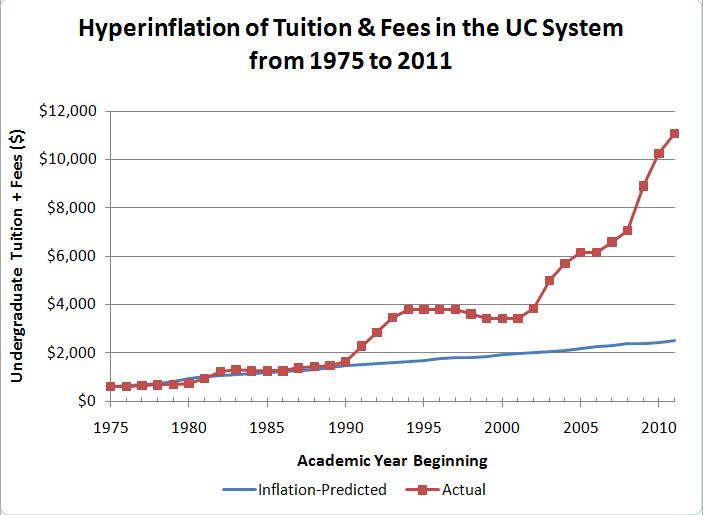

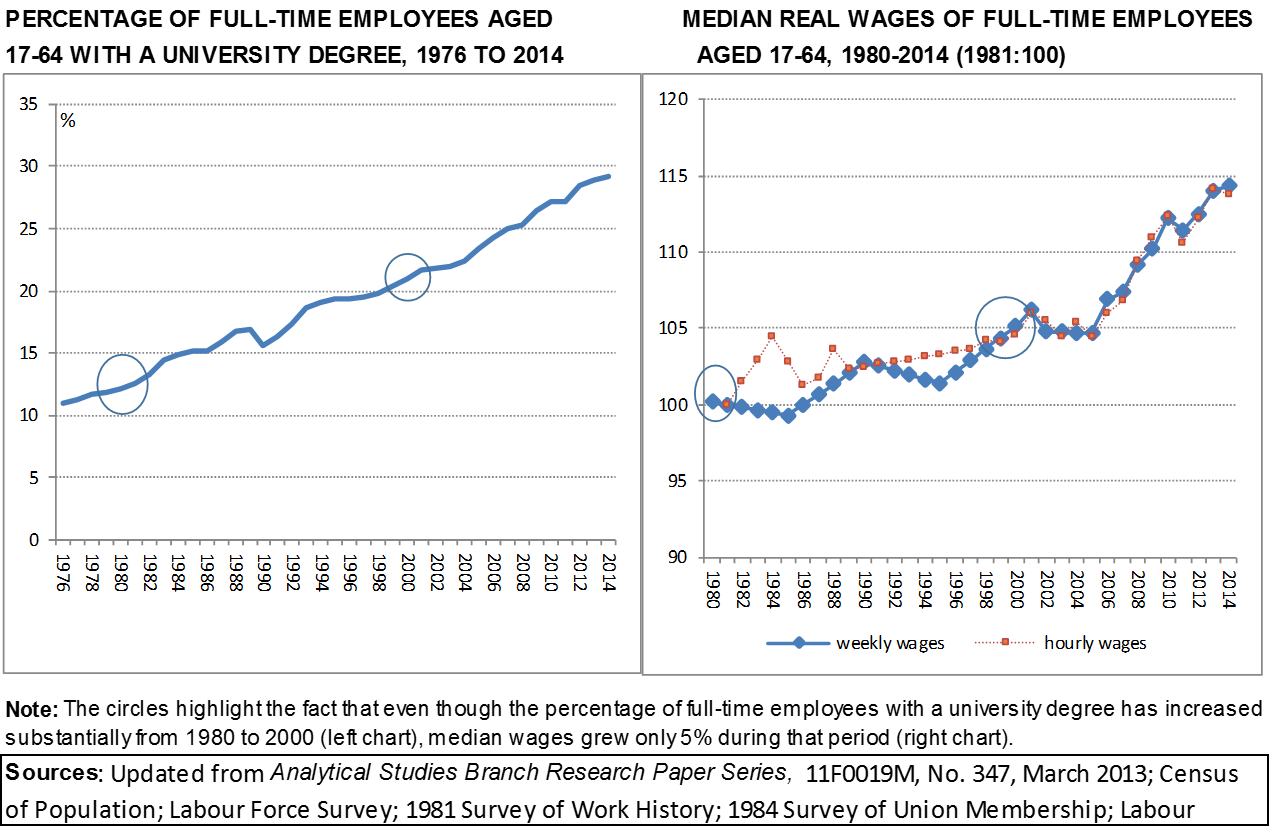
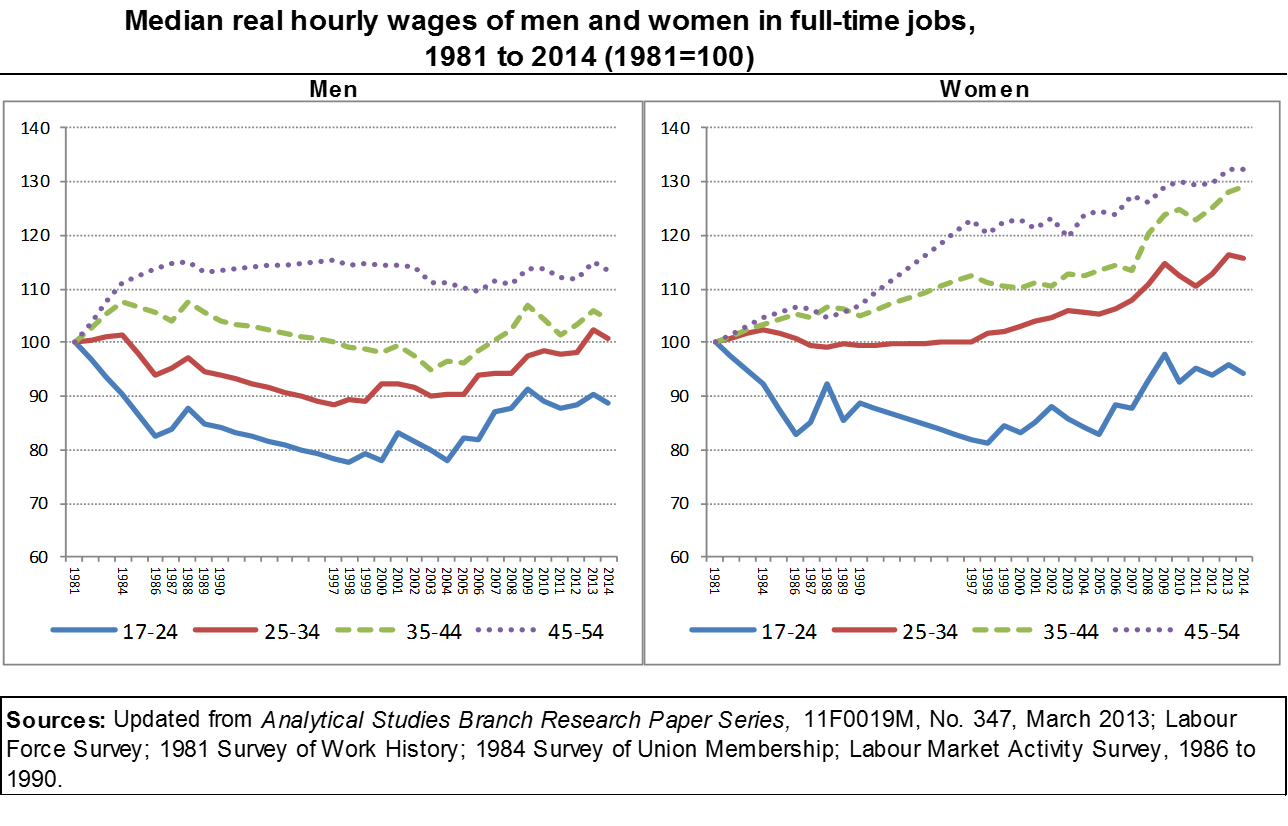
The way this manifests in reality isn't millions of people all doing a cost/benefit calculus like this and coming to the rational conclusion they can skip college. What happens is that slowly, the meme that "Jim went to college and he doesn't seem better off" seeps into the collective consciousness. More and more people start running into this evidence, and reconsider mortgaging the house (figuratively) to send their kids to college, and the upward pressure on college tuition starts to lessen.
After a while this meme that college is a tradeoff becomes well established, and it becomes common knowledge that you think hard about it before you send your kid to college. The underlying reason is something like "You can make a better return in principle investing in the S&P" but the way it becomes a force in the real world is by a collective bayesian reasoning process we all engage in as a society.