First, I think the ability to DO THINGS is the great equalizer at this point. Being a do-er lifts you out of poverty (or at least out of poverty's worst resting state). Being a do-er expands your network. Being a do-er prolongs your life (people with jobs/daily activities tend to live longer healthier lives). The best part about this is that technology has made it easier to become a do-er. You don't need as much specialized education or tools, and trial and error is free.
Secondly, education's place as the great economic equalizer has weakened because we have weakened the education. In public schools (the most widely used education institutions in the US), kids are just shoveled through. Why? We put an emphasis on standardized testing and graduation rates while also chronically underfunding schools. That leads us to lower quality/quantity of teachers who are told to march to the drum of hitting numbers. The emphasis on "just graduating" pushes teachers to push kids through, event when they have not actually learned anything. That same philosophy then propagates to college, where TA's want to research for their Masters/PHDs, not teach. You then get a "working class" with no real skills/education/ambition... they do not "do", which leads back to my first comment.
I agree with your second point that we have over-fitted education to optimize standardized test scores to the determent of encouraging intelligence.
But at least from my personal network developed from growing up in a working-class town and eventually living in extremely wealthy neighborhoods in extremely wealthy cities I have not noticed a strong relationship between "the ability to DO THINGS" and someone's social or economic status.
I've known working class people who grew up poor and who had amazing hustle and through a combination of intelligence, luck, and hard work they clawed their way into the lower-middle class and set up their kids for even further success. I know even more rich people who inherited companies that they weren't interested or competent enough to run, or who got positions that didn't really require much DO-ing on their part by leveraging family connections. So when I picture someone with no real skills or ambition ambition I usually imagine a neighbor who grew up in the "owner class" and when I picture a "do-er" I always picture someone who grew up "working class".
Intelligence, conscientiousness, affluence/social capital- pick any two and you get success on average. That’s about all there is to it. Success could look like making a bunch of money, starting a business, doing research, making interesting art. The point is a smart, hard working person can pretty much choose to do anything and an intelligent person will do fine with an infinite runway regardless of work ethic, etc. To the extent that college used to be a strong signal for those attributes it was also a strong proxy for success. Continually expanding college weakens the signal and the proximate worth of a college degree. In so many words, college for everyone confuses cause for effect - cynically, it’s not universities that make people successful, it’s that people who will succeed in life are overwhelmingly selected by and go to college- moreover, better colleges tend to matriculate people with greater quantities of those attributes. If college ceased to exist, the same cohort would still come out on top. See also, the vast majority of graduates don’t work in their major (education as a signal).
This is painting a bit too broadly - a degree still shows that you can jump through pointless hoops which is valuable to employers and some degrees are valuable in and off themselves because they gate professions that are necessary for society (medicine/engineering). I’d also point out that colleges historically ignored large pools of candidates from certain demographics for political reasons. I suppose there is probably some learning that manages to happen once in a while too, which is worth something if not the cost to society of fueling the higher ed apparatus.
> Intelligence, conscientiousness, affluence/social capital
Agreed that these are important factors in success, but in practice they don't seem to be equivalent in importance.
An unsuccessful person who lacks intelligence or conscientiousness but was born into affluence in the US is more likely to remain higher on the socioeconomic ladder than a successful person who has both intelligence and conscientiousness but was born poor.
That said, I believe that with hard work and intelligence it is possible for someone to move up no matter their starting point and we should celebrate the famous outliers who lept up the ladder. But it's also responsible to acknowledge that they are famous because they are outliers and that most people seem to end up within a rung or two of their parents.
> An unsuccessful person who lacks intelligence or conscientiousness but was born into affluence in the US is more likely to remain higher on the socioeconomic ladder than a successful person who has both intelligence and conscientiousness but was born poor.
Are you using the same scales here? If the affluent person was 1% you should take a top 1% person in terms of intelligence or grit. If the affluent person was top 25% in intelligence then the other person should be in a top 25% income family. (top 25% intelligence isn't even 110 IQ, so not high at all)
It isn't fair to take a bottom 10% person with top 2% intelligence and compare that to a top 0.1% in terms of wealth and top 25% in terms of intelligence, but that is the kind of argument people usually makes.
It's a bit hard to use a consistent scale given the non-linear utility of money/intelligence/grit and the subjectivity of measuring the latter two.
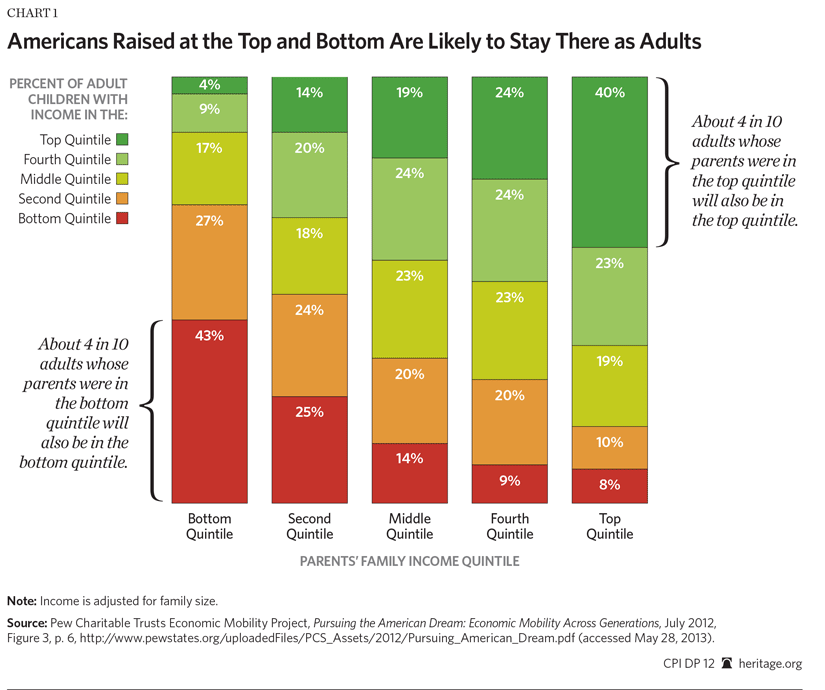
But another way of thinking about it is to look at the research on economic mobility. [1] For example, someone whose parents were in the top quintile is more likely to end up in the top quintile than anywhere else, followed by the next-highest quintile, etc and is much less likely to end up in the bottom quintile. Whereas someone born in the bottom quintile is more likely to remain in the bottom quintile, followed by the next-lowest, etc and is much less likely to end up in the top quintile.
One way to interpret that data is through the lens of the just-world hypothesis. This assumes that the United States is a meritocracy and that people will eventually end up at the correct quintile based on their personal effort and characteristics. And if there happens to be generational social stratification then it's probably due to intelligence and grit being hereditary.
Another way to interpret it is that the people with resources have instituted rules and systems that increase socioeconomic inertia so that they can pass as much of their status on to their children as they can while still allowing for enough mobility to prevent a revolution.
Having met, worked with, and taught people in the top and bottom quintiles, I do not find the first hypothesis compelling. That's not to say there is no movement, and those people I have met who have climbed the furthest are also some of the most intelligent, hard-working people I know. But telling them fairy-tales about meritocracies is not helpful -- they need to be prepared to fight long odds and work significantly harder to climb up than someone who is basically already there.
>I have not noticed a strong relationship between "the ability to DO THINGS" and someone's social or economic status.
Are we talking status relative to others or relative to the starting position?
There will always be the deadbeat child of someone wealthy who's still wealthier than you but all the "doers" I know have climbed the socioeconomic ladder at least a couple rungs in their adult lives.
The quoted statement was referring to absolute socioeconomic status.
I agree that relative movement is possible and I also know a lot of extremely hard-working people (both rich and poor) who have been successful and climbed a rung or two in their lives.
My point was more that the average wealthy person I know doesn't seem to have a particularly greater or lesser "ability to do things" compared to the poor people I know. Whereas if the "ability to do things" was really a substantial socioeconomic equalizer then I would have expected that DO-ers would be over-represented the higher up the socioeconomic ladder you climb instead of evenly distributed at each level. Perhaps it's different at the very top and the very bottom?
(As a contrast, in the military I found a positive correlation between an officer's rank and their ability to do things. Most of the colonels I worked with had an impressive intellect and drive, and even moreso with the generals I met.)
"Equalizer" was probably the wrong word. It's probably more like, you start somewhere, and do-ing is one of the biggest components in the delta between where you start and where you end. That doesn't mean that in one generation you overcome someone else's head start. But it's still a good, beneficial thing to strive after.
I would agree that do-ing is a major component of the delta, along with ability and a fair bit of luck. I guess my mental model would be that someone's socioeconomic status often comes down to:
starting point + (hard work * ability * luck)
(where any one of those may be positive or negative)
The real problem with this line of thinking is this conversation needs to revolve around things we can put on a political agenda, and there's no way to put "make more kids that do things" on a political agenda. We can put access to education on that agenda, and did, back in the 90s.
I don't know what the next societal band-aid will be, but it probably won't get us any closer to actual equality of opportunity. Still doesn't mean we shouldn't try.
Access to capital? The small business loan system could be modernized to support a wider variety of businesses, could incorporate grants, could be more generous - especially if we wanted to advantage certain groups - like first time entrepreneurs.
Also - think of what a better place it would be if that Don Lemon who was tired of race bating had survived and had got his wish? How sad we are where we are today - and ironically he's one of the front line contributors to it too!
Maybe you don't trust this source but there are many others like it.
This bizarre push to make everyone think that there's no meritocracy, which I guess goes hand in hand with the fashionableness of being a victim, is cynical poison being driven by people with radical political agendas.
Your example is like saying playing NBA basketball makes you taller.
His point was that there are plenty of people that don’t become wealthy even though they work hard and have hustle. And there are plenty of wealthy people that didn’t need to work hard to get it.
Looking at the self-made wealthy will select for people that “do”, but that does not imply that “do” makes you wealthy.
For any given individual "do" is almost surely better than "not do". That's the choice facing an individual as they contemplate how to live their life.
I completely agree. But I there's a middle ground between "nothing you do matters" and "you can accomplish absolutely anything if you put your mind to it". People at either extreme of the spectrum are more likely to end up disappointed with their lives than someone in the middle.
I have just decided to be four inches taller than I am /s.
I have depressed friends that I believe can’t reasonably be expected to just decide to “do”, and I have other friends that seem to naturally have an abundance of “do”.
Yes, we can learn the skill, or we can be taught the skill, but otherwise your statement seems unrealistic to me.
I think one important thing that we, as a society, need to respect is that the amount of "do" it takes a given person to do a given task is very different from the amount of "do" it takes another person to do that same task.
For example, it may take somebody who's depressed the same amount of "do" to get out of bed and eat a yogurt as it takes a go-getter, "neurotypical" [0] person to get up, cook a healthy breakfast, go to the gym, take a shower, get to work, and get through their first couple tasks of the day.
[0]: I put "neurotypical" in scare quotes because I'm not sure neurotypical is even really a thing, it's just the term we use for people whose mental makeup fits well into our society and work culture.
IMO both you and GP are correct, ultimately whether the decision to "do" helps or not relies on individual circumstance and context plus on chance factors.
>>> His point was that there are plenty of people that don’t become wealthy even though they work hard and have hustle. And there are plenty of wealthy people that didn’t need to work hard to get it.
is a trivially correct, banal point. The parent comment was implying with his "I know even more people who are rich and lazy" comment something that, while it may be true for the people he encounters, is not true for society at large.
You said “it is a myth that most rich people inherited their wealth”, which you introduced as a subject, and I don’t think his comment was trying to say anything about your point exactly, either way. He said he was talking anecdotally, i.e. he was explicitly talking about his experiences which are true by definition, and not generalising to what your experience might be.
> it is a myth that most rich people inherited their wealth.
No one here has said that. More importantly, your link doesn't dispute that either. It simply says that billionaires, who are on the extreme, don't inherit most of their wealth -- despite the fact that 45% of them at least partially did so.
I've long argued that until we send all kids, rich and poor, to academies at birth with no further contact or tracing to their parents, we won't really understand the full impact of advantages bestowed by wealthy parents.
I have only met one of the "world's richest people" on the list you linked and he is very hard working but I think the conclusions drawn from extreme outliers may not be applicable more broadly.
I think perhaps we're talking about different things? I don't think it's fashionable to be a victim or that people have no control over their fate. Hard work (along with intellect and luck) generally helps people move up in life, and the people I know who have moved up the most in their lives are generally also the smartest and hardest working, so it would make logical sense that most people at the very top have worked hard to get there. After all, not many people out there can fall down a couple rungs and still be at the top of the ladder, right?
But beyond those extreme outliers, most people in the US (which ranks 27th in social mobility according to the world economic forum[1]) seem to end up within a rung or two of where they were born. So I suppose how "meritocratic" the US is probably depends on what you mean by the word.
From your link: "“As our society has become more meritocratic, we’ve simply replaced an aristocracy based on title, class, race and gender with a new and equally persistent aristocracy based on genes, education and parenting,” Pearlstein continued. “Unless we are prepared to engage in extensive genetic reengineering, or require that all children be brought up in state-run boarding schools, we must acknowledge that we can never achieve full equality of opportunity.”"
These studies almost always point to a very limited set of the "wealthiest" for their study. And if you think about it, it's obvious that the very top of the pyramid will mostly have people who were able to concentrate wealth somehow, rather than inheritors. Often, inheritance is split between more than one person. That alone would account for a lot of inherited wealth not meeting an arbitrarily "wealthiest" category. So naturally there's going to be a lot of churn at the top.
In Washington State, for decades there was a big push to "fully fund" the schools. They finally got their way a couple years back, i.e. just about everything they wanted.
There has been zero improvement in results.
There has been no further mention of "fully funding" the schools in the press since, but the demands for more and more money for the schools have not abated at all.
Baltimore, MD high school graduation rate is under 70% [1].
They spend $18k per student [2] - more than 45 other states on average [3]
Citizens of Baltimore even elected a black grassroot mayor who understands needs of the community [4] and Maryland's police brutality is among the lowest in the country [5].
Because no matter how much better the schools / administration of it get, it all falls down if the kids don't have a culture at home of valuing education.
My sister taught in a few different low income school districts and each time it was the same thing. Probably 75% of the parents just don't care if their kid is misbehaving or straight up not attending at all. Discipline of those kids was met with accusations of racism by both the kid and the parent as a tool to stop the conversation all together. Phone calls home about performance were generally met with "its your job to teach them not mine". Almost no one showed up to parent teacher meetings. Kids who did want to learn were made fun of by other kids as "acting white".
All of this leads to administrations and teachers pushing under-qualified students through to get them out of the way. There is little incentive for them to personally invest in kids when there is no investment at home. Something has got to give.
Looks like Baltimore bit big into the charter school idea, where the cost-per-student at the school level is apparently somewhat higher (30%, $10,000 vs $7,900 judging by the first couple of pages of the per-school table). Administration is about 11% of the expenses. Interestingly, the City Schools' "District Offices" average $174,000 per "Full-Time Equivalent" for whatever that's worth.
It's not really clear to me that being a "black grassroot mayor who understands the needs of the community" is a benefit without any kind of experience managing and operating large organizations.
The operating budget of Baltimore is approximately $4B/year. I can't imagine many companies with that kind of budget that would hire a CEO/COO with Scott's resume to run it.
The sky will fall before a greedy fat cat corporate CEO will be elected as a public official - no matter what his track record in managing other people's money is.
Sure - I wasn't saying a corporate CEO would even be the right person to run a large city(though Bloomberg did pretty well relative to the expectations of a NYC mayor), but merely pointing out that businesses with operating budgets of a similar size are much choosier with who they put in charge.
In Baltimore, the democratic mayoral candidate is a shoe-in. So the Democratic mayoral primaries are actually the real election. And Scott bested his opponents in that competition with ~45,000 votes total.
So really only about 7% of the city(pop 620,000) voted for him, but that's just how the system works.
That, not unlike a lot of college misspending, was an administration issue, not a teacher issue. I, like most people don't mind paying taxes, but I want an itemized bill for my purchases and some redress when the money is misspent (I also live in WA... and the Seattle area is notorious for these types of shenanigans).
There are good schools and there are bad schools. Pumping money into bad schools doesn't help, as many urban areas have found out.
Schools are institutions and have all the inertia that any other institution has. Send a good kid to a bad school and they'll perform on that level. Send a good teacher to a bad school and they'll half-ass it long enough to get the experience on their resume and move on.
If you wanna make a bad school good you break it up and sprinkle the students teachers and administrators among schools that are doing alright. Those people mostly then go on to perform at the same level as those around them.
People vote for shoveling money at the schools because it's a feel good measure and doesn't require doing anything difficult.
A couple years back is 2019. I'm not sure you know how schools work but suddenly pumping money in doesn't dramatically increase test scores the next fiscal quarter. I think nearly everyone agrees public schools could use more funding, the debates tend to be about "on what and how much."
I looked it up, it was fully in place by summer 2018.
P.S. I didn't say "dramatically". I said "zero" improvement. Doing better than zero is as low a bar as possible. I fail to see that as unreasonable. There isn't even a plan for success.
But note that 2020/2021 school years where heavily disrupted by covid. Let's take a look back in a few years to see how they're doing, I'm not sure we can make many inferences from the limited data so far.
"The State has failed to meet its duty under article IX, section 1 by consistently providing school districts with a level of resources that falls short of the actual costs of the basic education program. The legislature recently enacted sweeping reforms to remedy the deficiencies in the funding system, and it is currently making progress toward phasing in those reforms."
Apparently the state was calling for a level of funding, but not providing the money and requiring local taxes to make up the difference. (Hence "fully funding".)
You cannot produce a baby in one month by getting nine women pregnant.
Summer of 2018 is too late for the 2018/2019 year. That gives them 2019/2020 (half messed up due to the pandemic) and 2020/2021 (half messed up and ongoing).
Since this seems to be yet another issue of a state screwing low income districts, one wouldn't expect any change in high income districts, either.
You do realize this is about where the money was coming from. The state had a constitutional mandate to fund education at a certain level and weren't doing so. Local and federal funding was making up the gap.
You won't see any impact to education because there isn't more money coming to education as a result of this ruling. Rather more money can flow from federal and local gov't to other programs (or in theory taxes could be lowered). This case is about funding sources more than funding amounts.
Anyone who thinks that this fixes education is crazy or insincere. It potentially raises just as many questions as answers. What it should do is relieve pressure from poorer communities though. It also does open the door to pass future education initiatives at the state level which require funding, which can improve education.
But the problems with education are more systemic than just the educational system itself. That said, its good that the state pick up its constitutional responsibility to fully fund education in the state.
I'm not sure you can tell much after only 3 years and one of those years schools were shut down for covid. Let's check back in about 3 or 4 years and see how they're doing.
For a student who was educated for 10 years under funding level A and where funding level B was available for 1 full school year (2018-2019), resulting in some changes in the classrooms in the districts only after some time delay after funding was approved, I'd expect to see almost no change in the spring 2019 testing. Spring 2020 testing was impacted by COVID. It's fine that we have different expectations, though.
The thing is, the "fully-funding" issue has completely vanished from the agenda. It is never discussed anymore. It's back to the same old "we need more funding to make a difference" rhetoric.
In fact, I recall the very day the legislation passed, the same advocates were demanding even more money.
I've lived in Seattle for over 40 years now. Long enough to see innumerable funding increases based on demands that "this time it'll fix the schools". Nothing has moved the needle.
One of these is wrong:
1. the way the school system is set up and run
2. our expectations of what the schools can accomplish
"The thing is, the "fully-funding" issue has completely vanished from the agenda. It is never discussed anymore."
The state was failing to provide funding to all of the school systems in the state. The legislature came up with a plan to fix that and the state Supreme Court agreed with it. There isn't much else to say there.
This is akin to expecting improvement of a building constructed on shaky foundation after increasing funding when the construction reached the 8th floor.
Does Washington do standardized testing on kindergartners or first graders? If not, I agree with your claim that there’s no evidence [in any direction] to test this specific hypothesis most precisely.
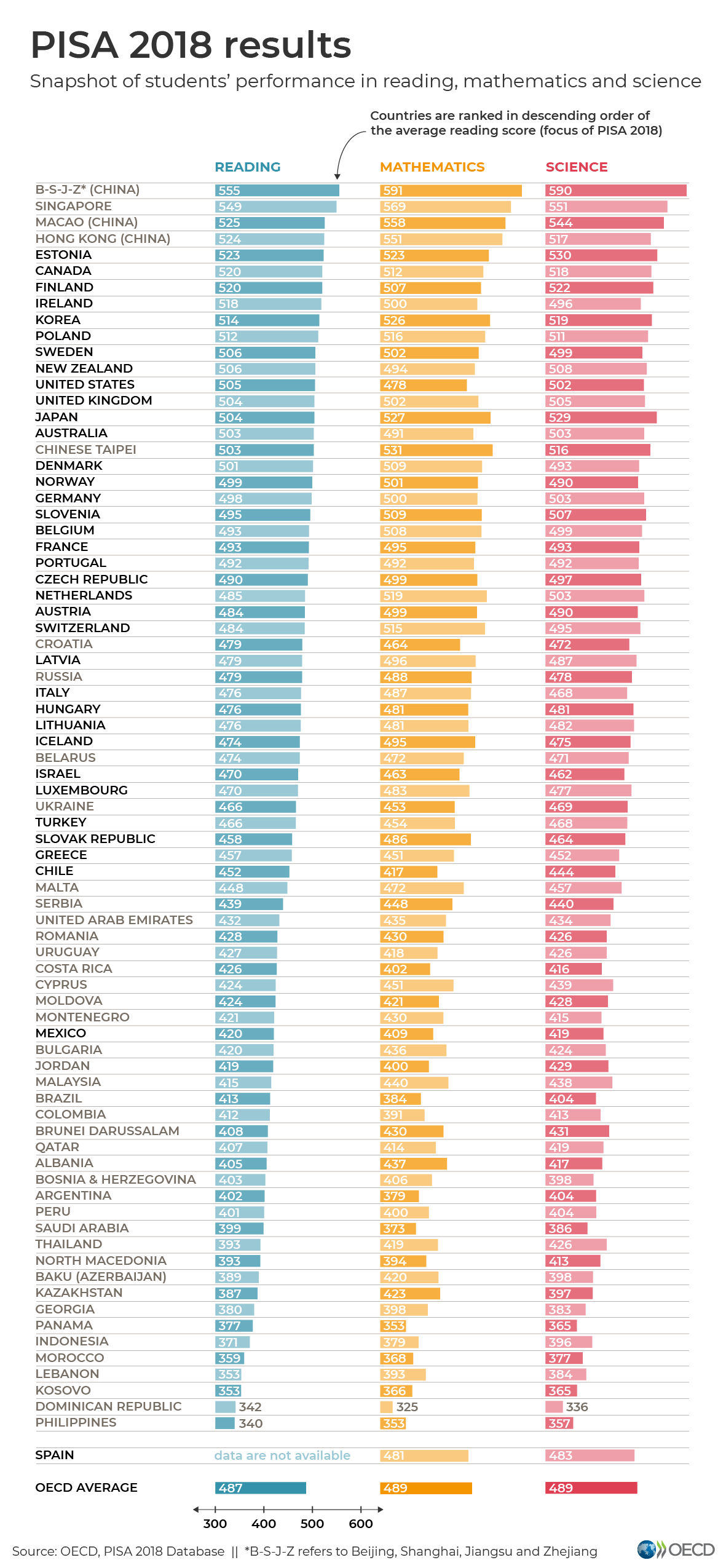
I agree with (what I believe is part of) your position that lack of money isn’t the sole (and not even primary) problem in our schools. More money alone won’t fix anything. Maybe it’ll bring back music or other specials that some kids like, but money alone won’t put our education on par with Switzerland, China, or Singapore.
It’s also probably true that whatever is actually needed will also need money, at a minimum in the transition period. It’s a necessary but not sufficient input.
Absence of evidence is not evidence of absence, plus citation needed.
Not to mention that you can only know whether the foundation improved after you build on top of it... which is something we can only observe in the future.
Note that I am not saying that you are incorrect in your assessment. All I am saying is that it's too early to know one way or another.
Institutional changes take time. Even with all that additional funding, it's still the same teachers teaching the same kids in the same schools. If the level of funding remains stable and the society gives the schools and the teachers sufficient autonomy, you may expect results in 20-30 years.
I think the real reason is buried deeper: most Americans have instilled into them that governments are not to be trusted. It's why government salaries suck, it's why it's largely filled with people that couldn't find jobs in the private sector (sad but true). This sentiment bleeds over into education, with nonsense talk of "leftist indoctrination", teachers being stereotyped as money-hungry and lazy because of their unions, and so on.
This isn't that far-fetched; the country was basically founded by rich conspiracy theorist farmers that didn't want to pay taxes.
>First, I think the ability to DO THINGS is the great equalizer at this point. Being a do-er lifts you out of poverty (or at least out of poverty's worst resting state). Being a do-er expands your network. Being a do-er prolongs your life (people with jobs/daily activities tend to live longer healthier lives). The best part about this is that technology has made it easier to become a do-er. You don't need as much specialized education or tools, and trial and error is free.
This is just the same "pull yourself up by your bootstraps" rhetoric that has been repeated for generations. The truth is that "trial and error" is not free because some people need to spend all their energy and resources treading water just to stop themselves from drowning. Having the safety net under you to catch you when you fail is not a universal truth in American society. This restricts certain classes of people from ever even attempting to "DO THINGS".
Being a do-er... what a nice, simple, seemingly intuitive concept.
I grew up in a rich area; all of my friends (even the screwballs) are in white-collar jobs, they are all "senior this" and "lead that". I'm 30. Even the people who were serious screw-ups, getting in trouble, drugs, rehab, etc. are doing relatively well - they just had unlimited re-tries.
On the contrary, my wife is from a relatively poor area. Most of the people she knew are poor, have a number of kids, and are just struggling to make ends meet in blue collar jobs.
I don't think my rich kids group had "the ability to DO THINGS". They just had every advantage & their failures were just setbacks in a nearly inevitable path to success.
For what we expect of schools they are underfunded. Schools provide before and after care outside of normal hours, they provide all 3 meals to many students. Counseling, social services, health care ... it's not just teachers in the classroom.
Now, if the US wanted to actually fix poverty and inequality dealing with the symptoms wouldn't roll down to the schools to deal with.
Negatory. Us shovels more funding per student into its public schools than almost any other country. That funding is spend poorly, mostly on administrative functions that no doubt demonstrate in great detail how great each school is.
Comparing countries by PPP doesn’t account for the cost of education between countries. A collage educated worker in Mexico is much cheaper than a collage educated worker in Luxembourg even accounting for PPP.
In fact if you compare countries by Median household income PPP. You find a familiar ordering,
Luxembourg 52,493, Norway 51,489, Sweden 50,514, Australia 46,555, Denmark 44,360, United States 43,585. https://en.wikipedia.org/wiki/Median_income
Differences in scope between each country such as what pays for school lunch programs explains much of the difference.
But still, there isn't a lack of funding in the US, not when you compare it with every other developed country. Switzerland is not a cheaper country than the US, far from that. Still, being a teacher there is a highly respected profession, and a high school teacher can make 7-8000 per month (last time I spoke with a Swiss). They still pay less per student than the US.
If you ask me, I'm going to guess that building large football practice fields with nigh lighting, driving buses on all the hills twice a day, paying 200k to non-teachers, these things all add up.
Exactly. The biggest problem with US schools is poverty. It isn't anything directly to do with the school system, but the school system is tasked with "leaving no child behind" when the thing holding many children back is poverty of their families.
To be clear, the results aren't great. We pay teachers more, we have pretty much no focus on elite athletics, less political mucking around in the actual education process.
The fundamental problem with these types of analysis is that it is the aggregate and average of a large mostly sparse country with a large population. Between Federalism, local & state politics, wealth concentration, and geographic constraint leads to some interesting and costly quirks to our school systems.
It turns out that wealthy public school districts are extremely good and compete at the top of the world stage, and poor school districts are really, really, terrible and underperform on the world stage by a substantial margin.
Could you support this with data of your own? I know that applies to university level education, but I've never seen the data for lower levels of education.
Funding in U.S. schools is super unequal. Most school funding in the U.S. comes from local property tax. But if a district has a lot of poverty, then revenue from property tax is low. That means low funding for the local school, which lowers the quality of education for students, which makes it harder for the students to get out of poverty, which keeps the district's poverty level high. It's a self reinforcing cycle, which need to be fundamentally re-structured.
>Most school funding in the U.S. comes from local property tax. But if a district has a lot of poverty, then revenue from property tax is low
This is a common myth but it's not backed up by the numbers. Poverty is (mostly) concentrated in inner cities and those inner cities typically contain large office builds which pay lots of real estate taxes but send no kids to schools. If you look around different states the highest per pupil spending is by far in the cities. As an example, Atlanta public schools spends $15k per pupil while the surrounding suburban counties are 8-10k per pupil.
that's interesting to hear, and I'll have to take your word on it for now, but I'm curious why(unless things have significantly changed in the past 6-7 years) inner-city schools are still horrendously bad. I've experienced schools in both the worst parts of Philadelphia as well as in middle-class suburbs of Philly, and the contrast is even more exaggerated than they make it seem on TV shows/movies that depict these types of schools.
Obviously the students who are raised in these high-crime areas and surrounded by a community that's significantly harsher are going to be harder for teachers to manage, and I do think this is a very big part of it, but there are some things that clearly aren't related to that(such as equipment and the quality/quantity of staff)
What we think of as school quality is mostly the quality of the students. Richer districts have, on average, students of high SES with parents that are more willing & able to help their kids succeed in school. Poorer districts have, on average, lower SES kids with terrible living situations and parents.
Having disruptive kids also makes educating them much more expensive. Discipline issues chew up a lot of resources and disrupt learning for other students. So you have to spend more to provide equal quality instruction.
And, of course, just because they spend more money doesn't mean they spend it on things that help educating students.
Perhaps the people should provide the teachers /school with more ways to punish disruption. Let schools expel and suspend disruptive students. Don't let bad actors hurt the rest. But from what I've heard, they do the opposite.
This might have been true at some point in the past, but it is very much false now, and has been false for at least a decade or two. If local property tax revenues are low, the shortfall is made up for with state and federal funds. Just look at the data: worst performing urban schools often have more funding than better performing ones in rural areas or in smaller towns. If you don’t believe me, just show me a few examples, it shouldn’t be too hard to come up with, if the pattern is as strong and casually important as you suggest it is.
"All but one of the several multi-state studies find a strong link between spending and outcomes –indicating that money matters on average. Importantly, this is true across studies that use different data-sets, examine different time periods, rely on different sources of variation, and employ different statistical techniques. While one can poke holes in each individual study, the robustness of the patterns across a variety of settings is compelling evidence of a real positive causal relationship between increased school spending and student outcomes on average. However, an examination of single-state studies suggests that,on average, money matters, but that this is not always so in all settings or in all contexts."
The amount of local funding for public education varies wildly from state to state. In New Mexico in 2018, only 15% of public school revenue came from local sources. However, during the same year in Nebraska, that number is 53%.
So yes, in some states differences in local property tax has a minimal effect on school funding. But in other states, the issue is still a significant issue.
And in Nebraska, can you find a strong correlation between funding levels and schools performance? I asked you for examples, can you find any?
Importantly, if in many states the school funding is equalized, and yet we still have wide difference in performance between good and bad schools, why would anyone expect that changing funding structure in Nebraska would change school outcomes in a significant way? If school funding levels in Michigan are similar across the board, with worse performing schools getting more, not less funding than better performing ones, clearly something else than funding is responsible for these disparities, isnt it? Lastly, as funding disparities have been equalized in many places in past decades, have we ever observed lower funded schools catch up to better funded ones?
The school funding differences are quite obviously not responsible for disparities in school outcomes, and it is beyond clear to me that the entire goal of this narrative is not to improve schools, but instead to funnel more tax funds to politically allied groups, using children as a cover.
> can you find a strong correlation between funding levels and schools performance
In New Zealand there is a negative correlation.
The performance of schools in New Zealand is very strongly correlated with “the decile” which is how wealthy the area where the school is located (i.e. how well off the parents are correlates with how well their children do academically).
The schools in areas of poverty get more state funding, but the results at those schools are very poor, because the parents are poor, and poor parents often cause poor students (edit: cause is the wrong word here, sorry).
Our government otherwise funds schools per student at a fairly flat per capita rate, so there is not the variation in school funding (ignoring private schools) like that which occurs in the US.
I am just pointing out that in New Zealand the main correlation for average student ability is their home, not their school.
> I am just pointing out that in New Zealand the main correlation for average student ability is their home, not their school.
Right. Whatever the casual mechanism is at play, increasing funding of schools is not going to make much of a difference for the kids -- it will, though, for employees of the school systems.
Maybe, but I went to one of the worst funded schools in my state (MN at the time) and got a great education. We were a rural area with only a small tax base, but everyone cared that we got a good education and so the money was carefully spent to give us a good education with the limited money. In fact as a kid I commented that it didn't seem like we had poor funding as we had a lot of activities and great education. Then it was explained that the historical mining areas of the state had a much better tax base, as did the inner city schools (they got the taxes from expensive downtown properties), and even suburban districts had industrial areas to tax.
Most first world countries are well above the US’s 5% GDP in public education expenditures; schools absolutely are underfunded in the US.
It may also be unusually poorly administered, but this isn't like healthcare where US public spending is on par, as a share of GDP, with other developed countries despite doing far less with it.
We're also still using the same educational model we were in the 1700s. We know a lot more about learning now, and that model makes no sense.
We know young kids learn through play yet we continually force them to learn through the equivalent of lectures.
For older students that can learn through lectures, we insist on giving in-person lectures. This means that 99.9% of students are taught by sub-par lecturers. Highschool and college students are foolish to attend lectures person. Instead they should just watch the best in the world on opencourseware/youtube.
Hands-on lab experience and group work is useful and difficult in a remote setting but a very small amount of HS/college time is spent on that. I'd argue pretty much all in-person HS/college time should be spent on that.
We still attempt to teach the mechanics / tools first, like math and calc before the motivation. We do this even though we know that the human brain generally ignores information without utility. We should instead provide students a long-term goal they are interested in and introduce math / calc / physics as a means to achieve that goal.
It's remarkable how much the per capita, inflation corrected cost per pupil in California has gone up in 50 years.
My own elementary school (not in CA), has double the amount of staff with the same pupil head count, plus I don't doubt that the salaries have risen faster than inflation and/or GDP improvements. OTOH, teachers were famously poorly paid in days of yore.
You say paid poorly, but exactly how poorly? Usually the upfront pay was offset by a good pension, medical benefits and having the summer months off was a huge benefit.
Teachers around here now make the average staring salary for a Bachelors Degree and still get the good benefits and time off.
I have a friend that was a teacher in palo alto at a public school, she taught special ed and was making 86k, not exactly poor but I could imagine a teacher at middle school or high school making more.
Sure. I can agree with that. The point being that, with the current schooling infrastructure, the amount of money needed to do what needs to be done isn't there.
>First, I think the ability to DO THINGS is the great equalizer at this point.
How do you define that though?
Do you consider someone working a minimum wage job full-time to be in this category? Someone making $15-20 an hour but without any real opportunity for advancement?
It's probably oversimplified but the idea is there. Maybe it would be better put as "the ability to do things the person next to you can't or won't do".
Being a cashier for a fast food joint on night shift is absolute hell on your mental and physical health, it takes a ton of endurance, and is all around not very pleasant. But a lot of people have that endurance and the ability to power through it. Being a cab driver takes a ton of time and hours and puts your safety at risk continually...but a lot of people know how to drive and risks is something anyone can take (even if they, rightly so, would rather not to).
Building a web app in a cushy office (or working from home!) is honestly not that hard and rather enjoyable, but right now not that many people can do it, so it pays well. As tools become friendlier and the knowledge spreads though, it very well might end up paying less for the simpler roles than the cashier or driver is. (like in the dot com crash).
It's always been about being able to do what others can't. Education, connections, capital, they're all means to that particular end. Shuffling assets in a fidelity account to set up a 3 fund portfolio isn't rocket science and will make you a lot of money, but most people can't do it because they lack the capital.
Thus, the ability to "DO THINGS". Some of those abilities can come from hard work, some come from luck, some from who you know, some because you were born to rich ass parents.
Amusing this definition of "the ability to do things the person next to you can't or won't do" basically contradicts the idea that DO THINGS can possibly be a great equalizer. Any equality that only some people can have, is pretty much by definition not equality.
I do think it can still be an equalizer, though diversity. If you can code but I can't, while I can do project management but you can't, then both our "do's" are valuable. What prevents THAT from working is that the amount of people who can do each will be different as will the demand. We're straight back at capitalism.
This speaks towards hustle culture. As a kid, I was making $20/hr plus by going door to door raking leaves. The narration of 'get a job ' is not for doers, but rather 'go produce value for others'.
Have you ever met a person who eats rice and ramen and whatnot all week so they can make it to their next paycheck(s), and eats next to nothing before pay day because they literally just don't have money to buy food to eat. You want them to quit their job(s), and what, figure out something else in ~4 days before they have 0 dollars left for food & electricity & rent & internet(if they have it at all).
I know a couple people like this, and I know there are many out there in this situation with several kids to worry about. Maybe your aware of this and were referring to people with disposable income and savings, but those people don't really need to do something else because apparently things are working out for them better than the vast majority of people. I don't want to assume too much but this comes off sounding really badly.
Never-mind the fact that these low-paying jobs exist and someone will have to do them, therefore some percentage of the population will be in this situation, often despite working several jobs and dealing with a lot more than most of us have to on top of that. I don't see how anyone can have this view without also implicitly stating that some % of the population are necessarily just not good at doing things and deserve to live through that kind of struggle because of it.
1) There's no reason you can't look for a job before quitting your current one. In fact, you should always be looking for better opportunities, no matter how much you like your current job.
2) Is it harder for parents, single or not? Yea. Yet these are the people you most often see make the change. They have the right motivation, moreso than singles their age without kids.
3) The fact that the low paying job exists, and will always exist, doesn't mean you have to be the one to do it forever. Or anyone else.
You get a job, you get experience, you move on to a better job, and someone with less experience takes over your old job. The world turns.
>some percentage of the population will be in this situation
Yes- entry level workers, kids, and maybe some people that are rebuilding their life. They're not meant to be careers.
This is a great take and is simultaneously optimistic and pessimistic. I think you're optimistic about the right things though in that getting stuff done at an individual level has never been more valuable. Likewise, learning facts in an academic setting has never been less valuable. School teaches and kids learn, but it doesn't teach the right stuff anymore.
Yup. Having an education doesn't do anything (as in diplomas). Being educated does. The quality of the public schools matter a lot.
As for college... It was a differentiator, not an equalizer. When so many people have college degrees, they're just an expectation and all of a sudden you raised the bar, so people who don't have them are even more screwed.
The analogy I always like is MMORPG expansions/level cap raise. Every time the level cap raises, new players to the game take that much longer to catch up. The developers then need to add a bunch of "catch up" mechanics to artificially close the gap.
I feel like the US has to split into separate countries and maybe adopt a system like EU. Everything in the us gets so generalized no one has any agency over it except companies with enough money to push a narrative across 300 mil people. Either that or the way you think about US has to change. I find it hard to believe every state does things the same way but still you say "US" has a problem and not Georgia or California. Why not think locally to your state which has a lot of independance in how it does things? Maybe then it would be easier to push reform
The US could create an amendment to say something like "powers not delegated to the United States by the Constitution, nor prohibited by it to the States, are reserved to the States respectively, or to the people". Which would give individual States the right to control a lot of things. Is that kind of what you're thinking?
To anyone who does not get the irony in the above, this already exists as the Tenth Amendment. It is effectively ignored because it is considered legally redundant with the Constitution itself.
I disagree if it was effectively ignored, a lot of things would be better and alot of things would be worse. While the lines between state and federal power has even diminished, it’s very much still there.
The interstate highway system and the freedom of movement between the states greatly restricts the ability for states to have meaningfully different policies from one another. A popular policy that works for the current population of the state may become an economic disaster once residents of other states move in to join the action.
That’s exactly how the USA was originally designed to work, and how it originally worked up until early-to-mid 20th century. It was only then when a bunch of power grabbing politicians, along with a bunch of complicit elements in the judicial apparatus, have twisted the US into completely different system that we now get to suffer from.
It’s not just power-grabbing politicians. It’s what the populace desires. Look at the overwhelming support for something like universal health care. That is a massive expansion of federal power.
A large number of Americans desire massive federal power.
> A large number of Americans desire massive federal power.
It's complicated.
A 2016 Gallup poll (https://news.gallup.com/poll/27286/government.aspx) revealed that 55 percent of respondents preferred power to be concentrated in state governments; 37 percent preferred the federal government.
Another group of surveys (https://www.cato.org/sites/cato.org/files/pubs/pdf/pa759_web...) shows that Americans strongly prefer state and local governments to lead on health insurance (62 percent, versus 38 percent preferring federal leadership), welfare (68/31 percent), unemployment (55/26 percent), education (75/25 percent), pre-kindergarten education (71/25 percent), transportation (78/22 percent), law enforcement (73/20 percent), job training (75/20 percent), housing (83/18 percent), and paving roads (77/9 percent).
The problem with the universal health care polls is that 1) "universal healthcare" is such a broad term that can mean anything from NHS style single provider to Switzerland style universal privatized systems, and 2) it's entirely possible to favor a "universal healthcare" system that's administered and funded at the State level as opposed to the Federal level.
Don't conflate the desired political goal with the political source.
There's no reason states couldn't implement it if they wanted to. And some did.
Which is part of why it's such a power grab. The "universal" part of it goes against the entire concept of tiered / federated / rupublic type of government.
It's dogmatic. Politics has become religion, especially to the non-religous, and most don't realize it.
"Catholic" means "universal". We can't allow States to have their own laws, when they might not align with the Truth. Praise Science!
Because you pay your taxes to the central entity that is running those programs. In the US, the majority of taxes go to the Federal gov't, not the states.
The federal government should then stop levying those taxes, so that states could then collect more and run their own programs. The federal Medicare tax is already so high that the federal healthcare spending per capita is already exceeding healthcare spending per capita in almost all European countries, yet Medicare/Medicaid only cover a fraction of the population. Seriously, with the same amount of money (in per capita terms) that US government already spends on healthcare, UK or France are able to provide universal coverage. If the federal government is too inept to do the same, it should give up trying, and instead make space for states to do that instead.
Most European countries are of the size of US states. If they can run their healthcare just fine, it only makes it dumber idea to try to centralize it in US at the federal level.
In Canada, the single payer healthcare system is Provincial, not Federal, and yet the income tax brackets at Canada's Federal level are roughly equal to those in the US (in fact are actually higher for some earners).
If we wanted to take Canada's cue, there's plenty of room to increase State tax rates even if we did nothing about Federal taxation. Or we could take Switzerland's cue and totally flip the distribution, where Cantonal taxes far exceed Federal income tax.
I'm not sure how that would work without allowing the individual states to act like separate countries. E.g. by being able to put tariffs on other states, sue them for their externalities, place restrictions on people who don't live and work in the state, etc.
At that point, I'm not sure what you gain by not being completely separate countries.
What you could do is to enumerate powers of the federal government, and one of those powers would be to “to regulate Commerce with foreign Nations, and among the several States”, with the understanding among the authors of the document that “regulating commerce” means regulating trade and tariffs, so that nobody then can misinterpret it as giving the federal power to regulate anything they want by arguing it affects interstate commerce.
Honestly the first two should be a federal thing. I just don’t understand how a federal election has 50 different ways of doing and qualifying things and not one way for a position that affects the whole country. If we were to pull up on a Alien planet and see this kind of election style we would ridicule the ridiculousness that is the US election system.
Don’t get me started on how it makes any sense that we don’t leverage the power of the government for something as crucial as life. Why in the god damn fuck is giving birth in this country not free?
We’re 50 different states that are, in theory, supposed to be quite independent of each other. (In some ways, even more so than the EU. For example, the EU has no equivalent of our anti-commandeering principle. The EU can direct national administrative organs to carry out task, while the U.S. federal government can’t direct state administrative units.
The issue of why taxpayers won’t pay doctors to deliver children is orthogonal to the point I’m making. If taxpayers in California or New York want to do that, they should do it.
> We’re 50 different states that are, in theory, supposed to be quite independent of each other.
That ship sailed over the horizon a long time ago, like at the latest with the adoption of the 14th Amendment nearly 150 years ago. When you took the oath to become a lawyer, you didn't swear allegiance to whatever state you happened to be living in at the time. And sociologically, I'd venture that most U.S. citizens think of themselves as Americans, not as Marylanders or Texans (OK, granted, a lot of Texans think of themselves as Texans first, which isn't a good thing).
> When you took the oath to become a lawyer, you didn't swear allegiance to whatever state you happened to be living in at the time
My New York bar oath says: "I do solemnly swear (or affirm) that I will support the constitution of the United States, and the constitution of the State of New York." You don't swear loyalty to the constitution of a mere administrative subdivision.
> And sociologically, I'd venture that most U.S. citizens think of themselves as Americans, not as Marylanders or Texans (OK, granted, a lot of Texans think of themselves as Texans first, which isn't a good thing).
I think that depends on the context of the question. If you ask people in the abstract, I agree most people identify as American first. But people have very well-developed affinities and prejudices about their states versus neighboring states that verge on nationalistic sentiment. Texans do, of course, which is something I find charming. But so do Oregonians. Having spent much of my adult life in Georgia, I can tell you exactly what I think about Floridians, Alabamans, South Carolinians, Mississippians, etc. (A lot of these sentiments play out through college football, the way they play out through soccer in Europe.) My wife, being a fifth generation Oregonian, would not move to California to save her life. Having relocated to Maryland, we have both cultivated an active dislike of Virginians (what the heck are they doing here, with their license plates?)
> My New York bar oath says: "I do solemnly swear (or affirm) that I will support the constitution of the United States, and the constitution of the State of New York."
The words "looking at your bio, I'd guess" are so reliably a marker for bad HN comments that I'm a little surprised the site doesn't auto-flag such comments. The guidelines ask you not to write things like this here.
I'm guessing you were my downvote, and yet I can't downvote your comment.
The relevant text of the 14th Amendment here is its opening declaration: "All persons born or naturalized in the United States, and subject to the jurisdiction thereof, are citizens of the United States and of the state wherein they reside. No state shall make or enforce any law which shall abridge the privileges or immunities of citizens of the United States ...." [0] (Emphasis added.)
In other words: Under the 14th Amendment, United States citizenship takes precedence over state citizenship — kind of like the old boast, civis romanus sum: I'm a Roman citizen. (The implication was: fuck with me at your peril.) Cf. Act 22:25: "As they stretched him out to flog him, Paul said to the centurion standing there, 'Is it legal for you to flog a Roman citizen who hasn’t even been found guilty?'"
To be sure, there are Lost-Cause diehards who claim that the 14th Amendment never actually came into effect because the Southern states refused to ratify it and so it didn't get the necessary 3/4 of states; courts have consistently rejected that claim [1]. If anything, the former Confederate states should be grateful that they didn't get the treatment that the Allies meted out to the Germans and Japanese in 1945 and afterwards — one recent commentator, remarking on the outrages perpetrated in and by the post-Civil War South, tweeted that "Sherman should've mowed the deep south like a lawn, making multiple passes." [2]
You(ABA/Federal Gov't) claim us as subjects to your federal state. Notice the COVID bailouts going to the highest cost of living states with the largest state income taxes and budget deficits/debts? I don't really give a fuck about equal protection for states when the administrators are wholly removed from accountability. Notice the gun laws in DC and NY - the political and financial centers? Weird how the powerful in those states aren't accountable for their failures, always a bailout at the expense of labor for their financial and political quandries.
How many times in the last couple decades have the financiers revealed themselves as liars while paying no personal cost for their lies and deceits?
In an above comment -
" > My New York bar oath says: "I do solemnly swear (or affirm) that I will support the constitution of the United States, and the constitution of the State of New York."
Note the order. "
The 14th Amendment is a fraud not because Southern states didn't ratify it while not apart of the Union. It's a fraud in the lack of enforcement against the power structures that initially enacted it.
I don't believe you'd see it my way, I'm thinking because it's a bit - to quote Upton Sinclair, "It is difficult to get a man to understand something when his salary depends upon his not understanding it."
My homework extends to knowing you're a lawyer, and given you do contract law for start ups I'm willing to bet you help them steal via the protections of the corporate veil.
Again, the 14th Amendment says we're all equal before the law but I don't see a lot of boards / c-suite scumbags going to jail or having the previous decades of 'earnings' clawed back. And definitely not seeing any corporate death penalties. As far as I can tell, you're one of the dudes that helps them achieve a superior legal status to mere flash and blood humans like myself.
> I just don’t understand how a federal election has 50 different ways of doing and qualifying things and not one way for a position that affects the whole country.
This is how it works in the EU as well, and per the GGP commenter, the prescription was for the US to be more like the EU, which is how it was set up in the first place anyway per the GP comment.
> Don’t get me started on how it makes any sense that we don’t leverage the power of the government for something as crucial as life. Why in the god damn fuck is giving birth in this country not free?
Except there are several different viable ways of providing universal healthcare. You can have a single payer system like Canada/Denmark/American Medicare, you can have a single provider system like the UK/Veterans Administration, you can have a purely private non-employer funded system like Switzerland or the Netherlands, you can have a public-private mix like Germany, or only universal catastrophic coverage like in Singapore. Each approach has its own trade-offs, and those trade-offs are political in nature, where some States might prefer one set of trade-offs and others may not.
This is exactly how Canada's single payer healthcare came about. Saskatchewan was the first Province to offer single payer in 1947, followed by Alberta in 1951, etc. By 1961, all Provinces had some form of a single payer healthcare system. To this day, Canada's single-payer system is Provincial, not Federal. The Federal government provides supplemental funding, but that only happened after each Province independently developed its own system, and only after all Provinces unanimously agreed to the Federal health transfer. As of 2020, Federal transfer payments in Canada only amount to 22% (https://www.cmaj.ca/content/192/45/E1408).
Because people get paid to do those jobs, and the government mandating that they do it for free, or for some reduced price is theft of labor. We've already fought that war.
This isn't "over reach of federal government" - it's ensuring that the citizens of anyone who wants to be part of a certain association have certain basic rights.
> In order to send representatives to the European parliment, the EU requires that representatives be elected in fair elections
And the US Constitution requires that its member states have a republican (small r) form of government.
> Part of being a member state of the EU requires having access to some sort of public healthcare system
First of all, that's not even true; the only requirement is that the member states accept the European Health Insurance Card regardless of how the healthcare is financed (publicly or privately). The Netherlands, for instance, gets its healthcare primarily through private health insurance. An EU-like approach to healthcare in the US would be for the Federal government to establish a common standard that can apply across disparate health insurance systems that are implemented, funded, and administered by the States, but that's not really what the D party is selling (as far as I know).
Environmental Policy (EPA). Family policy (gay marriage, transgenderism, etc via the Supreme Court). Healthcare (Obamacare). Education (no child left behind, the dept of education). Higher education (federal backed guarantees). We can go on...
This has been one of the least informed comments I have read recently - most of the things you are attributing to democrats are were actually republicans.
The concept of an individual mandate goes back to at least 1989, when The Heritage Foundation, a conservative think-tank, proposed an individual mandate as an alternative to single-payer health care.[121][122] It was championed for a time by conservative economists and Republican senators as a market-based approach to healthcare reform on the basis of individual responsibility and avoidance of free rider problems. Specifically, because the 1986 Emergency Medical Treatment and Active Labor Act (EMTALA) requires any hospital participating in Medicare (nearly all do) to provide emergency care to anyone who needs it, the government often indirectly bore the cost of those without the ability to pay.[123][124][125]
It was coauthored by Representatives John Boehner (R-OH), George Miller (D-CA), and Senators Ted Kennedy (D-MA) and Judd Gregg (R-NH). The United States House of Representatives passed the bill on December 13, 2001 (voting 381–41),[8] and the United States Senate passed it on December 18, 2001 (voting 87–10).[9] President Bush signed it into law on January 8, 2002.
While a lot of that is true, it’s also pretty pointless to argue about what political labels people used decades ago as if that is relevant to the merits of political groups today with those same labels. Political parties and other such labels drift significantly over time. You might as well argue that the GOP is great because John Milton was a “republican.”
I'm not sure how to respond to this comment. The comment I responded to asked for examples of things the federal government nationalizes, with the support of democrats. You seem to believe that a policy being championed by a republican president means that it is somehow 'not democrat'.
This is similar to how people make out Iraq to be a republican war even though in enjoyed broad bipartisan support.
The facts you mentioned here are obvious. I didn't think they needed much spelling out for moderately educated Americans.
If the question is 'do republicans nationalize things'? The answer is... yes. All national politicians do.
I hate how we literally split everything, including bipartisan things up, into neat little democrat/republican boxes.
I mean... duh. I'm just pointing out the general trend towards nationalizaton. It's not just a matter of democrats. Republicans do it all the time against their own values.
I think my kids would look at me strangely if, after asking me what to do in life, I said, “DO THINGS.” I think more specifics are in order. Like, do what? Or, what are the things worth doing? There’s just not enough information available on what things have ROI.
Holy hell dude, are you calling the working class lazy and the professional class hard-working?! This tells me you don’t have a lot of contact with the working class. The working class busts their asses while most software devs I know work about 2 hours a day from their couch in pajamas.
Someone who works at a warehouse or fast food joint is a much harder worker than a software architect. Probably also working 60-80 hours a week across a couple jobs just to pay rent. Meanwhile I just spout bullshit all day and play corporate politics without really knowing anything nor having much ambition, and I’m somehow worth 20-40x what someone at an Amazon warehouse is.
Americans glorify hard work while undervaluing efficiency.
For example, I often hear fellow Americans brag about how many hours they put in or how intense their work is. This is true all the way from the blue collar trades to the most white collar (management consultants are notorious for this).
In reality, it's better to use fewer hours to accomplish the same goal. There is no inherent value in applying more time to something.
The truth is the SW architect, the CEO of many corporations, etc are more efficient than the lowest level workers. I know this is not popular, and it makes many uncomfortable, but it is undeniably true. This is because both the SW architect and the CEO and the management consultant and the operations manager, etc, are all into automation, which is an efficiency increasing process.
This is not just automation in terms of building robots (which maybe a SW architect is involved with), but also automation in terms of making the lowest level workers replaceable by developing corporate policy, procedures, etc. The CEO provides the service of automating investment returns to his/her company's shareholders.
In this light, it is obvious why certain professions earn more. They are way more efficient with their time.
> I’m somehow worth 20-40x what someone at an Amazon warehouse is.
Because your work is quite a bit more efficient. I mean, like many here, I write software for a living. Once my software component works, it works. It will work forever with minimal maintenance once it stabilizes, and will provide the company with many many years of value, even if I and my team were to drop dead. In other words, we are automators. The automators are always going to do better.
Anyway, going back to the lazy/hard-working dichotomy. These terms are used with unnecessary moralistic overtones. There is nothing wrong with working two hours a day, and there is nothing inherently good about working 14 hours. We need to stop acting as if those who work more have some inherent virtue. This leads to all sorts of social pathologies such as the toxic version of the bootstrap mentality.
> The truth is the SW architect, the CEO of many corporations, etc are more efficient than the lowest level workers. I know this is not popular, and it makes many uncomfortable, but it is undeniably true. This is because both the SW architect and the CEO and the management consultant and the operations manager, etc, are all into automation, which is an efficiency increasing process.
I don't think this has anything to do automation, it's more likely due to their ability to delegate
And I don't mean their skill with delegating I mean the fact that they are in a position where they can tell other people to do their work for them.
It's easy to appear super productive if you are in a position to claim the productivity of other people as if it were your own.
its not just delegation, but the importance of strategy. In large orgs, things go fairly slow but wide. It is beyond importance that the direction set is a good direction. This requires talking to people, understanding the market, understanding trends, and the boiling it down into what the org should focus and do versus stop doing.
Uh I don't know what management consultants you've met but as an industry it is the opposite of efficient. It's an industry that's built on stealing value from the productive bits of society by leveraging the social status of it's employees. Some software is certainly very efficient and productive but after many years in software I can tell you that a lot of software work is repeated broken window fixing. It's not about lazy / hardworking it's about those with social capital and those without. Those with it prosper and those without it flounder.
I used to be a management consultant, so I have a lot of experience and a lot of insider knowledge.
Management consultants automate away the explanations a CEO or executive has to give. They can just point to their superiors and inferiors and say 'Bain said to do blah'. No one's going to get fired for buying Microsoft, or listening to McKinley.
Inside the industry itself, the actual consulting is heavily automated. Consultants are mainly glorified data entry technicians, inputting numbers into pre-built models and using pre-made assets to assemble a good-looking presentation. There's some skill to it in terms of speaking, but the process is heavily automated to make it extremely efficient.
It definitely saves the executives time, which is why they'd hire them.
> Some software is certainly very efficient and productive but after many years in software I can tell you that a lot of software work is repeated broken window fixing.
There is a common fallacy I see often when driving on the freeway during rush hour. Some people seem to believe that if they just took the surface streets, they would get to their destination faster. That is because they are spending more of their time moving on the surface streets, but on average they're still going slower than the freeway people. In short, they trade a large variance in a higher average speed on the freeway for a lower variance in a lower average speed on the roads.
This analogy extends to hard work. Americans glorify the worker taking the surface streets -- i.e., the one actively "doing" something even if the amount of work being done per unit time is very small -- rather than the one in the stop-and-go traffic -- the architect who works two hours a day intensely, and then takes time off, or the SW engineer who works for 30 minute stretches and then rests to compile his software. In reality, the latter two get to their destination faster, even if it seems like they're doing nothing most of the time. For some reason, the steady work is valued more than the high acceleration/high deceleration work.
That is to say you identify frustrations with software (repeated broken window fixing) which certainly exist, but they do not detract from the fact that the automaton enabled by software is still incredibly valuable. I don't see how this is even debatable. The increase in productivity directly attributable to software is undeniable.
EDIT; I'll point out that I ran away from management consulting. I hated it, and I have little good to say about the industry. But it's undeniable they automate away the decisions of executives to the point people are willing to pay.
I am actually unclear on what you mean by "Do". You seem to be using it in a very general sense, as in people who do something, anything, are better off than people who do nothing. That seems pretty obvious, movement is the very definition of work after all. However, the very vague way in which you talk about "Doing" creates a kind of Rorschach test where your readers can take any meaning they would like. So what is it, exactly that you mean? What sort of specific actions should a person take to raise their station in life? What about people not "doing"? Can you describe their life?
I agree with their interpretation. "Be more ambitious" isn't a solution to poverty. There are plenty of ambitious people to compete with at every income level.
Consider this thought experiment. Think of the people working at your place of employment in low-level positions who make less money than you. Do you think they are on average doing less productive work than you, or less likely to be "doers"? I am guessing you feel the answer is yes.
Now think of the people in high-level positions who make more than you. Do you think they are on average doing more productive work than you? I am guessing you feel the answer is not so obvious with this question.
It is better to use a peer instead of yourself to reduce bias. Do you think your tech lead does more valuable things than your average peer? Probably yes.
I think you're wrong. Doers have always been able to progress better than parasites, across social classes. Since the beginning of time.
What "changed", is that before, imagination and creativity were unnecessary for the mass. You had the field, the factory, your dad's craft or utility store, the army, the navy etc etc. Things were predictable, sorted by first level need.
Now hum you're a data analyst in a crypto exchange, what's the public school doing to make others armed to reach this social function?
I had a french education, very wide and messy, strict and deep, in a safe and rich private school, and I find that lack of desire to focus on easy equalitarian checkboxes gave me the flexibility to accept there's no purpose or goal to life and you have to adapt. In the Hong Kong bank I work at now, I see an enormous over-representation of french people and I wonder if that's a tell... but maybe it's just we learned english and flee the country.
So weirdly, I think before people did stuff and today you have to create stuff, education cannot be simple and follow premade receipes to teach peasants how to read to be the equal of factory workers. It has to go deep, focus on building a dynamic intelligence.
Or in not so many words: maybe equality isn't as useful to teach or reach as adaptability.


First, I think the ability to DO THINGS is the great equalizer at this point. Being a do-er lifts you out of poverty (or at least out of poverty's worst resting state). Being a do-er expands your network. Being a do-er prolongs your life (people with jobs/daily activities tend to live longer healthier lives). The best part about this is that technology has made it easier to become a do-er. You don't need as much specialized education or tools, and trial and error is free.
Secondly, education's place as the great economic equalizer has weakened because we have weakened the education. In public schools (the most widely used education institutions in the US), kids are just shoveled through. Why? We put an emphasis on standardized testing and graduation rates while also chronically underfunding schools. That leads us to lower quality/quantity of teachers who are told to march to the drum of hitting numbers. The emphasis on "just graduating" pushes teachers to push kids through, event when they have not actually learned anything. That same philosophy then propagates to college, where TA's want to research for their Masters/PHDs, not teach. You then get a "working class" with no real skills/education/ambition... they do not "do", which leads back to my first comment.