It seems people don't realize how much $6T is and the effects of that kind of money being injected into the economy. Consider the 2008 housing bubble and financial crisis which was ultimately corrected with two stimulus packages totaling less than $2T...that money turned the economy around, put the economy into the longest bull market in history, resulting in a record stock market and corporate profits.
Now its not to make this sound good, the 2008 crisis had real victims, millions lost jobs, never returned to the workforce and became homeless...but with the stimulus money in play those people were systematically swept under a rug and hidden from public. This was done through cooking the unemployment books (basically if you exhausted your unemployment benefits, the government no longer counts you as unemployed but removes you from the job market on the basis that you will likely not become employed again).
$6T is over 3x the 2008 stimulus packages and it will be spread to an even smaller group of people and a much more significant number of people will become unemployed (already over 20M) and they to will be swept under a rug in time and disappear from economic data when they exhaust their unemployment benefits...the rich will become richer and the government will go on to brag about the drastically falling unemployment numbers.
This was done through cooking the unemployment books ...
That's patently false. BLS reports 6 different "unemployment rates" (1). The media has historically reported U-3. You can argue that U-6 is more meaningful in light of recent economic trends. But, no books have been cooked.
>That's patently false...You can argue that U-6 is more meaningful in light of recent economic trends. But, no books have been cooked.
Even U-6 removes people after 12 months...so yes there are 10's of millions who have not been accounted for essentially since 2008. These people simply do not exist to the Bureau of Labor. The numbers are right their in your link, under U-6 the unemployment number is under 8% before March 2020...if you believe that is a legitimate number that isn't manufactured, that is fine, but it does not reflect the reality...hell 12.8% of the US is on disability, another hidden group that is accounted for brings the numbers up to nearly 20%.
Economists definitely pay attention to more than U-3, and they're the ones coming up with the stimuluses and other proposals. Not everyone needs to be aware of TCP to be able to, e.g., use the Internet on their smart phone.
Economists use a wide variety of different metrics to measure employment and set economic policies accordingly. Wage matters a lot too, not just unemployed/partially employed/fully employed.
Yes. U-3 is a useful generalization. But, it’s possible it’s usefulness has waned, as it fails to count two subsets of working-age population that have grown in recent decades - those that are unable to find work and leave the workforce completely and those that are underemployed. U-6 includes these two groups.
But, if U-6 was the commonly reported figure, we’d get cries of cooked books from some other groups, because why should we count people who have given up on working, or why should we care if somebody is underemployed (they have a job and should be happy).
In the age of fake news and too much information it’s a no win.
To respond to your argument - it may not matter that the others exist, but allegations that the books have been cooked are unfounded. The books are there, plain as day, and there are no shenanigans with them.
I'd like my government census/statistics agencies to present the raw data, instead of editorializing it. There's plenty of pundits and elected officials who are quite happy to provide the latter service.
Which is why there are 6 variations of “unemployment”. BLS publishes them regularly and has definitions available. Ignore 5 of the 6 at your own peril - they’re all there for the public to consume as they see fit.
I think this sort of discussion also happens with the CPI. There are a whole bunch of CPI indexes, with energy, without energy, etc. And then people make a big deal about the shortcomings of one of them that they chose to focus on. If you say, well, the CPI that includes everything, includes everything, then the response can easily be what you are saying about U-3.
I tend not to blame authorities for ignorance, because it seems to me ignorance is not passive; it evolves to extreme levels of resistance.
This would be more relevant is we tallied how much actual credit "money" is getting into the hands of average people. Divide 6 trillion per every person and if that was the extent of the calculation and legislation, we'd be better off. But it's not, the same financial beneficiaries in good times are the ones getting the bailout money in bad times.
>being injected into the economy
Except the crux of the problem is this money, arguably, doesn't "get into the economy", certainly not in any uniform sense.
Big chunks go to bail out large corporate stockholders, bonds, financial assets. Some are funneled through the banks via loans that are hard to come by for some. What is sorta kinda direct payments to people amount to 1 time events, and too small at that. And given no commerce & fixed obligations for many small businesses, what good does debt & "loans" do for them?
The biggest lie in all of this is that the money is actually getting to people that need it. It's not, yet.. and calling it helicopter money doesn't change the fact that many aren't anywhere near the helicopters to get it.
Of course, if it was actually distributed to people who needed it to spend, it would cause massive inflation. This way most of the money never gets spent, and demand never goes up.
You seem to be saying that excess money would lead to demand-driven inflation. That is clearly impossible at a time when 16 million people lost their jobs in 3 weeks, and the downturn is global, so there is no growth area, somewhere else in the world, to use up resources.
One could make an argument that the withdrawal of labor from the market (last month, this month, and for several months) is a supply-side shock (slightly similar to the OPEC oil crisis in 1973) and therefore can generate some inflation via the supply-side losses. But that kind of supply-side shock is likely to be highly transient, considering how much labor is eager to get back to work, as soon as they are allowed to do so.
But when property prices, rents, and stocks go up, that's labelled a good thing, even though it's just as much inflation as a hike in the price of bread.
2008 was basically a hand-out to the 1% who caused the crisis in the first place. [1] There was a bit of political nudging and winking about how it would trickle down to ordinary workers, but what it actually did was keep wages low and create an even bigger shitpile of unserviceable debt at virtually all economic levels - which was just starting to fall over before CV-19 happened.
Our economic system is perfectly capable of imploding and destroying trillions in value on its own, and does so regularly. CV-19 showed that it's also fundamentally unable to deal with any kind of significant external shock.
With any luck this may raise questions about whether the system really is fit for purpose.
It may finally become clear that you can't solve a problem that requires cooperation and solid support for key front line staff with economic dogma based on cut-throat piratical competition and contempt for "disposable and low-value" front line workers.
CV-19 may not be enough to make the point, but there are other threats coming down the road - expected and not - and the choice is rapidly going to become evolve-or-die, in very stark terms.
[1] And some economic commentators had the gall to call the bail-out Keynesian, when in fact it was plain old corporate welfare which did nothing to repair crumbling infrastructure or provide key services or any form of social investment.
The current problem, right now, is massive deflation. And the fixed costs such as rent, debt, mortgages, utilities that need to be paid while many incomes go to 0.
The need is to get people and businesses over the hump, survive this crisis and get to the other side of it in tact.
Now we can can legislate half-measures like rent and mortgage "moratoriums" and such, but that is gumming up the entire financial flow. Much easier to subsidize these payments and let the money flow than adjudicate millions of little friction points, and have tenants and landlords battling each other through no fault of their own, creating bad credit records for missed payments etc. Unemployment benefits can help but even this solution is slow and messy.
A big problem in this whole situation, though, is bailout money is getting handed out. Just not in a uniform manner. And check out who gets "bailouts" and who gets small checks or "loans" (as if more debt is anything but trouble right now). The discrepancy between how different factions are helped, given the huge overall stimulus quantities, is a problem.
$6T has been created, but an unknown $X trillion has also been destroyed by a sharp and sudden decrease in economic activity, including a contraction of credit.
So... who knows. Maybe it's enough, maybe it's too much, or maybe it's too little -- it's too early to say.
This is why I dislike that some have characterized the bill as a "stimulus." The point of stimulus efforts is to stimulate the economy, implying that it's ready to be stimulated. It's not. The $6 trillion is life support. We've put the economy into a medically induced coma. The $6 trillion is what we need to keep the economy alive, barely, while we try to get Covid-19 under control. Once we've done that, we'll need separate stimulus to get out of a depression.
Thank you for pointing this out. Secondly, just what the hell is the central bank supposed to do? Had they not intervened hard in debt markets, we would have seen bank runs and mass chaos in financial markets, making things we take for granted (such as paying for stuff at the grocery store) totally fail over night.
I am wayyyy less worried about the magnitude of the Fed’s intervention than I am about what might have happened otherwise.
Everyone is afraid of „otherwise“ without anyone having witnessed it before. My guess is, we are trading short / mid-term stability for decreased long-term efficiency / productivity
Which in my opinion is acceptable, because it's the short-term chaos that is the most likely to bubble out of control and turn into a long-term chaos. Imagine the chaos that would besiege the world if there was a risk of bank runs and people not even being able to pay for food anymore. We're only three to six missed meals away from absolute anarchy and violence in the streets.
The Fed is doing a great job with current tools but they're a bandaid for bigger issues. It's not a question of if this becomes an issue it's a question of when. The longer you let the bubble build the harder it is to deal with it. Economic stagnation similar to Japan... is tough to deal with.
Decrease in economic activities = decrease in goods and services offered + increasing amount of Money > Inflation (inevitable?)
Demand should stay the same for many products and services and decrease for some (cyclic) goods like machinery etc.
Time to get into Gold, Bitcoin and (non-cyclic) Stocks?
Decrease in economic activities = decrease in goods and services offered
I really hope you meant this as a joke. Did you mean to use an equal sign? The subset symbol might be defensible:
decrease in goods and services offered ⊆ decrease in economic activities
The forced withdrawal of labor is one type of supply-side shock. If it lasts, it could cause some inflation. One could try to compare it to the OPEC oil shock of 1973. But significant inflation could only occur if people developed an expectation that the resource will remain scarce for the long-term. In 1973, there was the wide-spread belief that oil would remain scarce for a long-time. In the present time we can ask, is the forced withdrawal of labor a permanent change to the economy? Will this last 10 years, or 20 years? Should businesses rebuild their business models around the assumption that labor will remain scarce for a generation? You'd have to believe that's true, if you wanted to compare the current forced withdrawal of labor to something like the 1973 OPEC oil shock.
I'd caution away from comparing the current recession to 2008. There the problem was truly unsustainable economic activity in the runup expansionary phase.
Consumer spending was powered by sub-prime mortgages that let people use hyperbolic housing prices as an ATM. Investment was juiced by an unsustainable expansion in residential construction. The financial markets created a flood of illusory wealth based off credit models that were never tested in production. Even after the initial financial crisis subsided, there was no way to turn the clock back to 2007. You couldn't just go back to AAA-rated CDOs built on NINJA loans to let people speculate on McMansions.
This crisis is very different. Quarantine may last a long time, but eventually it will be over. There's no ostensible reason we can't go back to status quo ante bellum. There was nothing grossly unsustainable about the way the economy was operating in 2019. And once the virus threat is gone, we can just go back to the same economic patterns we were engaged in before the crisis.
Even after quarantine is over, it will be a slow ramp for many sectors. Small (hopefully very small) outbreaks will continue to occur, so people will be afraid. Restaurants will be less than a third full. Nobody will want to go to the movies. Crowds will be avoided.
I doubt people alter their behavior for long. Certainly not more than 6 months after the crest is over.
The 1957 flu pandemic killed 100,000 Americans, which adjusted for population is where current models estimate Covid will land. And it had virtually zero lasting impact on culture of behavior.
Were people in 1957 forced to alter their behavior so significantly?
I’ve been spending $5+/day at starbucks every single day for the last 15 years. I’d often go morning and afternoon. Lately I’ve had to make my coffee at home. The first week or so sucked. The baristas did a much better job. But I had to make it work so I’d tweak things here and there until I got it right. Now I can pretty much make the same drink I was buying. It’s much faster and much cheaper. I don’t see myself going back to starbucks nearly as frequently as I used to when this is over.
Same here, except I'm using a Keurig machine now. Not great, but good enough. Starbucks drive thru is open, but I'm not waiting in a line for 20 minutes. It's not worth the time or the risk.
Maybe I only do Starbucks 2x a week when things go back to normal. In general, I'm eating less crap, exercising more, lost about 8 pounds so far. I'm physically healthier than a month ago. Mentally, that's a different story...
I bought an espresso machine right before shit hit the fan, it was $500. I can make a latte as good as starbucks and I'm more consistent.
I had it for about 3 months, I wfh at least part of the week but now 100% remote and make at least 1-2 lattes a day.
30x3x5 = $450 this is just at one latte a day.
I think you are most likely correct, but to argue devil's advocate there has been a significant change the way our society collectively discusses and reasons about these events, and a change in our views of acceptable losses.
Having lived through, intimately observed, and now in reflecting on the 2008 situation - Id's say your assessment is fair. That same effect/outcome multiplied this time around, seems to be inline.
While the recovery may miraculously end up more evenly distributed (with Sanders out I don't see enough pressure/leverage) under current administration and potentially four more years, nothing is off limits and this one may in fact become much more concentrated than 2008.
I would wager that most if not all downturns lead to greater concentration of wealth, since they invariably favor those that cover their risks with tail hedges and maintain a cash reserve for these market events. People who do this are far less common than those that don't and ownership will inevitably flow most dramatically to those that are prepared in a downtown.
The converse, where everyone is prepared, at best would lead to maintaining the status quo, since everyone is ready and willing to pick up the few assets that are forced into a firesale if any.
we're about to witness another, and probably the greatest to date, round of wealth redistribution. There is going to be a lot of distressed assets at the bottom while the well connected top will have unlimited (my mind needs some time to make distinction between unlimited and $6T :) access to money. From the heights of the Pareto of 5-10 years down the road the today's Pareto will look indistinguishable from a uniform distribution.
"it will be spread to an even smaller group of people"
I'll point out, the Democrats are fighting hard to ensure that the rescue money is spread to a very broad section of the public. With enough public pressure, Congress can be pushed to ensure that there is more rescue money made available, and also that the money should be distributed to the broadest possible spectrum of the public. We can look at the mistakes made during 2008 and promise ourselves that this time we will get things right. We all have the moral responsibility to fight and ensure that our government helps everyone through this crisis.
Meanwhile, the Fed has an obligation to make sure that there is no absolute breakdown of the credit markets. The Fed felt it necessary to inject some money into specific markets to ensure they continue to function (the repo market, in particular). But to whatever extent that money might help a narrow section of society, Congress can offset any unfair benefits granted to participants in those markets, by ensuring that money is also given to other sections of society.
The fed has stepped into the repo market, commercial paper, money market, primary corporate bond, secondary corporate bond, consumer ABS, they're backing payroll lending through banks, direct lending to sub 10,000 employee companies through banks, municipal debt, treasury market, MBS market, expanded swap lines and foreign bank repos to provide dollars internationally all to ensure financial markets function. They're busy.
World GDP is $80T. An important fact: USD is world reserve currency. So no, I don't think that injecting, $6T is going to be super big deal. Just like in 2008, this additional money gets dispersed in to world economy or in other words the burden of US action gets transferred to other countries. This is precisely the reason why $2T injection has almost no effect on inflation within US but if any other country had dared to inject same proportion, it would have faced about 10% inflation making most of the imports pretty expensive for them.
This is the good old trick often done by startups: founders & investors create and generously give themselves a lot of shares, diluting the share of rank-and-file employees to zero.
Here's some deep analysis from a armchair economist. $6T goes to the US "board members": their share of the company (I mean, the planet's resources) grows, but the share of rank-and-file American employees (I mean citizens), probably shrinks. My guess: $5T will be hoarded by the US elites, $1T will trickle down to citizens, the world's GDP will shrink from $80T to $50T and the US's GDP will shrink from $20T to $15T. If these hand wavy assumptions are correct, the US citizens' share will grow by 5%, from 20/80=25% to 15/50=30%, while the elites will get an extra 5/50=10% share of everything. Everybody outside the 12 mile zone around the US land is going to lose.
Whatever the truth may be it is certainly interesting how 20 million people can lose their jobs simply as a result of their employer reducing or stopping its operations for a few weeks. Regardless of the previous unemployement figures it raises the question of how secure were these "jobs". Is job security worth measuring.
It's "surprising" that people lose jobs when businesses stop functioning? I can't think of any interpretation of that sentence which makes any sense at all.
Fascinating. Do you suppose there are businesses that actually could keep their employees but are just throwing in the towel because their human capital will be easy to obtain after people can go back to work?
I don’t understand the theory for why injecting money into the economy is supposed to work. They’ve forcibly shut it down. The point of injecting money is to stimulate the production of goods and services. If you can’t make goods and services all it’s going to do is generate a lot of inflation.
Here's another observation from an armchair economist. Money flow upwards by forces of debt and contracts. If we short circuit the very top with the very bottom, money will start flowing inside this loop. If we don't form this loop, the powerful vacuum cleaner at the top will break this mechanism. In other words, the amount of money in the system doesn't matter much. What matters is that money form a steady flow pattern.
This sounds reasonable. Right now people need money mostly for rent and mortgages. So the solution is to pay people money so they can afford rent, I.e. loop money right back up to the banks and capital holders.
> ... it will be spread to an even smaller group of people...
Last time, the package was given to mostly big banks and GM. This time most qualified Americans are getting a check and small businesses are getting sizable support as well. In what way is the base of support smaller than in 2008?
I've been bombarded by a popular "stimulus for the rich" from everywhere. Please describe what would happen if stimulus did not pass and there was no assistance from the government.
It's amazing how the unemployment rate gets treated as gospel in the media. I never see the actual jobless rate reported anywhere. Why is that?
The incentive for politicians to prop themselves up with the unemployment rate is clear. But why does the media never push back? Does "jobless" data - that is ACTUAL unemployment- not exist?
The issue people are talking about unemployment rate and not the joblessness rate is that people care about ability to get a job if you want one. The joblessness rate includes people who are looking for job but can’t get any, but also people who are supported by their spouses, retirees, and people living on government benefits who are not looking for job, because they are disabled, too busy with childcare, or care for other people needing it, or ultimately too lazy and having too little self-respect to stop living on charity of others.
This wide aggregation makes it very difficult to understand what actually causes changes in it: are more people jobless because of expansion of disability benefits? Or maybe there was a surge of people retiring early? You need to look at other indicators to understand it. For example, good amount of growth of employment rate in recent years is a result of many people, who previously drew disability benefits to compensate them for their inability to work, actually going to work, once the work became better option than government check.
For this reason, unemployment rate is a better metric to look at, because it tells you something more useful and has better signal to noise ratio.
Sure I agree that the typically reported unemployment measure is best for measuring how easily people who want jobs can obtain them. However, so often this is touted not only as an indicator of the overall economy, but even the well-being of society. The categories of people you mention that shouldn't be counted... all of those people live in and have an effect on society. If we're worried about the economy, it seems like we would want to know how much of our population (not just job seekers) are working, and how many people depend on the system without employment. And if we're worried about aggregate well-being, a number that takes into account the massive prison population seems better.
I'm not saying that the common unemployment rate is useless. Only that it's over-used, and used to answer questions it has no business answering. It feels like we're sweeping a lot under the rug and everyone is playing along.
> The categories of people you mention that shouldn't be counted... all of those people live in and have an effect on society.
Those people are counted. I'm not sure why you're flaming someone attempting to educate you about how they are counted. Hint: it takes more than one number, and, the government publishes more than one number.
> If we're worried about the economy, it seems like we would want to know how much of our population (not just job seekers) are working, and how many people depend on the system without employment.
Is joblessness specific enough to answer how many people depend on the system without employment? I thought it includes, among other people, people who aren't job seeking because they are happily supported by their spouse, or people who are happily living off of savings, and not any other system, for example.
> "For example, good amount of growth of employment rate in recent years is a result of many people, who previously drew disability benefits to compensate them for their inability to work, actually going to work, once the work became better option than government check."
I've heard this before but have not seen good data on it, do you have cites?
I saw a good graph a while ago that matched growth in new workers with disability terminations, but this is pretty apparent when you look at the disability statistics themselves:
Number of people drawing disability benefits was rapidly growing at around 5% YoY up till 2011, then its growth slowed significantly, and around 2014 it started to slowly fall.
There are 6 official measures of unemployment in the USA (see https://www.bls.gov/news.release/empsit.t15.htm), and most people get confused when presented the distinctions all of them. In general, the number that is reported on the most is U3, but U6 includes a lot of people stuck in part time employment when they really want full time.
I think the big problem is who do you count? Probably not children under 18, or the elderly (starting at what age?), and what about stay at home parents?
Or do you survey people and ask them if they are not worrying, would they rather be working?
And how do you count people in the gig economy? Or folks who used to have professional jobs but are now making do with a service job because they can't find something like what they had before?
>The incentive for politicians to prop themselves up with the unemployment rate is clear.
One of the funny things is when Trump ran in 2016 a big part of his campaign was acknowledging the fact that the unemployment numbers were a lie and being fudged. He made major promises, which I am sure appealed to a lot of people, he would shine a light on the unemployed workers who were not counted in the workforce...of course, then he got elected and began taking credit for the best unemployment numbers ever using the same accounting methods.
Strapline: "A full economic recovery from the COVID-19 pandemic is unlikely, and the new version of normal for work and organizations is further off than we think"
2nd paragraph: "...it is likely that full recovery of economic activity, including GDP growth, jobs, and unemployment, will take at least a year, and likely much longer."
At this point we are used to shoddy economic analysis and predictions that are so woolly as to be meaningless, but this article is in direct contradiction with itself. Surely MIT of all places could place a bit more rigor on its output.
If you're in the fortunate position to have some capital during this crisis, this is an ideal time to start a soft-tech or low cost R&D intensive startup that can be seeded remotely. Competition will be largely wiped out relative to supply of dollars and plenty of market share will be there for the taking when the world opens back up for business. I imagine there will be a disproportionate number of big winners that were founded in 2020.
I basically mean a tech product MVP that can be built from your garage (or a few remote garages) in a few months without a huge amount of capital.
So I'm not talking about hard-tech startups where social distancing and less investment capital will be affecting you, too (like automobiles or nuclear reactors), although if you are well positioned to build something in the crisis, then why not? But specifically, this is a tremendous opportunity for new software startups or hardware startups that can be built from off the shelf components.
The points made are fine insofar as they go. At the same time, the current economic situation is, very literally, unprecedented. It has aspects of a war, a natural disaster and a secular recession. Economists should try to estimate its effects, but in this case their predictions need to be taken with an extra large grain of salt.
How is it very literally unprecedented? Spanish flu had much deadlier properties, "work from home" wasn't even possible, there were no antibiotics and almost none of the modern med tech, yet there is no mention of a "1919 economic collapse". Death toll in the US was <700k, which is not great, but actually less than some of the insane apocalyptic predictions you hear about this time around, especially considering that in 100+ years we probably improved just a bit.
So I'd say it looks very much "precedented", and during the last precedent the situation was much much worse, and the world moved on just fine for another decade after that.
Another feature of the 1918 economy in most of the world was it was a lot less global, a lot more localized. There was a lot more regional self-reliance, which meant that the nature of the impact on the economy looked very different.
One of the biggest differences is the enormous growth of what is not very usefully termed "the service economy" since 1918 (really, since maybe 1960 or so). A huge percentage of the population now gets paid to do things that had no real equivalent in 1918, things that you can simply stop doing (at least for some period of time). Restaurants, hotels, therapists of many different kinds, artists, musicians, retail .... these have all exploded, emply lots and lots of people and are all inessentiall to basic living (though essential to meaning for most of us).
Spanish flu was very closely intertwined with the war, because of which people were kept in the dark almost everywhere. Lack of reporting translates to lack of awareness of the pandemic which translates to people working and shopping fearlessly.
The difference now is that people know there's a pandemic, and many would be averse to go out working, or shopping even though the scale is much lower than that of Spanish flu.
Random tidbit:. It's named Spanish flu because that's one of the few places where it was reported, because it wasn't involved in ww1 and had no reason to shut down the press. Everyone thought the flu epidemic was in Spain.
During the Spanish flu pandemic, entire cities and towns would get sick and everything would stop. There were also shelter in place orders given during this time. 1918 wasn’t the dark ages, we had telephones and radios. People knew what was happening.
> Death toll in the US was <700k, which is not great, but actually less than some of the insane apocalyptic predictions you hear about this time around, especially considering that in 100+ years we probably improved just a bit.
The US population was also only ~103 million in 1918, compared to ~327 million today. Proportionally, we should expect about 2 million deaths from coronavirus to be merely "as bad" as the Spanish flu.
There was a depression in 1920/21. Of course, there were multiple factors that led to that not the least of which were lots of soldiers returning from WWI.
Also, lots of people worked from home in 1918. 40% of people lived on farms in 1900 so probably not much change from that by 1918.
I think you misunderstand me. I’m not claiming that a pandemic is unprecedented. I’m claiming that a pandemic in the post modern economy is unprecedented, as is a prophylactic shutdown of 1/3 of the economy.
That being said, my point is that economic predictions are especially difficult given that we’ve never seen this before.
For comparison, consider the many economists who at the time expected the depression to reappear after the demobilization following WWII. Despite their good intentions and good data, they too were dealing with a unique situation, and they turned out to be very wrong.
> "work from home" wasn't even possible, there were no antibiotics and almost none of the modern med tech, yet there is no mention of a "1919 economic collapse"
Probably because there was no choice but to barrel forward towards herd immunity and deal with the suffering and loss of life.
In 2020, we're delaying and dragging out the tragedy at the cost to the economy.
On top of that, the economy was far more distributed and local. With globalization, things are much more interconnected and interdependent.
The end of world war 1 had an enourmous impact on continental europe, with many nations simply ceasing to exist at the end of the war.
Germany for instance, had a state of near constant poltical and economic anarchy during the weimar republic. And the austrian-hungarian empire ceased to exist.
Many people seem to forget that world war 1 was suchs a massive shift in terms of the geopolitical landscape that many nations simply had no functioning economy or proper goverment to speak off.
If I have to clarify down to the last word, I'm talking about the total implosion of US economy, which is what a lot of people are currently hyping up and clickbaiting on. You don't hear about a great 1919 economic disaster in the USA despite a much more vicious illness and no modern tech (no antibiotics, no concept of a ventilator, etc etc etc). I can't answer for Austria, Hungary, Germany or any other collapsed empires past or present, I don't have any data on that.
That's certainly fair, but the black plague also led to several economic benefits to the working and laboring class, so I do think there are typically economic benefits from a pandemic. Although, we'll see to what extent the stimulus and money creation might affect this.
Antibiotics aren't actually useful against viruses. We are currently in roughly the place with antiviral drugs that we were a century ago with antibiotics: the first clinical and theoretical hints are there, and a few things have been tested and found to work in isolated cases, but there simply is no systematic, industrial-scale way to pump out (antiviral) pills or syrups that can be thrown at whatever new (viral) pathogen comes out of the wilderness this year.
This. It's pretty clear some aspects of the economy could suffer permanently. For example restaurants may reopen and decide they no longer need service staff. Or maybe warehouses accelerate the shift to automation to prevent closures due to illness. Perhaps commercial real estate will suffer, too.
But other areas of the economy could take off just as quickly and in unexpected ways.
It's not completely without precedent, in that the 1918 flu pandemic was only a century ago. We don't have a ton of good data, but some researchers are looking at its effects in the US:
Were virtually all businesses shut down for weeks or months during the 1918 flu pandemic? All I can find is reports of localized shutdowns in certain cities.
If not, I don't think you can say it's comparable.
> "Were virtually all businesses shut down for weeks or months... If not, I don't think you can say it's comparable."
that's the (over-)reaction. the precedent is the more-virulent-than-usual infectious disease. the precedent is the need to break the infection chain to slow/stop the pandemic.
you wouldn't expect the reaction to be 'comparable' after 100 years. you'd hope that we'd have developed methods to better assuage fear and panic though.
Yes, there were very large, long shutdowns during the 1918 flu pandemic. And they had more of an effect than what we're doing now, because people couldn't work remotely.
Do you have a source for that? I've seen charts purporting to show that, but digging in always revealed that they showed "social distancing measures" more broadly, limited to things like public gatherings bans and restaurant closures. I haven't seen any record of general business shutdowns or bans on private gatherings in 1918.
If you look at stock market data from the 1910s, when spanish flu ripped everything and everyone apart, the economy then dropped in a similar way today, well, until the Fed started pumping trillions into the market, and now the market is looking different then than today.
The economic collapse from the Spanish Flu was so devastating it was used as a selling point to create the Federal Reserve, which was sold to help a situation similar to today. Today, the Fed's marketing is on the line.
It's a succinct and plausible set of positions held by the author, but I'm not sure this one holds up:
"The disruptions in face-to-face work will be a drag on economic efficiency, leading to slower growth in revenues, lower profit margins, and reduced cash flow."
Maybe I've been doing business remote/virtual for so long already that I see actual face-to-face as the economic inefficiency more often than not. Earlier, the author espouses the obvious benefits of being in person, but I think those have been outweighed by the trade-offs for many years already. What many will simply need to adapt to going forward is the type of communication differences required for successful remote/virtual/verbal interactions.
Quality listening skills and straight talk are more important than ever!
I suspect that we here on HN may suffer from selection bias, in that many of us do work that is most amenable to moving to remote.
There is also an issue of transition, where there plausibly is quite an efficiency lag (months, at least) before people become get really set up, even assuming they are able to be as (or more) efficient.
When it comes to actually building a product there is definitely face to face benefits.
However, I'd point out that many software companies have far more sales people than engineers. There has been this expectation that salespeople should fly out, and have meetings, meals, and expensive drinks with the companies they sell to. Now magically that's all vanished, but sales are still happening. The cost of some sales efforts has presumably plummeted.
I strongly agree. This extends to reddit as well. Whenever it comes up, there is the overwhelming consensus of "I love WFH/dumb middle-managers are wasting everyone's time to feel useful". And while I agree there is definitely a bias towards demanding in-office working which is probably excessive, and that many people can be very successful working remotely, I feel like much of this attitude is romanticization.
Personally, I struggle to focus at home, and I have a pretty ideal WFH situation. I am fortunate enough/foolish enough to pay for a trivial commute, but I'm simply more productive in-office. And I don't think it is just me, many many problems can be solved in-office quickly without having to set up online calls (or letting an email thread drag on for weeks).
And the larger attitude among my office was that working from home is a burden. We're all software devs, we all have no strict barriers to WFH, but most people prefer going into the office most of the time.
Businesses that require face to face contact (ie. the service sector) employ the most people of any sector in the economy. And then there's manufacturing, resource extraction, construction, etc..., which all can't be done remotely. The amount of jobs which don't require physical presence or face to face contact are a minority of the workforce.
IMO things aren’t that bad. Yes restaurants and some small businesses are suffering, but look, people are cooking at home more, spending time with family, being healthier.
People don’t need cosmetics or new clothes or cars or gasoline, and some luxury flashy items take a hit because there’s no way to really flaunt your wealth inside your own home. People aren’t traveling as much, tourist hotspots that were getting trashed from so much traffic are getting a reprieve. People take joy in simple mundane things like boiling some tea or tending to some house plants instead of enduring a miserable struggle chasing their wildest ambitions fueled by what they see on social media. People who work from home or remote are no longer second class citizens, they are now first class citizens just like everyone else who is also working from home. And a result of this, I find people are more tolerable, and I even find myself caring more about the plight of homeless people, because these are the times when one really needs a home more than ever.
Not every business can survive this, but most can if they are built with the assumption that this is the new normal. That’s how you protect yourself.
Fuck man, this is a way better world, and frankly I’m not sure I really want to go back to what we used to have. I actually get depressed thinking this will all go away and I’ll never experience anything like this again in my life. I hope the pandemic lasts long enough to make some of these things permanent.
I appreciate your perspective, but regarding things not being that bad, it depends on your vantage point. I have a few friends with established restaurants in town. As you can imagine, this is pretty dire for them.
They're looking at losing everything they've built up slowly over a matter of years being completely destroyed in the matter of a few months--with ripple effects to dozens of employees that are essentially "family".
It's brutal.
I agree that there are a lot of silver linings, which you've outlined pretty well, but for some folks, it is REALLY bad.
It sucks for your friends yes, but to be honest most restaurants fail and the only thing notable about the present situation is many of them are failing all at once.
It’s not like a restaurant failing and putting entire families out of business is some surprising event. I’m sure it happens everyday.
You have to look at the other side, when your friends restaurants fail and move out, new ones will move in with the same optimism as your friend originally had, except this time it may be better equipped to survive social distancing by adopting a “take-out first” approach.
You know the phrase "walk a mile in someone else's shoes"? Considering and internalizing the meaning behind it would really help you here to be more empathetic towards what the majority of people worldwide are going through right now.
I don't have the numbers but this doesn't seem to match my anecdotal experience. Yes, restaurants do fail but I really don't think "most" of the ones I have seen in various neighborhoods I lived in failed.
I haven't lived in Seattle for 4 years or Tucson for 7, but when I go back to those places, most of the restaurants I remember frequenting are still around.
Survivor bias. New restaurants open and close within a few months all the time. You aren't looking for them now because they weren't there long to begin with.
Not relevant though, because the coronavirus is going to be killing many of even the previously long-established, previously profitable, well-run restaurants. It's a difference in kind. It doesn't matter so much when new restaurants churn (because that's the established order of things), but when all restaurants churn, now you've got a huge problem.
No you don’t, the restaurant industry isn’t “too big to fail”, people can still eat food. And new restaurants will absolutely pop up to replace the ones that were gone, especially if they are lured in with discounts due to the excess supply of restaurant real estate.
Only the best restaurants with strong support for takeouts and deliveries will survive, and that’s a good thing.
It's pretty bad. Actually, I would say it is the worst time period I have ever personally experienced. This feels worse than 9/11 because it is so drawn out, both physically and time wise.
I am mostly introverted, have some hermit like tendencies, and can't wait for this to all be over. I can't imagine how terrible the more extroverted, social folks feel. The mental toll of this is going to be enormous for many of us.
It's a dystopian nightmare... or at least the beginning of one. People are afraid to leave their homes. When you do leave your house, you can't go and relax anywhere anyway. Nothing's open obviously. Even a simple walk around town is depressing as hell. All the closed shops and restaurants, people in masks looking scared, worries if you're walking to close to someone... both for them, and for you.
Many people, who work in those industries you list as things "you don't need" are without work and health insurance (if they had in the first place).
16 million more people are out of work in the US [0].
Those out of work cannot get care for usual issues that would normally be provided by their employer, and are now unable to get care for issues related to COVID.
They are going to struggle to pay rent next month (like 40% of New Yorkers by some estimates) much less food, utilities, and other necessities.
People who are able to work from home are in a tremendously better places than blue collar or service workers who make up a great deal of the economy. I suppose in office politics a remote worker might have felt like a "second class citizen." In comparison with many workers who risk being laid off if they are even a few minutes late to their shift, remote workers had things very good.
I think you need to expand your view a little. It sounds like many in your life are not affected by this situation. Many of us, or those close to us, are struggling immensely right now and there is not a clear path out.
For what it's worth, I agree with what you're saying about how this could refocus the economy on things other than luxury goods. I just think we need more support for the people losing jobs than a ¯\_(ツ)_/¯
You are and always were free to be a hermit yourself. Rooting for this medical, economic, and psychological catastrophe to continue so that people are forced to adopt your preferred lifestyle is bordering on psychotic.
People die every day. Malnutrition has killed more people this year than covid. Where's your perpetual handwringing for those in impoverished far off countries? Or are you just emotional because it's YOUR people dying right now?
If you would like to try to get "the new normal" to show up faster, I suggest you focus on solutions.
If you want to be part of the solution and are looking for a startup idea, I have tried repeatedly over the years to suggest that we can try to develop gig work platforms that are actually a good deal for the worker. I work for such a platform and I've written about that (again) here:
Edit: And if you do create a gig work platform based roughly on the Textbroker model, you are invited to post the announcement to r/GigWorks. I'm the mod there.
Darn those millenials, they shouldn't have had a smaller voting-block, shouldn't have spent so much time in low paying hourly positions with no time off, and should have voted before they were 18! /s
Seeing as that minors can't work that's trivially true. The question is, if we underinvest into the next generation will they be able to invest into themselves to the same degree in the future?
Not my link, different poster. I just chimed in because your comment was kind of silly.
Even if that's the case, I'm not sure most Americans are getting the education they need. Maybe that takes even more money, maybe that takes more effective investment of that money, maybe it takes something else.
The economic outlook of my generation, the millenials, nearly all hard at work already, isn't looking so hot, and I fear that the next generation's chances look more grim.
We could be about to see a massive re-pricing in goods & services, salaries, rent, commodities with disrupted supply chains, food, wipe out of businesses no longer viable, new business models suddenly viable
I am tempted to think of crises like these to be the economic equivalent of a forest fire. It makes way for new vegetation to grow and is part of the normal cycle of many forests.
I disagree. It's more of a drought where the smaller trees with low reserves die out, and in the recovery the large trees grow even larger and take up the remaining canopy space.
The economic consequences of the pandemic will make things fundamentally worse for the average person. The wealthiest entities will accumulate even more wealth, because they have the resources to survive, to petition the government for assistance over smaller players, and to buy out the leftover pieces of those who couldn't survive. In the end, the majority of the bailout will go to the rich, because they are the ones with the bargaining power. The result is lower competition, which is worse for almost everybody.
The only upside could be a shifting technological landscape. Work-from-home and physical distancing could create demand for new solutions which would be capitalized by smaller, agile companies, creating new competition. That's what I'm hoping for anyway.
EDIT: I don't know if that's how a drought actually works. The demand for new tech is already here, it's a question of whether it will stay long-term.
"Everyone" says and knows it is going to be bad economically. But thats typical behavior when problems are coming to an end. Is it so? I don't see how we are at the end of those unrealized problems.
Or may be we are looking at an upcoming false silver lining before the real economical problems show up.
> The first is that it overlooks the negative impacts on consumer sentiment and spending, which are likely to persist for many months, if not years.
I sense a kind of broken-window fallacy here. If consumers want to spend less on things they don't essentially need, then why is that a problem? Isn't that a net-win for everybody (since what people don't want doesn't need to be produced) and the planet (for obvious reasons)?
That’s getting at fundamental problem in our economics, where it’s considered a good thing that some wealthy people will buy over a 100 pairs of sneakers and 3 or more IPhones in only a few years. Buying lots of things, barely using them, and then sending it all to landfill is fantastic for GDP.
People saying 6 trillion should remember that the assets being bought are probably worth more than zero but less than one so actually amount is in between the two
Regarding the economy, we are basically in the woods. It can go either way, the economy might recover or it may not, we have limited understanding and control.
Same regarding the pandemic: we might find a vaccine or another solution, or the virus might mutate into something more deadlier. Again, limited control.
We should be more scared about this. Despite our degree of civilization development, we are still clowns pretending we understand and control what happens around us.
I think it's incorrect to blame the current depression entirely on Covid-19. Economists have been predicting a depression by the end of 2020 or 2021 for a while - on HN I remember lots of discussions around the inverted yield curve. There's been a tech bubble for the past couple of years, and covid was just a catalyst for this bubble popping.
Maybe we shouldn't start calling it a depression before it actually is one? If that becomes the media narrative, it will be a self-fulfilling prophecy.
There are lots of bubbles going on all at once. The tech bubble is one thing, but the bubbles in China being popped right now are much more significant, on the scale of the great Japan bust that set the world into recession in the late 1980s. It isn't weird that many bubbles would pop during the same incident of stress.
I'm beginning to think about it in a new way. The economy hasn't changed since we were all OK with it six months ago:
* No surplus sufficient to ride out a crisis
* No safety net
* Barely functioning public health system
* No preparation for a major disease outbreak
* Etc.
It's the same economy today, but slightly different operating mode, like a car with the same engine but in a different gear. I'm certainly hoping for a new normal.
The source is credible, but looking rationally at this, the cause of the interrupted economic flow was not some underlying or unstable monetary/country factor.
This is a self-induced economic freeze.
Yes, an unfreeze won't immediately revive the world, because some capacities will have been lost along the way. But once demand ramps back up, you'll have entrepreneurial individuals and companies findings extraordinary ways to meet that rising demand, including who knows, repurchasing/rebuilding the required capacities :)
While I agree that it will take longer (and wind up different looking) to full recovery, having governments and business plan for the next pandemic will not happen. Short sighted people do not waste time on long term thinking.
I'd also point out that planning for "high risk" events like this is not something small to medium size businesses should be doing. Government yes, but I don't expect my mexican restaurant to have a plan in case of a global pandemic :). Just like I don't expect them to hedge pork futures so my pork tamales don't go up 8 cents.
Gov is insurance and I want them to be building resilience into the system. That is done with proper unemployment systems that can help people get back to work, but also are ready to go in cases like this or recessions. The delay to pay people is crazy. The EU and Canadian unemployment systems are designed for this more than the American system and it is showing.
Exactly. This is the furthest thing from a black swan. A global pandemic was always a matter of when, not if (still is). That, by definition, is not a black swan. Plus, we in EU/NA had plenty of notice since January to prepare, and we chose to bury our head in the sand instead.
Prominent people call this a black swan just to deflect responsibility, and perhaps to get a bit of bailout money on the side.
Indeed. A black swan is something you never thought could exist before because you've only seen white swans. We've had pandemics in the past, though not as serious as this one. This is not a black swan, and calling it a black swan just undermines what a black swan is.
> We've had pandemics in the past, though not as serious as this one.
There have been much more serious pandemics in the past, way too many to even list here. I'll briefly mention two because we know them well in the western canon -- the 1918 flu epidemic and the black death.
Please. I don't remember almost all economic activity ceasing because of AIDS, SARS, or Ebola. I certainly don't remember most of the US being under stay-at-home orders. This particular pandemic is an extreme outlier, so it's a black swan.
But ArialMinaei there's not that much more they could have done. It still would have had 20x the mortality rate of the usual flu strain and it still would have had an RO of 3 or 4. Once something that fits those parameters is loosed on the world, the rest is a fait accompli- we're going into social distancing, lockdown, whatever it's being called.
Yes respirators and masks, I know, but the previous administration had gone through the same thing on a smaller scale and stockpiles were not replenished possibly because experts said it won't happen again for a while (I am giving the previous administration the benefit of the doubt here.. I don't know why they didn't replace those items).
The point here is, there's not that much that even had all information been available, and masks, and respirators, the world could have done. It's literally a force of nature that humans have a limited ability to deal with instantly.
I am not defending any political or public policy department past or present. I am just stating the obvious. Everything else is 20/20 hindsight aimed at the margins of effectiveness, so why go there ?
If you look at who has the LEAST per million (absolute number of cases are worse than useless and what most statisitic sites are showing) it's not nations usually associated with good governance, ahem...
So what's going on.
It's traffic. Flights into a nation, and especially flights from China. The nations with the best per capita numbers are low-air-traffic nations, per capita, so Belize, South Africa, Thailand, Andorra places like that.
So mystery solved. The difference between the US and Germany, the best of the "developed" nations, is not that big at all. For a long time, weeks and weeks, it's been mid 700s for BOTH nations. I am not sure where the very latest data is getting we're at 100 per million now, but still they're comparable in the larger scheme of things.
It's not some foreign virus anymore. It's endemic everywhere. How many people die in any given place is now directly a result of the containment measures put into place there. You can't keep blaming this on China. Even places that have very tenuous connections to China are now experiencing massive death rates, because they aren't handling it well.
"How many people die in any given place is now directly a result of the containment measures put into place there"
Without supporting an alternative theory, this sounds doubtful to me. Do you think, for instance, that the difference between West Virginia and New York is a result of the superior containment measures in the former? WV has a lower death rate so far than even South Korea.
It's way too early to be making these comparisons. Wait until the pandemic is over and then we can analyze the death rates. Otherwise you're just talking about where it spread first, which is not the same as how well each place managed the totality of it.
The virus started in China.
The virus spread from China because of of the Communist Chinese Party's denial and lack of response.
Those are, in turn intimately connected to the fact that China is a one-party dictatorship that murdered the doctors who first tried to bring their attention to COVID-19 in the early days of the virus, lest the world forget.
Currently, Chinese epidemological numbers cannot be trusted because the Chinese Communist Party, on top of being a murderer of its own truth-telling scientists, is a pathological liar and manipulator of information, like all Communist regimes.
That's all I said about China; maybe someone said something more, so talk to them.
How many people die, the death rate from COVID-19, is about the same in most nations and mostly a function of age and previously existing health issues.
Aside from these facts, I don't even know what in my post you could be reacting to.
We didn’t need different CCP numbers to have taken more effective action in the UK, we just needed to listen to public health experts rather than statistical epidemiologists and motivated thinkers in government. Germany, Austria, S Korea are all just as, if not more, connected to China than the UK and Spain but are faring much better because they have competent govt, distributed and robustly funded public health systems. This is not a black swan event because it has long been predicted by mainstream epidemiologists.
I think people may be rushing to judgment, as a snapshot in time right now may not tell you where things will end up in each country.
I was looking at a chart of the trajectory of the epidemic in different countries, and it was interesting because there were at least three qualitatively different types of curves.
South Korea and China are notable for nearly completely flattening out after a certain point. The former might tend to undermine conspiracy theories about China, I don't know. On the other hand, why have no other countries had the same experience? Could it be the response, or characteristics of data gathering and reporting?
Japan and Singapore have risen much more slowly than the US and hard-hit European countries, but do not seem to be flattening which is surprising and seems ominous.
The western countries that have a lot of cases seem to have a characteristic sort of gradual curve, that rose faster early on, gradually is leveling out, but not completely (yet). The US looks similar to the others, except it is larger and continuing to suggest a higher peak.
I am wondering if Japan, and maybe the US states that are not initially seeing a lot of cases, will end up being a second wave after things seem to be under control in a lot of places.
The CDC had a pandemic team, they were let go. California had a reserve of ventilators, which were liquidated due to “budget reasons”.
The problem isn’t risk experts; the problem is that government representatives elected have no domain expertise nor leadership fortitude to put domain experts into the driver’s seat when the situation dictates.
China, for all its failings, gets this right. Their leadership is more STEM and less lawyers and politicians.
There's a populist war on expertise. Arguably justified when fake expertise is available for hire. Think big tobacco paying for studies (expertise) to say smoking doesn't cause lung cancer. When this becomes rampant, eventually there's a public trust issue.
Experts should not be expected to side either way on morality. Much like technology, expertise is neither good nor bad, it’s just what it is.
Furthermore, I seriously doubt that there is anything close to a “populist” war on expertise. The US public has had a somewhat adversarial relationship with Science throughout its history (possibly because College is not considered mandatory, but that’s me speculating). The lack of education and the unrelenting advertisement infrastructure around climate denial is probably what has painted scientists especially in a bad light.
China spent 3-4 weeks covering up evidence of human to human transmission of the virus (Singapore started screening travelers Jan 3 due to a pneumonia cluster in Wuhan; China started acting Jan 22...).
That's not getting it right, it's a different type of shit show.
Something doesn’t stack up here. If China’s response is such a shit show why don’t they have widespread transmission around the country? The US and Europe have had more warning than Chinese regions, but have been far less effective at managing the disease.
Their reaction to the massive outbreak has been effective.
My point is that they reacted the second half of January, after trying to cover up the outbreak for weeks/months. If the local and regional officials had acted effectively in late December, there might not be a global pandemic.
Sure, China did some bad things and shares some blame. That said, we did figure out China was lying in January, but did nothing nothing for the next six weeks (besides an ineffective travel "ban"). We have some culpability as well.
Most people who do that are posting nationalistic flamebait whether they mean to or not, and the majority of readers here do not want flamewars on the site.
I'm afraid that your post upthread (https://news.ycombinator.com/item?id=22834681) is an example. We don't need that sort of low-information, high-indignation arguing on inflammatory topics.
OK let me get this straight, just so I understand.
It's flamebait to recite the material and relevant facts about the Chinese Communist Party / dictatorship including the fact that they murdered the doctors who were trying to warn them and investigate it, after which this same dicatorship lied to the world about the spread of the disease and permitted tens of thousands of people to leave Wuhan provence, carrying what they knew to was a highly infectious virus with them. And now thousands are dead.
That is nationalism and flamebait and not the mere recitation of known facts ?
Seriously just trying to get my mind around the standards we're held to here at HN. We are supposed to deny or massage reality if it makes psychopathologically murderous and murderously irresponsible regimes look, you know, bad?
If that's not what you're telling me, then please, explain. Cite just one sentence or phrase which I wrote you think misrepresents reality and constitutes "flamebait".
You're assuming that reciting facts can't be flamebait. Actually it easily can. Your reply here is even more in the flamewar style.
These comments are clearly fighting a political/national battle, and you can't do that and have curious conversation at the same time. Those are two different states of the nervous system. We want curious conversation here.
In case it feels like I'm saying this because I secretly support the other side: I'm really not. Comments in the flamewar style the other way get moderated just the same, when we see them.
When you're inclined to use labels like psychopathological murder or murderous irresponsibility, it's probably better to wait until your system shifts into a different frame. In case it feels like I'm picking on your personally: we all have our version of this, definitely including me.
Re facts: the thing to realize is that there are infinitely many facts. They don't select themselves; humans do that. Which facts you select, which stand out to you as important, is not itself a fact—it's a consequence of how you see the situation and which side you identify with. Those on the opposing side select other facts.
If you show up in a thread with a bag of stones to throw at the other side, it doesn't make it ok if the stones are facts. What matters is the stone-throwing: it destroys the shared connection that makes good conversation possible. Actually, it's worse if the weapons are facts. They make harder stones, and harder hearts too.
I find I just can't relate to what you're saying although I can tell you're perfectly sincere and what you say makes sense insofar as its coherent and on topic. I get your point, I just disagree. What you're citing as selective fact presentation is called presenting a coherent point of view, buttressed by facts. If the facts hurt, then that's information to the injured party and information they need to have.
To give an analogy, our court system is adverserial and most debating societies follow the similar rules. The reason for this is because the best arguments are just that- arguments. In a debating society both sides present their cases as strongly as they can and the audience (here readers) decide. Asking someone not to form accurate, relevant, and decisive facts into an argument because the facts themselves will inflame people is, let's just say very Europeanish. It's akin to bannning so called "hate speech", which is nothing but speech that pisses off the people it exposes in some way.
I can't support a platform that has hatespeech moderation built into it.
What is going on is that people who do do what you're saying I am doing, attacking with selectively edited facts which distort reality, are ruining your platform. They suck up mindwidth and attention and litter the place with n-nested, tit-for-tat, lastwordistic threads. They ruin the joint. Then it's not an engaging place to be anymore and the Good People leave. Just so you know I know what you're talking about.
It's your place, not mine and you can do as you see fit. I can't participate as a commenter, that's all. There's just zero chance I'll change my approach, so it's better that I just refrain, which I am happy to do.
Reddit got it right btw, and then it went full totalitarian and those two things aren't unrelated. When you let people develop their ideas fully, using all the means their intelligence and imaginations can muster, then complex issues become clear. When that clarity doesn't favor your preferred narrative, as it didn't favor the narratives of the handful of Reddit mods who run that place, then you're put in the position of hosting your own ideological destruction. Not many Sam Adamses are ever birthed in the first place and certainly not enough to keep Reddit stocked with moderators, so, of course, they shut dissenting subreddits down faster than a kissing booth at the Wuhan county fair.
> China, for all its failings, gets this right. Their leadership is more STEM and less lawyers and politicians.
You don't know anything about China's leadership. They're all politicians. Not a decision gets made without it being vetted ideologically -- ideology always comes first. And we should look at the timelines from China before saying they "got it right."[1]
>> The CDC has a pandemic team, they were let go.
>Can we please stop parroting that distortion of the facts?
I'm not a fan of fact-checker battles but Snopes says "Claim: The Trump administration fired the U.S. pandemic response team in 2018 to cut costs. True."
briandear is right and toomuchtodo is wrong. (He's even wrong in the way he was wrong.)
One would think reading only the Snopes article, or the Twitter thread (!) the piece is based on, that to save money (or because the Trump administration hates science, or something) the entire "US Pandemic Response Team" agency was eliminated and everyone in a large DC office building was fired.
Actually reading the contemporary NBC News https://www.nbcnews.com/politics/politics-news/tom-bossert-t... and Washington Posthttps://www.washingtonpost.com/news/to-your-health/wp/2018/0... articles the Snopes piece cites in the body, they seem to have been a handful of people in one team in the National Security Council (not CDC, contrary to what toomuchtodo claims) hierarchy, that the new National Security Advisor reassigned to related agencies, as part of a desire to have his own hierarchical structure. Ziemer resigned because he wanted to keep his team the way it was.
COVID19 was not a surprise; that is, it was known to exist in China some time before the first cases appeared in the US. It is not unreasonable for a government to assemble a team to respond to something like a pandemic as needed, as opposed to having people dedicated solely to the purpose and nothing else. And that's exactly what the US did, implementing the ban on non-American travelers who'd been to China in late January, among other things.
You may or may not agree with this. But please don't claim that this is somehow prima facie proof of the Trump administration's malfeasance/evilness.
PPS - Trump was not acquitted in the Senate until February 5. Thought experiment: What do you think would have happened if he had implemented the only thing that would have 100% kept COVID19 out of the US, completely shut down all borders (including with Canada) before January 15, the day "patient zero" entered Seattle from Wuhan? (The WHO was still stating that person-to-person contact for COVID19 did not seem to be occurring.)
There are other options of actions he could have taken that wouldn’t have involved shutting borders. Over the years, as well as not making obviously false statements, starting in late January. Those falsities created a republican resistance to the necessary actions, making it some sort of misguided windmill tilt about freedom.
Further, the entire culture he created — don’t speak truth to power, or you will be fired - is also responsible for the late actions and poor preparedness of the administration.
I'm glad I'm not the only one who bothered reading these links. I can only assume earlier posters are blinded by partisanship. Anything even tangentially related to politics requires a good degree of skepticism in the face of bias that's evident throughout this entire thread.
Yes. Thank you so much for saying this. It seems like there is only a handful of people who are trying to keep the focus on the truth in the midst of this partisan battle of competing narratives.
I think the problem is how we look at risk in the context of our cognitive biases.
Although given a long enough timeline a pandemic is all but guaranteed, on a annual or election cycle it scores pretty low on the probability scale. Our gauge of the severity may have been misrepresented due to the once-in-a-century nature of this event.
Juxtapose that with issues that people face in the immediate term like budget shortfalls, service disruptions creating disgruntled electorates, etc. I think it's easy for powers-to-be to convince themselves to gut preparations for a pandemic in favor of more 'guaranteed-to-happen' short term crises. Combining poor risk assessments with a recency bias can incentivize these kinds of decisions.
Interesting perspective. It's as though the gov (read: we/us) have become distracted by the "risk" of a lot of the day to day social issues and minutiae at the expense of the real threats.
I wouldn't expect your local mexican restaurant to have an emergency stockpile of ventilators (as handy as that may be right now..) but I would expect most clever small businesses to have resiliency by keeping cash on hand, operational flexibility (can they switch to a to-go model?) and not over-expanding.
You can't prepare for specific black swans, but you can generally structure things to be more or less resilient. It's not even impossible for small businesses to gain during this time - my local wing spot is doing crazy good business because they've converted to to-go orders amazingly intelligently (curbside delivery, easy to get orders, high order accuracy, and delivery area is well managed by multiple employees).
Tons of companies with "cash on hand" still responded to the current conditions by shedding employees immediately.
I'd argue that the poor government response to pandemic planning led those companies to conclude that whatever length of time this event was to last, there weren't strong signs that national management would mitigate that. They probably read those leaves correctly.
It's not just about the businesses.
(I say all this as someone who got laid off and has some savings but can't last as long as I would've 5 years ago...)
I agree. For most small businesses, going the Dave Ramsey way is best. Be debt free, build a cash cushion, and as you say grow slow and methodically with cash not cash you think you might have next month.
While it sounds doable in theory, it’s hardly doable in today‘s (well, yesterday’s) market conditions.
Low interest rates and an abundance of cheap money looking for yield distort the environment. Your debt-free, slow growth company will be wiped out by some bilion $ valued cash-burning startup.
esp if your primary cost is payroll... i ran a business and if we had to shut down even with super high savings rate of 20%, our payroll would have knocked that out in a couple months.
> Gov is insurance and I want them to be building resilience into the system.
This is kind of one of those ‘Hindsight is 20-20’ things. During the good times, building resilience means buying extra capacity that you do not need, and answering awkward questions about empty wards and hospital beds.
In good times, the demand from the people is that every dollar is spent well, which is usually defined as meeting demand in the here and now. Real life doesn’t have auto-scalability.
This has been discussed many times, but the united states previously had a highly qualified pandemic response team which could have taken action as early as January based on the intelligence coming out of China. The reality is that thousands of deaths could have been prevented without building extra beds and buildings, but no action was taken because our elected officials do not understand exponential growth.
At the exact same time China and the WHO were lying that this wasn't person-to-person transmissible?
December 30: Dr. Li Wenliang sent a message to a group of other doctors warning them about a possible outbreak of an illness that resembled severe acute respiratory syndrome (SARS), urging them to take protective measures against infection.
December 31: The Wuhan Municipal Health Commission declares, “The investigation so far has not found any obvious human-to-human transmission and no medical staff infection.” This is the opposite of the belief of the doctors working on patients in Wuhan, and two doctors were already suspected of contracting the virus.
January 2: One study of patients in Wuhan can only connect 27 of 41 infected patients to exposure to the Huanan seafood market — indicating human-to-human transmission away from the market. A report written later that month concludes, “evidence so far indicates human transmission for 2019-nCoV. We are concerned that 2019-nCoV could have acquired the ability for efficient human transmission.” Also on this day, the Wuhan Institute of Virology completed mapped the genome of the virus. The Chinese government would not announce that breakthrough for another week. [1]
January 3: China’s National Health Commission, ordered institutions not to publish any information related to the unknown disease, and ordered labs to transfer any samples they had to designated testing institutions, or to destroy them. Also on this day, the Wuhan Municipal Health Commission released another statement, repeating, “As of now, preliminary investigations have shown no clear evidence of human-to-human transmission and no medical staff infections.” [2]
January 8: Chinese medical authorities claim and Western media continue to repeat, “there is no evidence that the new virus is readily spread by humans, which would make it particularly dangerous, and it has not been tied to any deaths.” [3]
The US government doesn't rely on Chinese state news. US Intelligence independently tracked the virus and briefed the President on it on January 3rd [0]. It's plausible to assume that there was not even a single case of coronavirus in the United States at that time: and yet the administration waited until the 31st of January to suspend travel from China. Compare this to the previous administration's work on Ebola [1].
That CNN article claims that US intelligence agencies somehow knew about the outbreak before, as far as we know, even the actual doctors on the ground in Wuhan did. All of the known timelines point to doctors there spotting the first cases in December and becoming increasingly alarmed about it at the month wore on; the headline claim in that article is that the US knew about it in November. Small wonder that the intelligence agency in question issued a rare public, on-the-record denial.
For most small businesses, disaster planning is going the full Dave Ramsey. Be debt free in your personal life. Have a 6 month emergency fund. Don't hire in your business until it hurts and is impossible without the additional help. Build up 3-6 months of cash cushion in the business. For most businesses, this take a decade or more of delaying self gratification but the end result is stability. You're much better off if you don't owe a bunch of bills and have a little cash in an emergency.
Just as government finance isn’t like personal or business finance, business finance is not like personal finance. For one, the cost to borrow money is far cheaper for a business. Please don’t apply personal finance rules to businesses, they do not apply.
Payroll is a lot easier when the owner/executive can skip income for one or more months. It's easier if the business has the cash that in good times allows them to pay payroll even when collections are weak. In my own agency/consultancy business, payroll is constantly on my mind and the source of most of my anxiety as I double down and do the technical work that is in front of me along with my team. It takes YEARS to build cash savings when the margins on top of labor are so thin.
I also think a lesson people might have learned on the business side is that theres almost no point planning for something like this - how is a small business supposed to have enough cash on hand to make it through something like this? This is just so bad for so many restaurants/small businesses etc that it's not really something you can overcome with some planning if you own a small margin small business
The same is true of a fire in your small restaurant.
Yet people buy insurance for that.
Pandemic insurance could exist, and a massive fund could be built up over many decades to pay out when a pandemic does occur.
It would be expensive though. If a pandemic occurs every 100 years, and cuts revenue to zero for 6 months, that means the average cost is 0.5% of revenue...
Pandemic insurance doesn't really make sense. Fires are isolated events, and it is incredibly unlikely that every insured business catches fire all at once.
On the other hand, the very nature of a pandemic is that all insured businesses will make their claims at the same time. It's impossible to actually make it work.
"Meanwhile The Times as well as The Guardian reported the estimated payout for the cancelation to be in excess of £100 million (around $123.7 million). AELTC is said to be in the process of putting together the claim."
Whether pandemic insurance exists or not doesn't change the average cost (except for the insurance company's profit margin). The average cost to society will still be 0.5% even if no one carries insurance for it.
By your own calculation there that's a really tall order for restaurants to afford, and the damages are also hard to tabulate. For flood or fire you can mitigate your risk and clearly value the damages - how exactly do you tabulate for shutting down a restaurant? Who decides what revenues would have been for a new restaurant?
damages could be written into the insurance contract. For example, "During any pandemic period, as defined by WHO, the policyholder may define a single continuous wholly contained subperiod for a claim. A business valuation shall be made of all assets at both the start and end of this subperiod by designated auditor X. The insurance policy shall pay out the difference in valuations."
> Short sighted people do not waste time on long term thinking.
... unless there is profit to be made!
What financial instruments could be made to give massive payouts in case of a future pandemic? If enough of those instruments existed, there would be financial skin-in-the-game for preventing pandemics.
The articles states as fact there will be negative impacts on long term consumer sentiment and spending without really providing any evidence.
Most Americans are about to receive a $1200 check and unemployment benefits that pay more than their job did for the next 6 months. I don't think consumer spending is going anywhere soon.
$1200 is barely enough for one month for most people. for a lot of urbanites, that check will get eaten by rent more or less immediately. if not this month's rent, next' month's rent, and so on. if not rent, then food. or healthcare. or essential utilities, or car payments.
when things get tough and there is scarcity, people save more and spend less. as far as the unemployment benefits go, i think most people will still be very reluctant to spend on anything other than staples until they have a sustainable way of generating income that isn't dependant on a government program.
many of today's workers remember the duration of the unemployment benefits offered during the great recession -- and they remember for how many years economic conditions were difficult long after those benefits ended, even including the extension programs. everyone sees that there is a substantial chance of an extended and deep COVID depression which might dwarf the great depression and will certainly dwarf the great recession. you're not going to convince people to spend money in that environment.
plus, most of the things people would usually spend on are either explicitly off-limits or unlikely to be purchased in the current situation.
> $1200 is barely enough for one month for most people.
It's only enough if you stop paying your mortgage/rent and utilities. It's certainly not enough for most people if they still have those expenses on top of everything else.
Though, admittedly, lots of people are getting substantially more than that -- a married couple earning even into six figures gets $2,400 plus $500 per kid.
Just a note, unemployment isn't working, that $600 bucks hasn't been reported received by anyone because they are not sure how to deploy it. I am sure it will come, but it might not be for another 3 to 4 weeks. Which if you have bills and rent you might be in big trouble.
Does anyone have reports of anyone getting it?
None of my friends who were laid off are getting it yet and the states they talked to say they are waiting guidance from the labor department.
Realistically if you're poor with credit card debt, $1200 adds two months runway from default dead state of losing your housing, (so at least you're not instantly wiped out as of April's eviction notice date)
I used to do taxes for extremely poor (<$10K yearly income) people in Michigan as a volunteer thing. For most of them, I could get the ~$3.5-5K earned income tax credit. A huge windfall? No, these people need that money for basic expenses like feeding their kids.
I can guarantee you these same folks—and the millions that suddenly lost their jobs—are not looking at a $1200 check and thinking, “sweet, 6 months of weed money!”.
You're thinking about this wrong: consider it terms of how much floating cash you have available. If you are paid $2000/mo but pay out $1800/mo in living expenses (rent, bills and food), then you have $200/mo to spend on fun. Then you receive a check for $1200, that's 6 months of fun in one go.
If you are paid weekly, the amount of cash you have in your pocket might only be $50, and then only on a Friday night, so $1200 looks like an extraordinary windfall.
I grew up in a poor family. Not poor enough that we ever went hungry, but that was partly because of the generosity of friends/family who would sometimes buy us groceries. Us kids certainly never got new clothes (there was a steady stream of hand-me-downs from the older kids and other families we knew).
Being self-employed, my dad's income was irregular and often came in $5000 chunks. You might call that a windfall, but my parents were disciplined enough with their money that it automatically went into a savings account for the next mortgage payments, or to pay off credit card debt[1]. We weren't suddenly going out to eat when a cheque came in (in fact, when I was 10 or so, I remember helping my mom enter receipts into her big accounting book, and the total restaurant expenses for the entire year was something like $30).
I don't think we were ever officially under the poverty line, but with a family of 11 in a high cost of living area, the money had to go a lot farther than normal.
[1]: Unfortunately, they weren't disciplined enough to build up and maintain an emergency fund to carry them through rough times, so they relied on a low-interest credit card for essentials way too often.
This is only anecdotal, and I'm probably not representative of the norm but, I will be saving every nearly every penny from UI and the stimulus incentive.
The markets - after a welcome and long overdue correction - are up a few percent, so people seem to be buying in on the expectation of things getting back to normal. Prices seem to be back to 2016/2017 levels. This doesn't indicate to me that people with money believe we're in for a great depression.
The markets are up much more than a mere few percent.
Going off closing lows, the SPY is up ~25% from it's ~223 close on 23 March. The Nasdaq Composite is up ~19%. That puts them back at mid-late 2019 prices, not 2016-2017 levels.
This all agrees w/your latter point - investors are already bullish again - but I wanted to add data points to supplement the market has recovered much faster than some people realize.
Speaking as someone who is paid in £, I can tell you I'd much rather be paid in $, especially since the Brexit vote. You guys don't know how lucky you are.
From the article:
"The first is that it overlooks the negative impacts on consumer sentiment and spending, which are likely to persist for many months, if not years. "
Yeah, right. Citation needed. My to-buy list of pent-up demands grows longer by the hour.
I assume you're not one of the 17+ million Americans who became unemployed in March?
In addition, there will be structural changes to consumption habits. Many meetings will persist online when this is over, creating a drag on demand for airline services. Cruise ships, large sporting events, and concerts will take years to bounce back.
They are not talking about electronics or haircuts.
For example, many people have vowed never to step on a cruise ship after this and attending large scale events in person will probably give a lot of people anxiety for some time.
My mom is a nurse. One of her refrains when I was growing up was (and is) "Germs are real!"
People who previously didn't think anything of it will, for decades, be aware that if you're indoors and/or closer than six feet from a person who coughs, you will likely inhale airborne droplets that may contain viruses or bacteria from their lungs. I think this was known academically by some, and the risk was calculated and accepted by a few, but most people wouldn't have expected to inhale airborne droplets from someone they pass in a grocery store aisle.
Pause? There is no way I'm taking my family to a crowded restaurant until either full scale frequent testing (with intra-region travel quarantine) proves it's gone or an effective vaccine is deployed at scale, or lastly if some medicine which means you get mild symptoms and no after-effects is developed.
Man I do not believe this. The restaurant and bar industry cater to the reckless youth segment. Seeing "nothing bad happened" to people you know who are less risk-averse than you is enough to coax people back into herding into bars and restaurants. We herded for a century before anything happened and those are clear memories everyone has, too.
What is going to change is the world's attitude toward the Communist regime currently running China. I feel pretty confident in saying that that regime is slated for death, even as public officials and famous people act, in public, like they're willing to get back to normal.
This is where some of us have been for a long time. You cannot permit an intolerant, racist, minority persecuting, citizen murdering, dictatorial, totalitarian government armed to the teeth with the latest in biowarfare who is inclined to make aggressive noises towards everyone who is not like them and some who are (Taiwan) to exist, period.
I think COVID-19 finally brought that home to everyone who is not just outright anti-Western in their outlook.
People are going back to bars and restaurants and jobs, the stock market is going to go up, but the Communist regime in China is going down.
I agree with the first point regarding a low impact of risk aversion in younger demographics.
Your point on the consequences for the CCP, not so much. They have an iron grip on their people and information flows. COVID provides them with validation to tighten that grip. I think what will topple them will the be long run consequences of resource misallocation rather than anything their citizens can do. Their 'cost-to-control' is too low for civil unrest to be an issue, in my opinion.
I don't see it. We might be able to sanction China but we cannot do much more than that, and any incredibly rigid sanctions might be seen as an act of war and _nobody_ wants to fight a war with nuclear power China. Maybe it'll be a cold war, but that could take 30 or 40 years to peter out and the CCP does seem a bit more sophisticated than the Soviet's.
Not all bars and restaurants cater to "the reckless youth" segment, heck, not even most, because there simply isn't enough money in that segment to keep the industry afloat.
Wishful thinking, IMHO. Just because the CCP is Very Bad, doesn't mean they will actually fall. After all, Orange Man is Very Bad, and he hasn't fallen yet, even given repeat opportunities.
Sure. Communists gone from China by 2035. Latest. 15 years across multiple administrations across multiple nations.
It's just like before WWII. Some people see the mortal danger and realize by hook or by crook something HAS to be done. Some people are suing for "peace in our time". Only one of these camps is right. Guess which one.
Say what you want, this is something we DID learn from WWII. Know the signs and don't kid yourself about them. However bad your situation is now, it will only get worse in the future.
Covid-19 onboarded the majority of the population in all nations to this little project. Have no doubt.
The USA won't even have most of its supply chain under domestic control by 2035.
The response to the virus was typically disorganized and indicative of wider issues. The last 40 years have seen a huge slide in power and credibility, what is going to stop that?
Recapturing the supply chain is not hard to do. Even the cheerleaders from the 90s for neoliberalism, which lead to "that great sucking sound" Ross Perot warned about, now admit they made a mistake.
Formerly, before COVID-19 and China building up outcroppings of rock into military bases, and declaring the whole of the South China Sea to be their personal property, and the genocide of the Uyghurs the details of which are far far more horrifying than the average Westerner is aware of (proof on demand), before the bellicose anouncements about the upcoming "China Century" before all that... the conventional wisdom was the growing propserity of China would lead to a burgeoning middle class, which in turn would demand their human rights causing a reform of the Communist regime. That and giving China MFN status would make them behave like other nations with respect to IP laws and pirating and currency manipulation etc. etc.
It didn't happen. Instead what we got was a blustering, expanionistic kleptocracy provably willing to murder their own people, other people's people and anything else that stands in the way of the mighty Century of China, where China takes its "rightful place" as the undisputed world leader.
A treatment will be the first through the gate. Then a vaccine. But a treat will be enough to get people out again. That and the discovery through testing that people are immune.
They may, however, be talking about replacing the microwave oven that is on the fritz or the things that they really want but can't justify it at the moment.
Not sure what that even means. Many studies over an extended period of time show that a majority of US households cannot deal with a US$400 emergency without taking on more debt.
Perhaps they'll start reducing non-essential purchases. While many people are paycheck-to-paycheck, there are many of those same people that buy things they don't need and incur debts they shouldn't have incurred.
The loudest complaints are always from the groups in the minority. Lots of people have small businesses who are suffering, or jobs that are basically incompatible with social distancing. But also think: just Bank of America employs 200k+ people. Most of them are still at work, doing their stuff from home, receiving their normal paychecks. Hundreds of thousands of small Amazon sellers and still shipping packages. There's a wide swath of America that's not feeling the pinch and is more eager to consume out of boredom than ever before.
Average is a very loose concept, but many Americans who appear to have steady discretionary income for 'non-essentials' are constantly walking the thin line of living within their means/being broke at best, but worse, in debt.


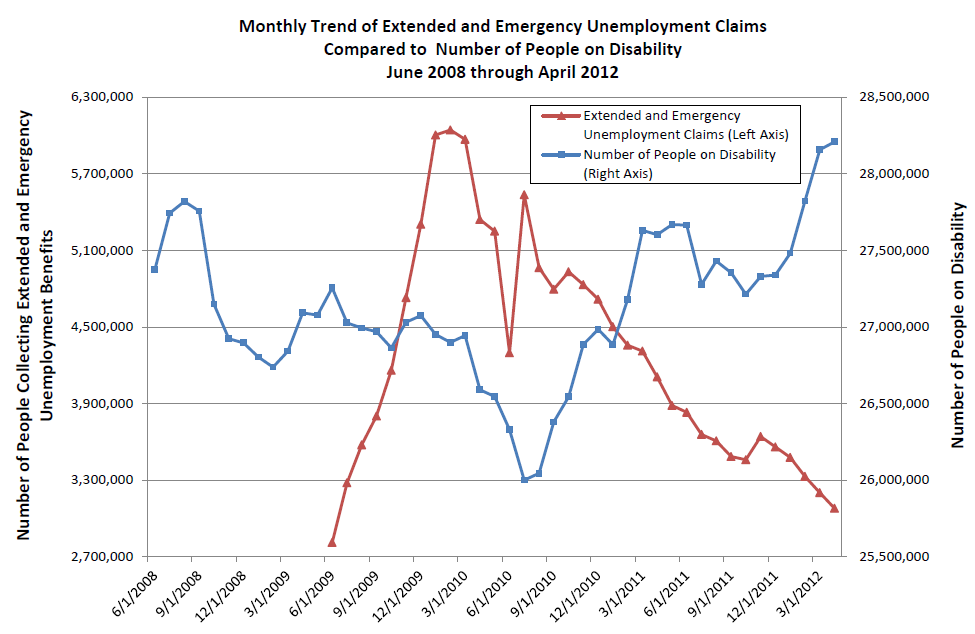
Now its not to make this sound good, the 2008 crisis had real victims, millions lost jobs, never returned to the workforce and became homeless...but with the stimulus money in play those people were systematically swept under a rug and hidden from public. This was done through cooking the unemployment books (basically if you exhausted your unemployment benefits, the government no longer counts you as unemployed but removes you from the job market on the basis that you will likely not become employed again).
$6T is over 3x the 2008 stimulus packages and it will be spread to an even smaller group of people and a much more significant number of people will become unemployed (already over 20M) and they to will be swept under a rug in time and disappear from economic data when they exhaust their unemployment benefits...the rich will become richer and the government will go on to brag about the drastically falling unemployment numbers.